



₨550
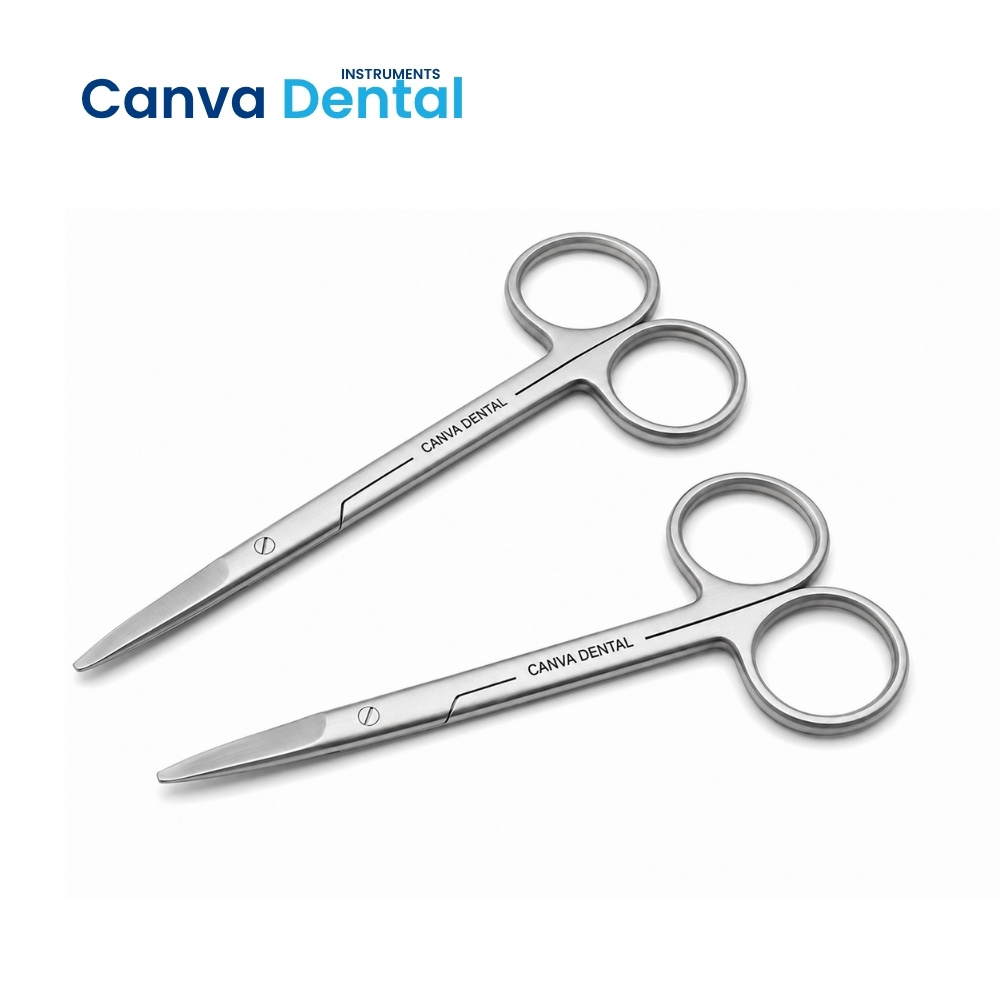
A suture cutting scissor is one of the most frequently used instruments in dental and surgical practice. After every suturing procedure, clinicians rely on this specialized cutting tool to remove stitches cleanly, quickly, and without causing unnecessary discomfort to the patient. Because proper suture removal directly affects wound healing and post-surgical outcomes, choosing the right instrument matters significantly.
Unlike general-purpose scissors, a dedicated suture cutting scissor features a fine, angled blade tip designed specifically to slide beneath suture loops and cut thread precisely — without pulling, tearing, or traumatizing surrounding tissue.
A suture cutting scissor is a short-bladed, fine-tipped surgical scissor designed exclusively for cutting suture material during stitch removal or intraoperative trimming. Dental professionals, oral surgeons, and general surgeons use these instruments after wound closure procedures to remove sutures once healing progresses sufficiently.
Furthermore, certain designs — particularly the Littauer stitch scissors — include a specialized hook or notch on one blade that catches the suture thread securely before cutting. As a result, clinicians achieve cleaner cuts with minimal risk of accidentally nicking the surrounding tissue.
Understanding suture cutting scissors uses helps clinicians select the correct instrument for each clinical scenario. Although the primary use involves postoperative stitch removal, dental and surgical teams use these instruments across several additional applications:
Among all suture removal instruments, Littauer stitch scissors remain the most widely used design in clinical dentistry and surgery worldwide. Their distinctive feature is a small, curved hook on the lower blade that slides cleanly beneath the suture loop before the clinician closes the blades to cut.
Because this hook stabilizes the suture thread during cutting, Littauer stitch scissors eliminate the pulling and dragging that patients commonly associate with stitch removal. Moreover, the fine blade tips allow precise access in narrow interproximal spaces and deep gingival sulci — areas where standard scissors simply cannot reach effectively.
Dental and surgical teams choose from several designs depending on the procedure type, suture material, and access requirements. Therefore, understanding the available types helps clinicians build a well-equipped instrument tray:
| Type | Blade Design | Best For |
|---|---|---|
| Littauer Stitch Scissors | Hooked lower blade | Standard suture removal, dental surgery |
| Spencer Stitch Scissors | Short straight blades, fine tips | Superficial suture trimming, skin sutures |
| Iris Scissors (curved) | Curved fine blades | Delicate tissue and suture work |
| Wire Cutting Scissors | Heavy serrated blades, TC inserts | Scissors suture wire cutting, metal ligatures |
| Curved Suture Scissors | Angled blade axis | Posterior oral access, deep surgical sites |
| Microsurgical Suture Scissors | Ultra-fine miniature blades | Periodontal microsurgery, implant flap procedures |
Many clinicians ask whether a dedicated suture cutting scissor offers meaningful advantages over general surgical scissors. However, the differences are clinically significant and worth understanding clearly:
| Feature | Suture Cutting Scissor | General Surgical Scissors |
|---|---|---|
| Blade tip design | Fine, pointed or hooked | Blunt or rounded |
| Blade length | Short (3–4 cm) | Longer (5–7 cm) |
| Tissue trauma risk | Very low | Moderate |
| Access in narrow sites | Excellent | Limited |
| Suture thread grip | Hook-assisted (Littauer) | None |
| Recommended for stitch removal | Yes | Not recommended |
Our suture cutting scissors feature surgical-grade stainless steel construction that delivers long-term sharpness and corrosion resistance. Additionally, the blade edges maintain precise alignment after repeated sterilization cycles, ensuring consistent cutting performance throughout the instrument’s working life.
For wire-cutting variants, tungsten carbide inserts reinforce the cutting edge, providing the hardness needed to cut metal suture wire cleanly without blade deformation. Furthermore, the finger rings feature smooth, polished edges that reduce hand fatigue during extended stitch removal sessions.
Wire sutures appear in maxillofacial surgery, orthopedic procedures, sternal closure, and certain bone fixation techniques. Consequently, clinicians working in these specialties need a purpose-built wire-cutting variant rather than a standard stitch scissor.
Standard suture scissors will chip or dull immediately when applied to stainless steel wire. Therefore, always specify tungsten carbide-insert scissors or dedicated wire-cutting scissors for any procedure involving metal ligature wire or stainless steel suture material.
Because suture scissors contact open wounds and postoperative tissue directly, strict sterilization protocols are non-negotiable. Fortunately, all stainless steel variants in our range withstand standard autoclave sterilization at 134°C without dimensional change or corrosion.
However, clinicians should inspect blade alignment and tip sharpness before each use. Misaligned blades drag rather than cut, increasing patient discomfort during suture removal. Additionally, scissors with tungsten carbide inserts require ultrasonic cleaning before autoclaving to remove debris from the serrated cutting edge effectively.
Organizations such as the World Health Organization provide recommendations regarding infection prevention and safe handling of reusable medical instruments.
We supply suture cutting scissors — including Littauer stitch scissors, wire-cutting variants, and microsurgical designs — to dental clinics, oral surgery departments, teaching hospitals, and medical supply stores across Lahore, Karachi, Islamabad, Multan, Peshawar, and all major cities in Pakistan. Moreover, we offer institutional pricing and bulk order support for dental colleges and hospital procurement teams.
Contact our team for current pricing, available configurations, and delivery timelines.
Q: What are the main suture cutting scissors uses in dentistry?
Dental professionals primarily use them for postoperative suture removal after extractions, implant surgery, and periodontal procedures. Additionally, clinicians use them intraoperatively for trimming excess suture tails during wound closure.
Q: What makes Littauer stitch scissors different from other suture scissors?
Littauer stitch scissors feature a small hook on the lower blade that slides beneath the suture loop before cutting. This design prevents the thread from slipping away and eliminates the pulling sensation that patients experience with standard scissors.
Q: Can suture scissors cut wire sutures?
Standard suture scissors are not suitable for scissors suture wire cutting applications. However, heavy-duty variants with tungsten carbide inserts handle metal wire effectively. Always use the correct instrument type for the suture material involved.
Q: How often should suture scissors be sharpened?
Sharpening frequency depends on usage volume and sterilization cycles. However, a good rule of thumb is to test cutting performance on a latex glove — if the scissors drag rather than cut cleanly, professional sharpening or replacement is due.
Q: Are these instruments autoclavable?
Yes. All stainless steel suture scissors in our range withstand repeated autoclave sterilization at 134°C. Furthermore, we recommend ultrasonic cleaning before autoclaving to extend blade life and maintain cutting precision.
For complete clinical setups, explore all dental instruments here: CLICK
| Size | Small, Large |
|---|
Reviews
There are no reviews yet.