



₨280 – ₨380Price range: ₨280 through ₨380
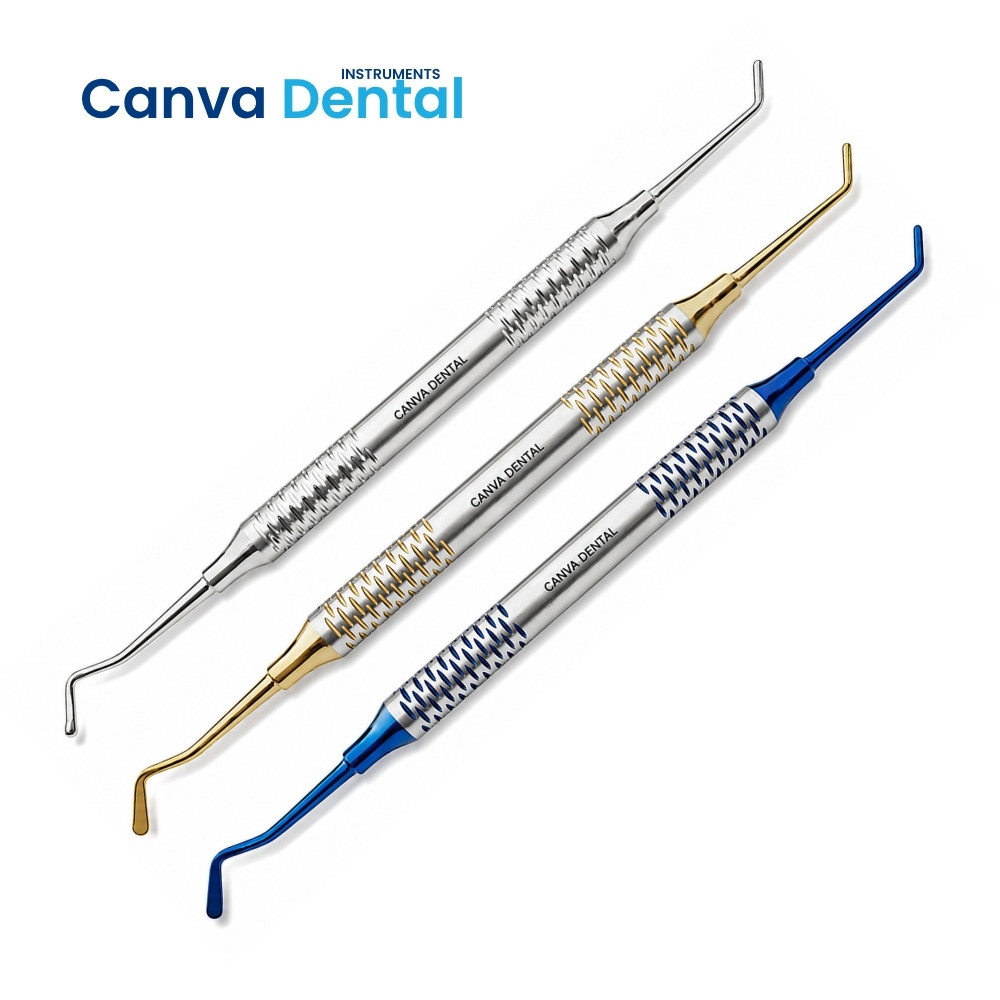
A plastic instrument is one of the most versatile and widely used hand tools in restorative dental practice. Dental professionals rely on this instrument every day to place, adapt, and contour restorative materials — including composite resin, glass ionomer cement, amalgam, and temporary filling materials — during cavity restoration procedures. Because accurate material placement directly determines the quality and longevity of every restoration, a well-designed plastic instrument remains indispensable in every clinical tray setup.
Moreover, the plastic instrument allows clinicians to manipulate restorative materials before they set, making it one of the few instruments that directly shapes the final appearance and function of a tooth restoration.
A plastic instrument dental teams use is a double-ended hand instrument featuring flat, paddle-shaped, or pointed working ends designed to carry, place, and adapt restorative filling materials into prepared cavities. Despite the name, this instrument consists entirely of stainless steel — the term “plastic” refers to its function of working with plastic (moldable) materials, not to the material from which the instrument itself is made.
Because restorative materials like composite resin and glass ionomer cement require careful incremental placement and adaptation before setting, the plastic instrument gives clinicians direct manual control over material positioning, contour, and surface finish throughout the restoration procedure.
Each plastic instrument in our range delivers the precision, balance, and durability that restorative procedures demand:
Dental teams select from several plastic instruments in dentistry depending on the restorative material used, cavity location, and the specific placement technique required. Therefore, a comprehensive instrument tray includes multiple designs to cover all clinical scenarios:
| Type | Working End Design | Best Application |
|---|---|---|
| Flat Plastic Instrument | Flat paddle blade both ends | Amalgam and GIC placement, cavity condensing |
| Ball-Ended Plastic Instrument | Ball tip + flat blade | Composite adaptation, pit and fissure sealing |
| Pointed Plastic Instrument | Fine pointed tip + flat blade | Interproximal composite, tight contact areas |
| Hollenback Carver | Angled carving blade | Amalgam carving, occlusal anatomy restoration |
| Composite Placement Instrument | Teflon-coated spatula ends | Composite resin — prevents sticking to blade |
| Ward’s Waxing Instrument | Wax-style blade ends | Wax patterns, provisional restorations |
| Interproximal Plastic Instrument | Offset angled tip | Class II and Class III composite placement |
Understanding plastic filling instrument uses helps clinicians select the correct design for every restoration type. Although material placement is the primary function, plastic filling instrument uses extend across several additional clinical applications that dental teams perform daily:
The plastic filling instrument dental professionals choose varies significantly depending on whether they place composite resin or amalgam. Consequently, understanding these differences ensures clinicians select the most effective instrument for each restorative material:
| Criteria | Composite Resin Use | Amalgam Use |
|---|---|---|
| Preferred blade coating | Teflon or titanium nitride | Standard stainless steel |
| Placement technique | Incremental layering | Single or bulk placement |
| Working end shape | Ball-ended or pointed tip | Flat paddle blade |
| Light sensitivity concern | Yes — work quickly | No |
| Surface adaptation | Gentle molding | Firm condensation |
| Follow-up instrument | Composite brush or burnisher | Amalgam condenser and burnisher |
As adhesive dentistry continues to grow, plastic instruments in dentistry have evolved alongside restorative materials and techniques. Modern composite placement protocols rely heavily on precise incremental layering to minimize polymerization shrinkage and achieve optimal aesthetics — a workflow where the plastic instrument plays a central role at every step.
Furthermore, in direct posterior composite restorations, the plastic instrument shapes proximal walls, establishes contact areas, and adapts material against sectional matrices — tasks that no other hand instrument performs as effectively. Therefore, investing in a high-quality set of plastic instruments in dentistry directly improves restoration outcomes and reduces clinical chairtime.
Understanding how the plastic instrument dental role compares to related restorative instruments helps clinicians build a complete and efficient tray setup:
| Instrument | Primary Function | Used After Plastic Instrument? |
|---|---|---|
| Plastic Instrument | Material placement and adaptation | — |
| Amalgam Condenser | Compresses amalgam into cavity | Yes — after initial placement |
| Burnisher | Smooths and polishes restoration surface | Yes — after carving |
| Hollenback Carver | Carves occlusal anatomy in amalgam | Yes — before setting |
| Composite Brush | Final surface blending of composite | Yes — before curing |
| Dental Excavator | Removes caries before restoration | No — used before plastic instrument |
Because the plastic instrument contacts restorative materials and dentinal surfaces directly at every appointment, thorough sterilization after each use is essential. Fortunately, all stainless steel plastic instruments in our range withstand repeated autoclave cycles at 134°C without warping or corrosion.
However, Teflon-coated and titanium-nitride-coated variants require gentle ultrasonic cleaning rather than abrasive scrubbing, since harsh cleaning agents damage the non-stick coating and reduce its effectiveness during composite placement. Additionally, clinicians should inspect working ends before each procedure — bent or nicked blades distort material placement and compromise restoration quality.
Similarly, many healthcare professionals follow hygiene and sterilization guidance shared by the American Dental Association regarding clinical safety and surgical instrument maintenance.
We supply a comprehensive range of plastic instruments — including flat, ball-ended, pointed, Teflon-coated composite variants, and complete restorative instrument sets — to dental clinics, teaching hospitals, restorative departments, and dental colleges across Lahore, Karachi, Islamabad, Multan, Peshawar, and all major cities in Pakistan. Furthermore, we offer competitive institutional pricing and bulk order support for procurement teams.
Contact our team for current plastic instrument pricing, available designs, and delivery timelines for your clinic or institution.
Q: What is a plastic instrument used for in dentistry?
A plastic instrument dental professionals use serves primarily for placing, adapting, and contouring restorative materials — including composite resin, glass ionomer cement, amalgam, and temporary fillings — into prepared cavities. It is one of the most essential hand instruments in restorative dental practice.
Q: What are the main plastic filling instrument uses?
Plastic filling instrument uses include composite resin layering, GIC cavity filling, temporary material placement, pit and fissure sealant application, liner and base placement, and provisional crown construction. Moreover, clinicians use this instrument for wax pattern carving in indirect restorative workflows.
Q: Why does composite stick to my plastic filling instrument dental blade?
Composite resin adheres to standard stainless steel surfaces. Therefore, for composite placement, always use a Teflon-coated or titanium-nitride-coated plastic filling instrument dental variant. These non-stick coatings prevent composite adhesion and allow smooth, clean material placement throughout incremental layering.
Q: How are plastic instruments in dentistry different from excavators?
A dental excavator removes decayed tooth material before restoration begins. Plastic instruments in dentistry, however, perform the opposite function — they place and shape new restorative material into the cleaned cavity. Both instruments work in sequence during the same restorative appointment.
Q: Are plastic instruments autoclavable?
Yes. All stainless steel plastic instruments withstand autoclave sterilization at 134°C. However, Teflon-coated variants require gentle cleaning without abrasive agents to preserve their non-stick coating and maintain composite placement performance across many sterilization cycles.
For complete clinical setups, explore all dental instruments here: CLICK
| Type | Silver, Plasma, Golden |
|---|
Reviews
There are no reviews yet.