



₨700
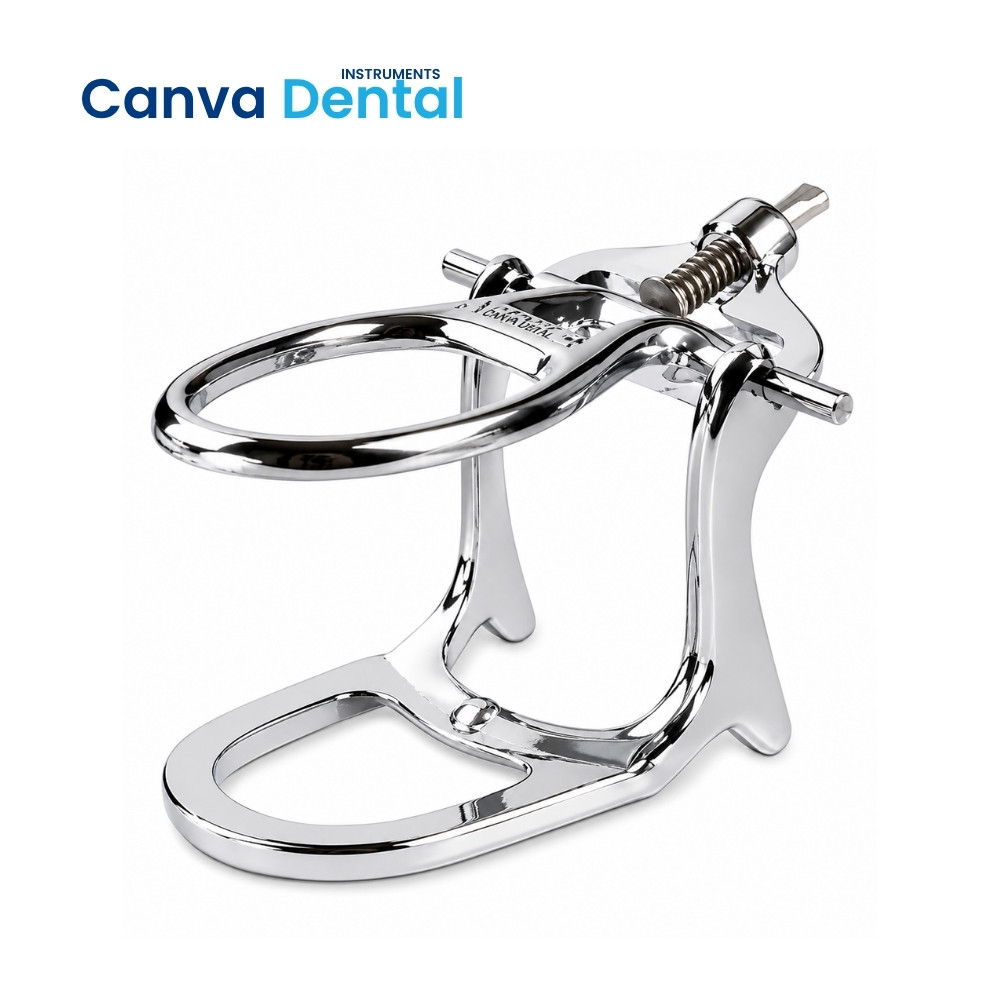
A Non Adjustable Articulator is a fundamental dental laboratory instrument used in prosthodontics and dental technology. Dentists, prosthodontists, and dental technicians mount study models and working casts on this device. It simulates simple jaw opening and closing movements. This allows the laboratory team to examine, adjust, and fabricate dental restorations in a controlled jaw relationship outside the patient’s mouth. Because every prosthetic and restorative procedure requires some form of occlusal reference, the non adjustable articulator provides the most accessible and affordable starting point for this work.
In addition, hinge articulators serve as the primary teaching instrument for dental students learning occlusal assessment and denture fabrication. Their simple design makes them easy to understand. Moreover, they are the most widely used articulator class in general dental practice globally. As a result, they appear on dental college equipment lists and clinical tray setups across Pakistan and internationally.
A hinge articulator is the simplest type of dental articulator. It consists of two metal arms connected by a single hinge joint. The upper arm holds the upper cast. The lower arm holds the lower cast. The hinge allows the upper arm to open and close. This simulates simple vertical jaw movement only. It does not replicate lateral excursions, protrusive movements, or condylar guidance. Therefore, it captures only the most basic element of jaw function.
The plain line articulator is the most basic hinge articulator design. It has no adjustment features at all. Both arms are flat metal plates. They connect at a fixed hinge point. This design is economical and simple. It suits procedures where only vertical occlusal relationships matter. Consequently, it remains the most affordable articulator design available and dominates entry-level dental laboratory setups.
The term “non adjustable” distinguishes this articulator class from semi-adjustable and fully adjustable designs. Non adjustable articulators have no settings for condylar inclination, Bennett angle, or intercondylar distance. These fixed design parameters mean the instrument cannot replicate the patient’s unique jaw mechanics accurately. Therefore, it suits fabrication tasks where an approximation of centric occlusion is sufficient. It does not suit cases requiring precise eccentric occlusal balance.
Each non adjustable articulator in our range delivers the dimensional stability, model retention, and handling convenience that dental laboratory work requires:
Several non adjustable articulator designs exist. Each provides a slightly different level of functional simulation. Understanding them helps dental teams select the most appropriate design for each clinical and laboratory task:
The plain line articulator is the simplest design. It consists of two flat metal arms connected at a hinge. There are no adjustments, no incisal pin, and no mounting platform. Models are mounted directly to the flat arms. This design suits simple study model examination and basic occlusal assessment. However, it provides no vertical dimension control. Therefore, it suits diagnostic tasks rather than prosthetic fabrication work where vertical dimension accuracy matters.
This design adds an incisal pin to the plain line design. The incisal pin establishes a reference for vertical dimension. It prevents the arms from closing beyond the set dimension. Moreover, it maintains consistent model separation during wax-up and occlusal adjustment procedures. Consequently, this design suits complete denture wax-up, study model assessment, and preliminary occlusal equilibration work. It is the most commonly used non adjustable design in general dental practice.
Anatomical non adjustable articulators incorporate average value condylar guides. These guides are fixed at standard average values — typically 30 degrees for condylar inclination. They cannot be adjusted to the patient’s individual values. However, they produce more accurate lateral and protrusive movements than a purely hinge-only design. Therefore, they suit complete denture fabrication at average values where individual jaw mechanics measurement is not performed.
The complete range of hinge articulator uses extends across prosthodontics, restorative dentistry, dental education, and laboratory work. Although complete denture fabrication is the most commonly cited application, hinge articulator uses cover many additional clinical and educational scenarios:
Understanding the limitations of the non adjustable articulator dental design helps clinicians recognise when a more sophisticated instrument is needed. The limitations are not defects. They are design boundaries that define appropriate use cases.
Non adjustable articulators cannot replicate lateral excursions accurately. They move only in a hinge arc. Real jaw movement combines rotation and translation. The condyle both rotates and slides forward and downward during opening. A hinge joint simulates only the rotation component. Therefore, restorations fabricated on a hinge articulator may require chairside occlusal adjustment to eliminate lateral interference contacts that the articulator could not detect during fabrication.
In addition, the fixed condylar inclination of non adjustable articulators does not match any individual patient’s anatomy. The average value assumed is approximately 30 degrees. However, individual condylar inclinations range from 15 to 50 degrees. Consequently, protrusive occlusal contacts on posterior teeth fabricated on a non adjustable device differ from actual patient protrusive contacts. For single crown and simple bridge work, this difference is clinically manageable. For full arch rehabilitations, however, it produces significant occlusal discrepancies.
Several clinical situations require upgrading from a non adjustable articulator. These include full arch or quadrant crown and bridge cases, temporomandibular disorder rehabilitation, occlusal vertical dimension changes, complex complete denture cases in patients with unusual condylar inclinations, and any case where the patient reports premature contacts after insertion of restorations fabricated on the hinge articulator. Therefore, stocking both a non adjustable and a semi-adjustable articulator covers the full range of clinical complexity in a general practice.
Understanding how the non adjustable articulator compares to other designs helps dental teams select the most appropriate instrument for each clinical situation:
| Articulator Type | Adjustability | Movements Simulated | Best Application |
|---|---|---|---|
| Non Adjustable (Hinge) | None — fixed hinge | Vertical opening only | Study models, complete dentures, student training |
| Plain Line Articulator | None | Vertical opening only | Basic occlusal examination — no fabrication |
| Semi-Adjustable Articulator | Condylar inclination, Bennett angle | Vertical, lateral, protrusive | Crown and bridge, complex removable prosthetics |
| Fully Adjustable Articulator | All condylar parameters | All jaw movements | Complex rehabilitation, TMD cases, research |
| Digital Articulator (Virtual) | Patient-specific from scan data | All movements from CBCT/scan | Digital workflow crown and bridge, implant planning |
Therefore, the non adjustable articulator suits the majority of routine dental laboratory and study model tasks. It provides sufficient accuracy for complete dentures, simple restorations, and diagnostic study model work. Upgrading to a semi-adjustable design becomes necessary when individual jaw mechanics affect restoration outcome significantly.
Before mounting, trim the study models or working casts to remove undercuts and excess plaster. Flat, parallel model bases mount more accurately and stably than untrimmed casts. Apply petroleum jelly to the model mounting platforms to prevent permanent bonding of the mounting plaster to the articulator arms. Moreover, confirm the incisal pin rests on the incisal guide table at the correct vertical dimension before closing the articulator for final mounting plaster set. This ensures the vertical dimension is accurately captured during the mounting procedure.
Mount the lower model first in centric occlusion using a bite registration or wax wafer to orient the models correctly before mounting plaster sets. Allow the lower mount to set completely before mounting the upper model. In addition, confirm that no occlusal interferences prevent the models from seating in their correct relationship. Remove any plaster blobs on occlusal surfaces before mounting. Consequently, the mounted models reproduce the patient’s centric occlusal relationship accurately enough for the designated fabrication task.
We supply non adjustable articulators — in plain line, simple hinge with incisal pin, and anatomical average-value designs for standard adult and paediatric model mounting — to dental clinics, prosthodontic practices, dental laboratories, teaching hospitals, and instrument distributors across Lahore, Karachi, Islamabad, Multan, Peshawar, Faisalabad, Rawalpindi, and all major cities in Pakistan. Moreover, our institutional supply team handles bulk procurement for dental college prosthodontic departments and laboratory setups at competitive pricing.
Contact our team for current non adjustable articulator pricing in Pakistan, available designs, and delivery timelines for your clinic or institution.
Q: What is a non adjustable articulator used for in dentistry?
A non adjustable articulator mounts dental study models and working casts to examine and reproduce jaw closure relationships outside the patient’s mouth. Primary hinge articulator uses include complete denture wax-up and tooth arrangement, study model examination, removable partial denture design planning, occlusal equilibration planning, crown and bridge preliminary wax-up, denture repair and relining, orthodontic progress model archiving, and dental student occlusion training. It suits all procedures requiring only centric occlusal relationship reproduction without lateral or protrusive movement accuracy.
Q: What is the difference between a non adjustable articulator and a hinge articulator?
A hinge articulator is one specific type of non adjustable articulator. All hinge articulators are non adjustable. However, not all non adjustable articulators are purely hinge designs — some anatomical non adjustable articulators include fixed average-value condylar guides that produce approximate lateral and protrusive movements without individual adjustment. Therefore, “hinge articulator” refers specifically to the simplest plain hinge-only design, while “non adjustable articulator” covers the entire class of articulators without individually adjustable condylar parameters.
Q: Why can’t a non adjustable articulator replicate all jaw movements?
Real jaw movement involves both rotation and forward-downward translation of the condyle along the articular eminence. A hinge articulator simulates only pure rotation around a fixed hinge point. It cannot replicate the translational condylar path. Therefore, lateral excursions and protrusive movements on a hinge articulator produce a different occlusal contact pattern than the patient’s actual jaw mechanics generate. This limitation makes the non adjustable design suitable for vertical centric occlusion tasks but unsuitable for complex eccentric occlusal balance requirements.
Q: When should I use a semi-adjustable articulator instead of a non adjustable one?
Upgrade to a semi-adjustable articulator for full arch or quadrant crown and bridge cases, temporomandibular disorder rehabilitation, occlusal vertical dimension changes, complex complete denture cases where the patient’s condylar inclination is unusual, and any restoration case where chairside adjustment after insertion consistently exceeds the expected minor equilibration. If restorations fabricated on the non adjustable device regularly require significant occlusal adjustment at delivery, the case complexity exceeds the accuracy limits of the hinge articulator design.
Q: Is the non adjustable articulator suitable for complete denture fabrication?
Yes — the non adjustable articulator with an incisal pin suits complete denture fabrication in most routine cases. Complete dentures fabricated on average-value or hinge articulators achieve acceptable bilateral balanced occlusion through the trial insertion and final equilibration stages. However, patients with significantly unusual condylar inclinations may show protrusive occlusal discrepancies that require more extensive chairside equilibration. Therefore, the non adjustable design suits the majority of complete denture cases. Complex cases with documented unusual condylar anatomy benefit from an anatomical or semi-adjustable articulator approach.
Reviews
There are no reviews yet.