



₨270 – ₨350Price range: ₨270 through ₨350
The Minnesota Retractor is one of the most essential soft tissue management instruments in dental and oral surgery practice. Surgeons and dental professionals rely on this instrument to retract cheeks, lips, tongue, and surgical flaps during oral procedures — creating a clear, unobstructed operating field that improves both visibility and access throughout surgery. Because adequate soft tissue retraction directly determines how well a surgeon sees and reaches the operating site, the Minnesota Retractor plays a critical role in every oral surgical procedure.
Furthermore, the Minnesota Retractor protects delicate soft tissues from accidental instrument contact during surgery, reducing the risk of incidental tissue trauma and improving overall patient outcomes.
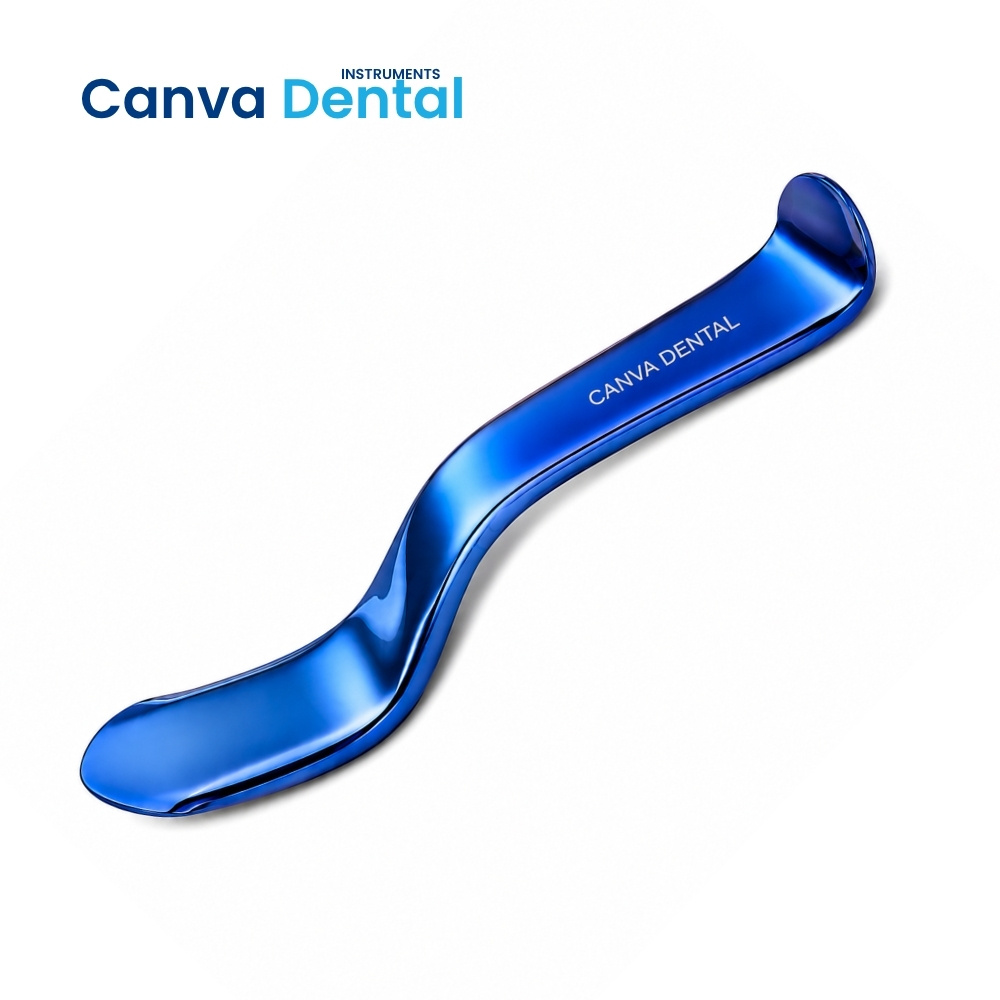
A Minnesota Retractor dental instrument is a broad, flat-bladed retractor with a characteristic right-angle bend that allows the working end to engage soft tissue comfortably while the handle remains clear of the operating field. Unlike narrow retractors designed for a single tissue type, the Minnesota retractor dental design accommodates a wide range of soft tissue retraction tasks — from cheek and lip retraction to mucoperiosteal flap management during surgical access.
The instrument takes its name from its origin at the University of Minnesota School of Dentistry, where it was developed specifically to meet the broad retraction demands of oral surgical procedures. As a result, it became one of the most widely adopted retractor designs in dental surgery worldwide, and it remains a standard instrument on surgical trays across every level of dental practice.
Each Minnesota Retractor in our range combines ergonomic handle design with a broad, smooth blade that protects soft tissue during extended surgical procedures:
Understanding the full range of Minnesota Retractor uses helps surgical teams deploy this instrument most effectively across different clinical procedures. Although cheek and lip retraction represents its most common application, Minnesota Retractor uses extend across a broad spectrum of oral surgical and restorative scenarios:
The Minnesota Retractor oral surgery design specifically addresses the anatomical challenges of the oral cavity — a narrow, curved working environment where conventional straight retractors provide limited tissue control. Because the oral cavity restricts instrument angles and lines of sight more than most surgical fields, retractor design directly impacts both surgical efficiency and tissue safety.
The right-angle blade orientation of the Minnesota Retractor oral surgery instrument allows the blade to engage tissue at the correct anatomical angle while keeping the handle positioned above the mouth — accessible for the assistant without obstructing the surgeon’s direct line of vision. Moreover, the broad blade surface distributes retraction pressure over a larger tissue area, reducing the localized pressure that causes soft tissue blanching and postoperative discomfort.
Consequently, oral surgeons performing implant placements, third molar removals, bone grafting procedures, and flap-based periodontal surgeries consistently rely on the Minnesota Retractor as their primary soft tissue management tool throughout these procedures.
Several soft tissue retractor dental designs exist, each suited to different anatomical locations and surgical access requirements. Understanding how the Minnesota Retractor compares to other instruments helps surgical teams build a complete and versatile retractor inventory:
| Retractor Type | Blade Design | Primary Use | Vs Minnesota Retractor |
|---|---|---|---|
| Minnesota Retractor | Broad right-angle flat blade | Cheek, lip, flap retraction — general oral surgery | Most versatile — standard choice |
| Bowdler-Henry Rake Retractor | Multi-pronged rake tip | Mucoperiosteal flap grip on bone surface | Better bone-level flap grip; less soft tissue |
| Austin Retractor | Narrow angled blade | Lingual flap and tongue retraction | More targeted; less versatile than Minnesota |
| Weider Tongue Depressor | Large heart-shaped blade | Tongue depression and retraction | Better for tongue; poor for cheek retraction |
| Cheek Retractor (Plastic) | C-shaped bilateral frame | Bilateral cheek retraction for photography | Passive holder; no flap retraction capability |
| Langenbeck Retractor | Right-angle flat blade | General surgical flap retraction | Larger blade; used in maxillofacial surgery |
| Senn Retractor | Double-ended rake and flat | Shallow tissue retraction in minor oral surgery | Shallower reach; less control than Minnesota |
Therefore, for most dental clinics and oral surgery practices, the Minnesota Retractor serves as the primary soft tissue retractor dental instrument for the majority of surgical procedures. However, stocking the Austin Retractor and Bowdler-Henry Rake alongside the Minnesota design ensures complete coverage for all flap configurations and anatomical access requirements.
Effective soft tissue retraction with the Minnesota Retractor depends on correct blade placement, appropriate retraction force, and consistent instrument positioning throughout the procedure. Because poor retraction technique reduces surgical visibility and risks soft tissue injury, surgical assistants should follow these key technique principles:
Implant surgery requires sustained, precise soft tissue management throughout a procedure that typically involves flap elevation, bone preparation, implant insertion, and membrane or graft placement. The Minnesota Retractor provides the consistent, controlled retraction that each of these steps demands.
During implant surgery, the surgical assistant holds the Minnesota Retractor in position while the surgeon works through multiple instrument changes — from elevators and drills to implant drivers and suture needles. Because the Minnesota Retractor maintains stable tissue displacement throughout all these steps without requiring repositioning at each instrument change, it significantly reduces overall surgical time and improves the assistant’s ability to maintain a clear, dry operating field.
Moreover, by shielding the raised mucoperiosteal flap from accidental contact with rotary instruments during osteotomy preparation, the Minnesota Retractor actively protects the tissue quality needed for effective primary wound closure after implant placement.
Because the Minnesota Retractor contacts oral mucosal tissue and surgical wounds directly at every procedure, thorough sterilization after each patient use is essential. Fortunately, all stainless steel Minnesota Retractors in our range withstand repeated autoclave cycles at 134°C without blade deformation, handle corrosion, or surface degradation.
However, clinicians should inspect the blade edges before each use. Any nicks, sharp edges, or blade bending on the Minnesota Retractor can cause mucosal lacerations during retraction — injuries that would not occur with a correctly maintained instrument. Additionally, ultrasonic cleaning before autoclaving removes blood and organic debris from the blade surface effectively, preserving the smooth finish that minimizes soft tissue trauma during clinical use.
Similarly, many healthcare professionals follow hygiene and sterilization guidance shared by the American Dental Association regarding clinical safety and surgical instrument maintenance.
We supply Minnesota Retractors to dental clinics, oral surgery departments, maxillofacial surgery units, dental teaching hospitals, and instrument distributors across Lahore, Karachi, Islamabad, Multan, Peshawar, Faisalabad, Rawalpindi, and all major cities in Pakistan. Furthermore, our institutional supply team supports bulk procurement orders for dental colleges, government hospitals, and private hospital groups at competitive pricing.
Contact our team for current Minnesota Retractor pricing in Pakistan, available specifications, and delivery timelines for your clinic or institution.
Q: What is a Minnesota Retractor used for in dentistry?
The Minnesota Retractor serves primarily for retracting cheeks, lips, tongue, and mucoperiosteal flaps during oral surgical procedures. Minnesota Retractor uses include third molar surgery, implant placement, bone grafting, apicectomy, periodontal flap surgery, and any procedure requiring sustained soft tissue displacement for improved surgical access and visibility.
Q: How does the Minnesota Retractor differ from other soft tissue retractors?
The Minnesota Retractor dental design features a broad, flat blade on a right-angle handle — a combination that makes it the most versatile soft tissue retractor dental instrument for general oral surgery. Other designs like the Austin Retractor or Bowdler-Henry Rake target more specific retraction tasks, whereas the Minnesota Retractor handles the widest range of soft tissue management requirements in a single instrument.
Q: Who holds the Minnesota Retractor during surgery?
In most dental and oral surgical procedures, a trained chairside surgical assistant holds the Minnesota Retractor in position throughout the procedure. However, self-retaining retractor frames can also hold the instrument in fixed position during single-operator surgical procedures where no assistant is present.
Q: Can the Minnesota Retractor be used during implant surgery?
Yes. The Minnesota Retractor oral surgery application includes implant procedures specifically. It holds the mucoperiosteal flap clear during osteotomy preparation, implant placement, and graft or membrane positioning — protecting flap tissue from rotary instruments and maintaining the surgical visibility needed throughout the full implant procedure.
Q: Is the Minnesota Retractor autoclavable?
Yes. All stainless steel Minnesota Retractors in our range withstand autoclave sterilization at 134°C. Furthermore, ultrasonic cleaning before each sterilization cycle removes blood and tissue debris from the blade surface, preserving the smooth finish that protects soft tissue during clinical retraction procedures.
For complete clinical setups, explore all dental instruments here: CLICK
| Color | Silver, Blue |
|---|
Reviews
There are no reviews yet.