



₨400
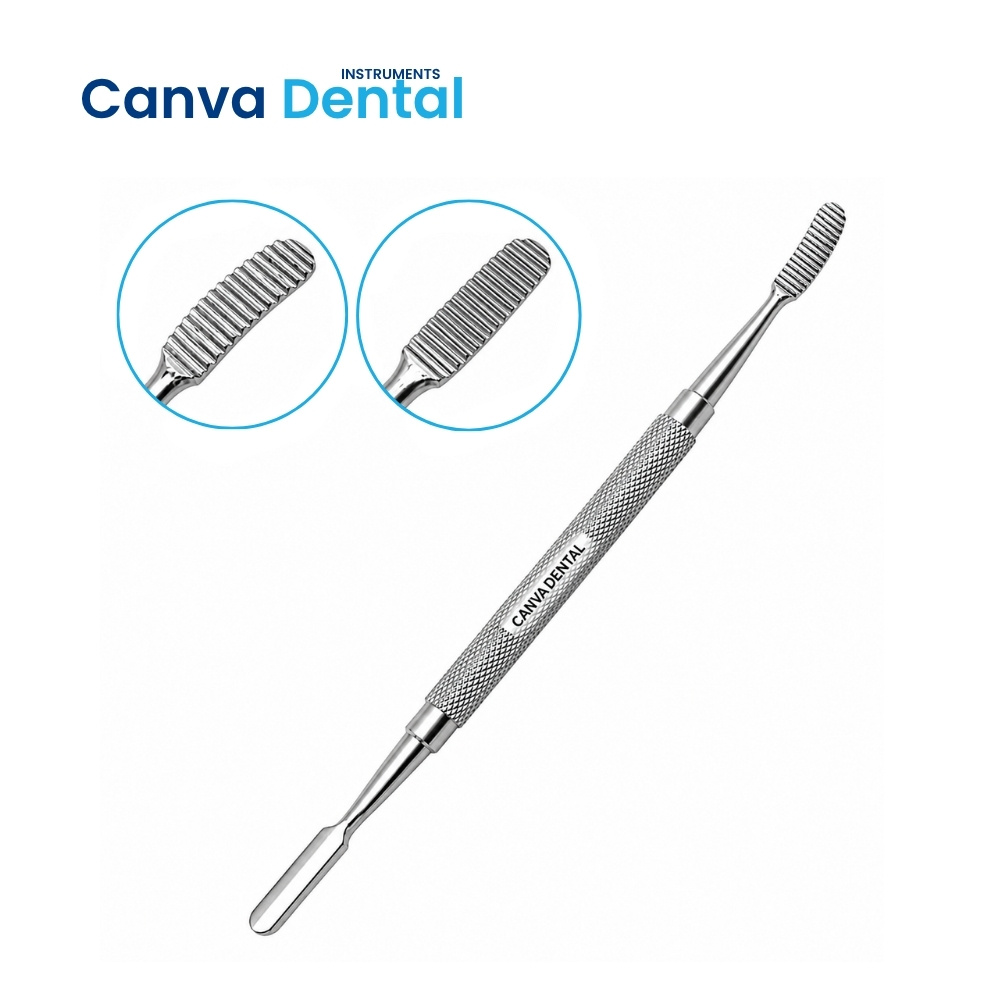
The Miller Bone File is an essential bone smoothing instrument in oral surgery and dental extraction practice. Oral surgeons and general dentists use this instrument to smooth sharp bone edges, remove small bone spicules, and refine alveolar ridge contours after extractions and surgical procedures. Sharp residual bone margins after extraction cause significant patient discomfort. They also delay soft tissue healing. Therefore, the Miller Bone File remains a standard instrument on every post-extraction and alveoloplasty tray in dental practice.
In addition to post-extraction use, the bone file miller design serves across alveoloplasty, implant site preparation, and bone grafting procedures. As a result, oral surgical teams consider it a versatile instrument across a broad range of bone management tasks beyond simple socket smoothing.
A bone file dental instrument is a hand-operated rasping tool with a serrated or cross-cut working surface. It smooths bone through a push-pull filing stroke. The serrated ridges on the file surface abrade and remove small amounts of bone with each stroke. This mechanism differs from the bone rongeur. Rongeurs remove bulk bone through a biting action. Bone files refine the surface after bulk removal. Therefore, the Miller Bone File serves as the finishing instrument in every bone management sequence.
The Miller bone file specifically carries a double-cut or cross-cut serration pattern. This pattern cuts on both the push and pull strokes. Consequently, it removes bone more efficiently per stroke than single-cut files that only cut on one direction. Moreover, the cross-cut pattern produces a finer surface finish. This suits the delicate post-extraction socket environment where bone surface quality directly affects soft tissue healing.
The Miller designation identifies a specific bone file design in oral surgical instrument catalogues. It refers to the particular blade geometry, serration pattern, and handle design associated with this named instrument. Bone file miller designs appear on surgical tray lists in dental curricula and procurement catalogs worldwide. As a result, “Miller Bone File” and “bone file miller” are both used interchangeably across clinical and procurement contexts to refer to the same instrument family.
Each Miller Bone File in our range delivers the rasping precision and durability that post-surgical bone smoothing requires:
The terms “bone file” and “bone rasp” are often used interchangeably. However, there is a technical distinction between them. Understanding it helps clinicians select the correct instrument for each bone refinement task.
A bone file carries parallel serrated ridges aligned across the working surface. Each ridge acts as a cutting edge. The file removes bone through controlled abrasion. It produces a fine, smooth surface finish. A bone rasp, however, carries pointed projections across the rasping surface. These projections are more aggressive. They remove bone faster but leave a coarser surface. Therefore, the bone rasp suits initial roughening of smooth bone before grafting. The bone file suits final surface refinement for tissue-contact areas.
In clinical practice, many practitioners use the terms interchangeably. Both instruments serve post-extraction socket smoothing. Both fit the general category of “bone smoothing instruments.” Moreover, many Miller Bone File designs carry a file surface on one end and a rasp surface on the other. Consequently, one double-ended instrument provides both levels of bone surface management in a single handle.
After initial rongeur bone removal, clinicians use the rasp surface first. This rapidly smooths the grossly irregular bone surface. Then they use the file surface. This refines the final contour to a smooth, rounded edge that soft tissue can cover comfortably. In addition, for very minor post-extraction bone spicules, the file surface alone is sufficient. Therefore, the double-ended Miller Bone File design eliminates the need for two separate instruments at most post-extraction smoothing tasks.
The complete range of bone file uses extends across post-extraction management, alveoloplasty, implant preparation, and bone grafting. Although post-extraction socket edge smoothing is the most frequent application, bone file uses cover every bone surface refinement task in oral surgical practice:
Several instruments manage alveolar bone in oral surgery. Understanding how the bone file miller compares to related instruments helps clinicians build a logical bone management instrument tray:
| Instrument | Mechanism | Primary Use | Relationship to Miller Bone File |
|---|---|---|---|
| Miller Bone File | Rasping abrasion | Final bone surface smoothing and refinement | — |
| Bone Rongeur | Biting jaw removal | Bulk alveolar bone removal — alveoloplasty | Used before bone file — removes bulk first |
| Lucas Bone Curette | Cup scooping | Granulation tissue and soft tissue removal from sockets | Soft tissue removal — different task |
| Bone Chisel | Mallet-driven wedge | Cortical bone splitting and sectioning | Larger cuts — bone file refines after chisel |
| Surgical Bur | Rotary cutting | Osteotomy preparation, fine bone contouring | Requires handpiece; bone file is manual |
| Molt 9 Periosteal Elevator | Soft tissue separation | Mucoperiosteal flap reflection | Exposes bone before bone file access |
Therefore, the logical bone management sequence places the Bone Rongeur first for bulk removal, the Miller Bone File second for surface refinement, and the Lucas Bone Curette for soft tissue debridement alongside each bone management step. Each instrument addresses a distinct phase. Together they cover the complete post-extraction and alveoloplasty bone management workflow.
Insert the Miller Bone File into the socket or surgical site with the file surface flat against the bone. Apply firm, controlled strokes in the direction that removes the sharp bone projection. Use short strokes of 5–10mm rather than long sweeping passes. Short strokes concentrate rasping force on the specific irregular area. Long strokes disperse force and reduce material removal efficiency. Moreover, work systematically around the full circumference of the socket crest. This ensures complete smoothing of all edges rather than selective filing of only the most prominent projections.
After every 4–5 strokes, irrigate the site and run a gloved fingertip along the filed bone surface. A smooth, rounded edge without palpable projections indicates successful smoothing. A file surface that catches the fingertip confirms residual sharpness requiring further strokes. In addition, confirm visual smoothness under good light before proceeding to wound closure. Consequently, this brief palpation check between filing sequences prevents the common error of closing a wound over a residual bone spicule that causes significant postoperative discomfort.
All stainless steel Miller Bone Files in our range withstand autoclave cycles at 134°C. The serrated rasping surface requires specific cleaning attention before sterilization. Bone dust and organic debris pack into the serration grooves during use. Manual wiping alone cannot remove this debris. Therefore, ultrasonic cleaning before autoclaving is essential. It removes packed debris from the serration grooves effectively. In addition, confirm the file surface remains free of debris after ultrasonic cleaning before autoclaving. Residual packed debris hardens under autoclave heat and permanently reduces rasping efficiency.
Inspect the file surface under direct light before each procedure. The serration ridges should be clearly defined and uniform. Worn, flattened serrations produce a smooth surface that glides over bone rather than abrading it. Moreover, testing the file on a scrap plaster model confirms whether the surface still removes material with light strokes. A worn file requires significant force to achieve minimal bone removal. This wasted effort fatigues the operator and risks instrument slippage. Replace the instrument when testing confirms insufficient rasping performance.
We supply Miller Bone Files — in single-cut and double-cut designs, in single-ended and double-ended configurations with both file and rasp surfaces — to oral surgery departments, general dental clinics, implant centres, teaching hospitals, and instrument distributors across Lahore, Karachi, Islamabad, Multan, Peshawar, Faisalabad, Rawalpindi, and all major cities in Pakistan. Moreover, our institutional supply team handles bulk procurement for dental college oral surgery departments at competitive pricing.
Contact our team for current Miller Bone File pricing in Pakistan, available designs, and delivery timelines for your clinic or institution.
Q: What is the Miller Bone File used for in dentistry?
The Miller Bone File smooths sharp bone edges, removes bone spicules, and refines alveolar ridge contours after tooth extraction and oral surgical procedures. Primary bone file uses include post-extraction socket crest smoothing, interradicular septum filing after molar extraction, alveoloplasty ridge finishing after rongeur bone removal, implant site bone ledge removal, bone graft recipient site preparation, and torus and exostosis surgical surface refinement. It serves as the final bone surface refinement instrument in every oral surgical bone management sequence.
Q: What is the difference between a bone file and a bone rasp?
A bone file carries parallel serrated ridges that abrade bone through controlled friction strokes. It produces a finer, smoother surface finish. A bone rasp carries more aggressive pointed projections. It removes bone faster but leaves a coarser surface. Therefore, the bone rasp suits initial rough bone reduction and graft site preparation. The bone file miller design suits final surface smoothing for tissue-contact bone margins. Many double-ended Miller Bone File designs carry both surfaces — file on one end and rasp on the other — providing both functions in one instrument.
Q: How does the Miller Bone File differ from the Bone Rongeur?
The Bone Rongeur removes bulk bone through a biting jaw mechanism. It handles large-volume bone removal efficiently during alveoloplasty and socket preparation. The Miller Bone File, however, refines bone surfaces through rasping abrasion. It removes only small amounts of bone per stroke. Therefore, these two instruments work in sequence — the rongeur removes bulk first, and the bone file refines the resulting surface to smooth, rounded contours before wound closure. Using only a rongeur leaves a surface too rough for comfortable soft tissue coverage.
Q: How do I know when the bone surface is smooth enough after filing?
After every 4–5 filing strokes, run a gloved fingertip along the filed bone surface. A correctly smoothed bone edge feels uniformly rounded without palpable projections or catches. If the fingertip catches on any area, that area requires additional filing strokes. In addition, visual inspection under direct light confirms smooth surface contour. A smooth bone surface reflects light uniformly. A rough surface shows irregular shadow lines across the filed area. The palpation check is more reliable than visual assessment alone for detecting residual small spicules.
Q: Is the Miller Bone File autoclavable?
Yes. All stainless steel Miller Bone Files in our range withstand autoclave sterilization at 134°C.
Reviews
There are no reviews yet.