



₨550
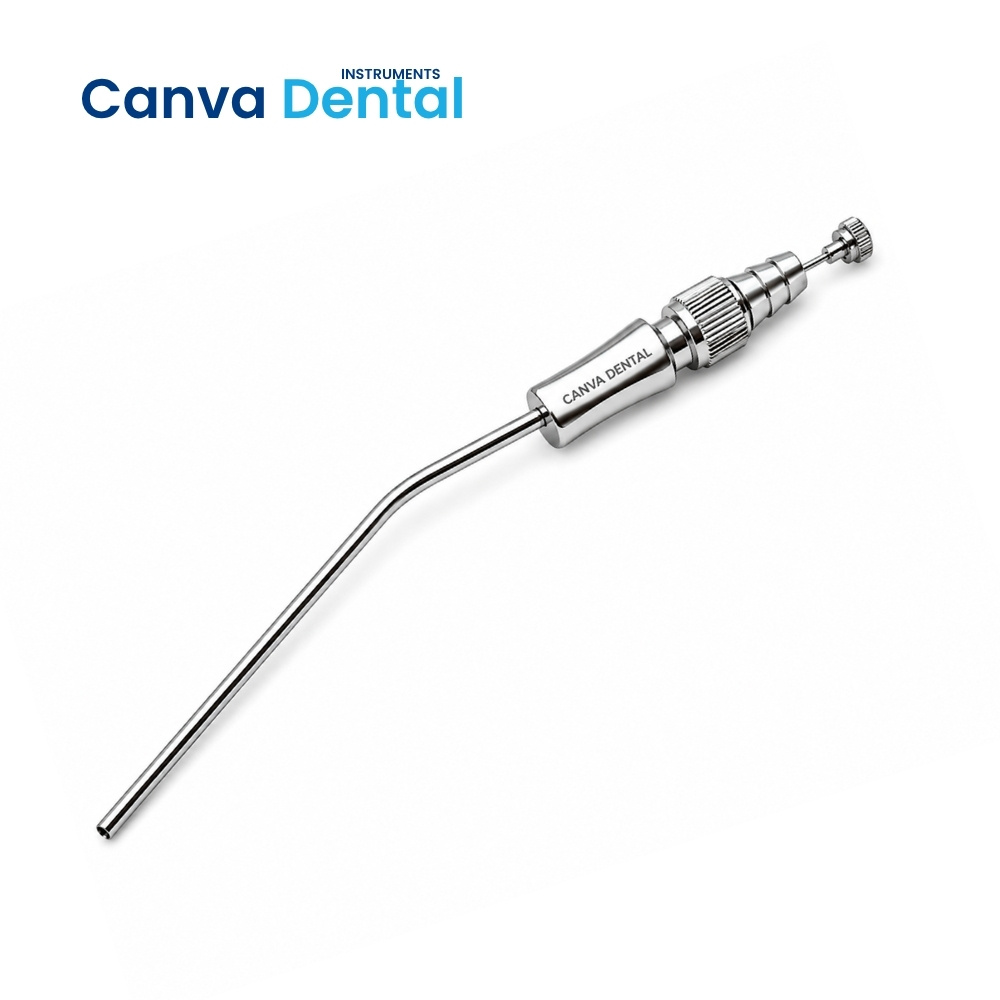
A Frazier Suction Tip is one of the most important fluid management instruments in oral surgery and dental practice. Oral surgeons, dental teams, and surgical assistants rely on this instrument to remove blood, irrigant, saliva, and debris from the surgical field rapidly and precisely — maintaining the clear operative visibility that every surgical procedure depends on. Without effective suction management, blood and fluid accumulation obscures the surgical site, extends procedure time, and increases the risk of procedural complications at every step.
In addition to clearing fluids, the Frazier Suction Tip gives the surgical assistant a level of directional control that standard dental suction cannulas cannot match. Its narrow, angled design reaches posterior and deep surgical sites where conventional suction tips lack the geometry for precise placement. As a result, dental teams performing extractions, implant surgery, bone grafting, and flap procedures consistently prefer the Frazier tip over wider suction alternatives throughout the surgical procedure.
A Frazier suction tube is a thin, rigid, angled suction cannula with a characteristic thumb-controlled vent port that allows the operator to regulate suction intensity without disconnecting from the suction line. The tube connects to the dental or surgical suction unit through a standard connector, and the assistant controls flow by placing a thumb over or lifting it from the thumb vent — a simple mechanism that provides immediate, precise suction modulation at the surgical site.
The Frazier suction tube takes its name from Dr. Charles Harrison Frazier, an American neurosurgeon who developed this narrow suction design originally for neurosurgical procedures requiring precise fluid removal in confined, delicate operative fields. Over time, the design transferred into oral and maxillofacial surgery — and subsequently into general dental surgical practice — because the same narrow-tube precision that served neurosurgery equally serves the confined anatomy of the oral cavity and dental surgical sites.
The thumb vent is the defining functional feature that separates the Frazier Suction Tip from standard suction cannulas. When the assistant’s thumb covers the vent port completely, the full suction force of the unit draws through the tip — removing blood and irrigant rapidly at maximum flow rate. Lifting the thumb partially from the vent reduces suction intensity proportionally, allowing gentle fluid management near delicate structures without the tissue trauma that full suction force causes at surgical wound margins.
This modulation capability matters considerably during implant irrigation and membrane placement, where full suction force would displace bone grafting material or collapse the membrane. Moreover, it protects the wound margins from being drawn against the suction tip — a phenomenon known as tissue invagination — that causes mucosal trauma and postoperative discomfort when suction force cannot be reduced quickly at the clinical site.
Each Frazier Suction Tip in our range delivers the precision, material quality, and connector compatibility that surgical teams require consistently across all procedure types:
Frazier Suction Tip sizes follow the French gauge system — a standardised measurement where each French unit equals 0.33mm of outer diameter. Consequently, a higher French number indicates a wider tube and greater suction capacity, while a lower number provides finer, more precise suction in smaller surgical spaces. Selecting the correct size for each procedure balances fluid removal speed against tissue access requirements:
| French Gauge | Outer Diameter | Suction Capacity | Best Clinical Use |
|---|---|---|---|
| Fr 3 | ~1.0 mm | Low | Microsurgical and fine endodontic irrigation removal |
| Fr 5 | ~1.7 mm | Moderate-low | Anterior oral surgery, delicate flap procedures |
| Fr 7 | ~2.3 mm | Moderate | General oral surgery, extraction site debridement |
| Fr 9 | ~3.0 mm | Moderate-high | Implant surgery, bone grafting, sinus lift procedures |
| Fr 10 | ~3.3 mm | High | Standard oral surgical procedures — most commonly used |
| Fr 12 | ~4.0 mm | Very high | Heavy bleeding control, maxillofacial surgical procedures |
The full range of Frazier suction tip uses extends across oral surgery, implantology, endodontics, and periodontal surgery — wherever precise, directionally controlled fluid removal improves surgical field clarity and procedural safety. Although extraction site haemorrhage control is its most common dental application, Frazier suction tip uses cover a significantly broader clinical spectrum:
In Frazier suction tip oral surgery applications, the difference between precise suction and general suction directly affects how efficiently the surgeon works and how safely the procedure proceeds. Standard dental suction cannulas — with their wide, blunt tips — remove fluid effectively from open spaces but cannot reach the narrow angles, deep sockets, and confined flap pockets where surgical bleeding and irrigant accumulate most problematically.
The Frazier tip’s narrow diameter fits into a molar extraction socket, under a raised mucoperiosteal flap, and alongside an implant osteotomy in ways that no standard suction cannula can replicate. Therefore, the surgical assistant can maintain a consistently clear operative field throughout every procedure stage — eliminating the repeated interruptions for visibility recovery that standard suction cannot prevent in confined surgical sites.
Faster suction delivery also reduces total anaesthetic volume requirements. When the surgical field remains clear, the surgeon operates more quickly, reducing the procedure duration within the anaesthetic window. Consequently, fewer top-up injections are needed, patient comfort improves, and postoperative recovery is measurably shorter compared to procedures extended by poor fluid management.
The rounded tip aperture of the Frazier Suction Tip prevents the mucosal invagination that occurs when full suction force contacts soft tissue directly. In addition, the thumb vent allows immediate suction reduction when the tip approaches a wound margin or delicate tissue structure — a protection that standard suction cannulas without vent control cannot provide. For this reason, oral surgeons and their assistants specifically prefer the Frazier design in procedures where surgical margins and grafting materials require protection from inadvertent suction trauma.
Several suction instruments serve different roles in dental and surgical practice. Understanding how the Frazier Suction Tip compares to other suction designs helps dental teams build a complete suction instrument inventory that covers all clinical scenarios:
| Instrument | Tip Diameter | Thumb Control | Best Use | Limitation vs Frazier |
|---|---|---|---|---|
| Frazier Suction Tip | 1–4 mm | Yes — thumb vent | Oral surgery, implants, confined sites | — |
| High-Volume Evacuator (HVE) | 8–10 mm | No | General operative dentistry, composites | Too wide for surgical sites — no suction control |
| Saliva Ejector | 4–5 mm | No | Low-volume saliva removal during crown work | Insufficient suction power for surgical haemorrhage |
| Yankauer Suction | 6–8 mm | No | Oropharyngeal secretion clearance — medical use | Too wide and blunt for intraoral surgical precision |
| Pool Suction Tip | 3–4 mm | No | General dental — amalgam and composite procedures | No vent control — cannot modulate suction intensity |
| Endodontic Suction Needle | 0.5–1 mm | No | Pulp chamber irrigant removal | Too fine for surgical haemorrhage — limited flow |
Therefore, the Frazier Suction Tip occupies a specific and irreplaceable niche between the fine endodontic suction needle and the wide HVE tip — providing surgical-grade suction precision with vent-controlled intensity that no other standard dental suction instrument delivers.
Effective Frazier Suction Tip use begins with correct assistant positioning. The surgical assistant holds the instrument in a pen-like grip between the thumb and index finger, with the thumb resting over the vent port at all times — ready to modulate suction without repositioning the hand. Approaching the surgical site from the contralateral side of the surgeon’s working hand prevents instrument crossing and maintains each team member’s unobstructed view of the operative field simultaneously.
The tip should rest at the dependent lowest point of the surgical site — where blood and fluid pool naturally under gravity — rather than being held above the wound margin and chasing fluid reactively. Proactive suction placement at the lowest anatomical point maintains a consistently dry field with less tip movement and fewer visual interruptions for the surgeon throughout each procedure stage.
During heavy bleeding or copious irrigation removal, covering the thumb vent completely applies full suction intensity — removing fluid rapidly from the surgical site. However, when the tip approaches wound margins, graft material, or a raised flap edge, partially lifting the thumb reduces suction intensity to a gentle draw — removing only fluid without aspirating tissue or graft particles. In addition, lifting the thumb completely from the vent stops suction entirely, allowing the assistant to reposition the tip without creating tissue movement from residual suction force during repositioning.
All stainless steel Frazier Suction Tips in our range withstand repeated autoclave cycles at 134°C without tube deformation, vent port damage, or connector corrosion. However, blood clot and irrigant residue accumulate inside the internal bore after every procedure — making thorough cleaning before sterilization an essential and non-negotiable maintenance step.
Flushing the tube immediately after use with clean water prevents blood from drying and adhering to the internal bore surface. In addition, pipe cleaners or dedicated suction tube brushes should pass through the bore before ultrasonic cleaning to dislodge any particulate matter that water flushing alone cannot remove. Ultrasonic cleaning before autoclaving then removes residual organic material from both the bore and the thumb vent mechanism — preserving smooth internal airflow and consistent suction performance across many sterilization cycles.
We supply Frazier Suction Tips — in stainless steel across French gauge sizes Fr 5 through Fr 12 — to oral surgery departments, implant centres, general dental clinics, maxillofacial surgery units, teaching hospitals, and instrument distributors across Lahore, Karachi, Islamabad, Multan, Peshawar, Faisalabad, Rawalpindi, and all major cities in Pakistan. Moreover, our institutional supply team handles bulk procurement for dental colleges and hospital surgical departments at competitive pricing.
Contact our team for current Frazier Suction Tip pricing in Pakistan, available gauge sizes, and delivery timelines for your clinic or institution.
Q: What is a Frazier Suction Tip used for in dentistry?
A Frazier Suction Tip removes blood, irrigant, saliva, and debris from surgical sites during oral surgery, implant procedures, endodontic surgery, and periodontal flap operations. Primary Frazier suction tip uses include extraction socket haemorrhage control, implant osteotomy irrigation removal, third molar surgical site management, apicoectomy debridement, sinus lift fluid management, and bone graft site preparation.
Q: What makes the Frazier Suction Tip different from a standard dental suction tip?
The Frazier Suction Tip differs from standard dental suction in two critical ways. First, its narrow French gauge diameter provides access to posterior sockets, deep flap pockets, and implant osteotomies where standard HVE tips are too wide to reach the fluid accumulation point.
Q: What size Frazier Suction Tip should I use for general oral surgery?
For most general oral surgical procedures — including standard extractions, implant placement, and minor flap surgery — the Fr 9 or Fr 10 Frazier suction tip sizes provide the best balance of fluid removal capacity and tip precision.
Q: How do I prevent the Frazier Suction Tip bore from blocking during surgery?
Preventing bore blockage requires three practices. First, maintain continuous suction movement rather than holding the tip stationary against a bleeding point — stationary placement allows clot to form around the tip aperture. Second, briefly release the thumb vent momentarily if suction resistance increases, then reapply — this dislodges early clot formation before a complete blockage develops.
Q: Is the Frazier Suction Tip autoclavable?
Yes. All stainless steel Frazier Suction Tips in our range withstand autoclave sterilization at 134°C. However, thorough cleaning of the internal bore before autoclaving is essential — flush the tube with water immediately after use, then use a suction tube brush and ultrasonic cleaning before the sterilization cycle. Autoclaving without prior bore cleaning hardens any residual blood inside the tube permanently, reducing suction capacity.
For complete clinical setups, explore all dental instruments here: CLICK
| Diameter | 2mm, 3mm, 4mm |
|---|
Reviews
There are no reviews yet.