



₨280
An Endo Ring is one of the most essential chairside measurement instruments in endodontic practice. Endodontists and general dentists performing root canal treatment use this instrument to mark, measure, and track the working length of endodontic files throughout every stage of canal preparation. Because accurate working length control directly determines whether canal instrumentation stays within the root — preventing apical transportation, ledge formation, and instrument separation — the Endo Ring remains a fundamental component of every endodontic instrument setup worldwide.
In addition to working length marking, the Endo Ring provides an organised, hygienic chairside platform for sequencing multiple files during canal shaping. As a result, clinicians maintain a clear, systematic file order throughout the entire instrumentation sequence without contaminating files by placing them loose on the bracket table or instrument tray.
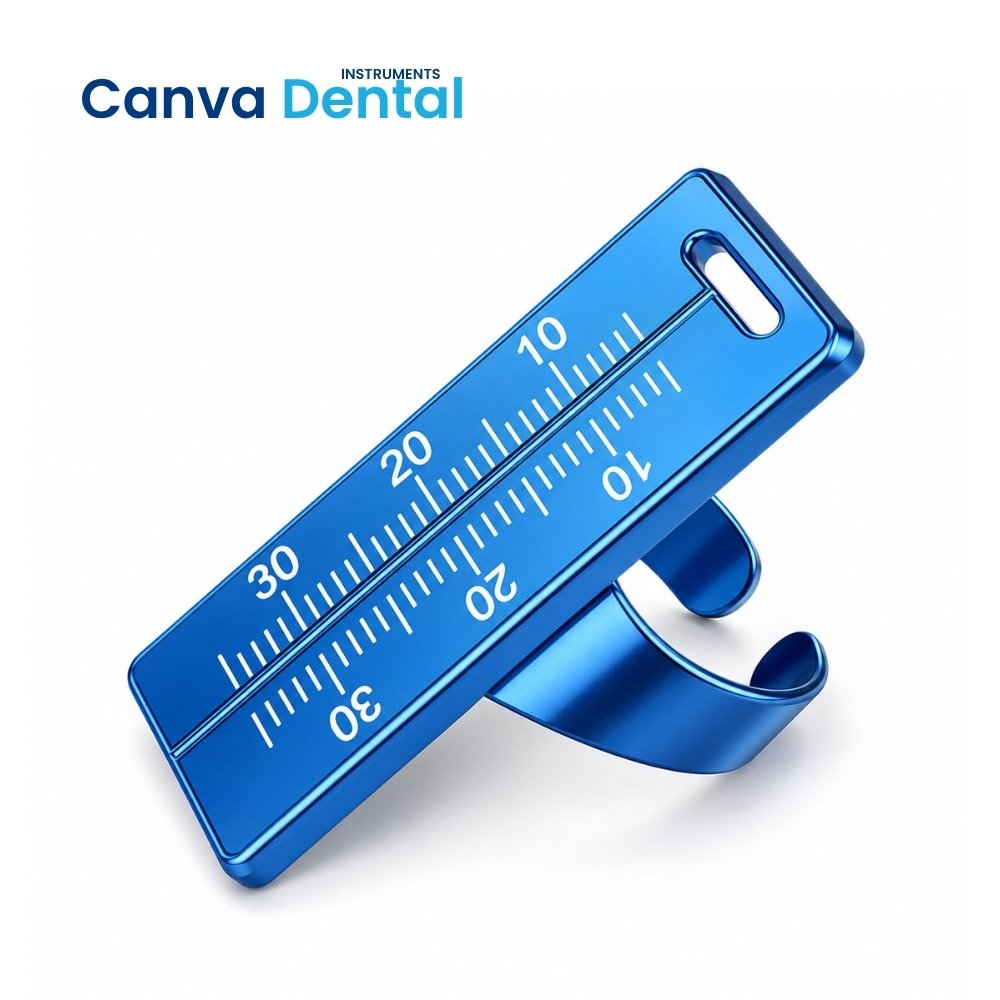
An endodontic ring dental instrument — commonly called an endo ring — is a finger-worn measuring and file organisation device that sits on the clinician’s finger during root canal procedures. The ring body carries a millimetre ruler along its length, allowing the clinician to set rubber or silicone file stop positions directly against the ruler markings and confirm working length at every file change without reaching for a separate measuring device.
The endodontic ring dental design integrates two functions into one wearable instrument — a calibrated length measurement reference and a file holder — keeping both immediately accessible on the clinician’s own hand throughout the entire canal preparation procedure. Consequently, file changes become faster, working length verification becomes more consistent, and the risk of accepting an incorrect file length decreases significantly compared to working without a chairside measurement reference.
Traditional endodontic millimetre rulers are flat metal or plastic strips placed on the bracket table beside the procedure field. Although these rulers provide accurate measurements, the clinician must pick up and put down the ruler at every file change — a repetitive action that slows the procedure and increases the risk of placing files at slightly different lengths each time. The Endo Ring eliminates this workflow interruption by keeping the ruler on the clinician’s finger throughout the procedure, making working length verification an integrated step rather than a separate action at every file exchange.
Each Endo Ring in our range combines accurate millimetre calibration, comfortable wearability, and file retention functionality that intensive endodontic practice demands:
The finger ruler component of the Endo Ring is a calibrated millimetre scale engraved or printed along the ring body — positioned so the clinician can read file stop positions directly against the scale markings while holding the file in the same hand. This integrated measurement approach defines the finger ruler concept: the measurement reference travels with the clinician’s hand rather than sitting separately on the bracket table.
When the endodontist determines the working length — typically through electronic apex locator reading confirmed by periapical radiograph — the clinician sets a rubber file stop on the endodontic file at the measured length in millimetres. The finger ruler scale then allows immediate verification of this stop position by placing the file tip at the zero reference and reading the stop position against the engraved scale markings on the ring body.
Therefore, every subsequent file change during canal shaping uses the same finger ruler reference to confirm that the new file carries its stop at the identical working length before insertion into the canal. This continuous verification at every file change is the core clinical value that the finger ruler provides — catching stop displacement errors before the file enters the canal rather than after apical transportation has already occurred.
Most finger ruler designs provide millimetre markings in 1mm increments from 15mm through 30mm — the range covering virtually all clinical working lengths in adult teeth. However, some premium designs include 0.5mm intermediate markings for cases where precise working length falls between whole millimetre values. In addition, the engraved scale on stainless steel and aluminium ring bodies maintains full legibility after autoclaving — unlike printed plastic rulers that fade progressively with each sterilization cycle.
Understanding the full range of endo ring uses helps endodontists and general dentists apply this instrument most effectively across every stage of root canal treatment. Although working length file stop verification is the primary application, endo ring uses extend across the entire endodontic appointment from initial file selection through final canal preparation:
he distance from a coronal reference point to the apical foramen or a defined apical stop — is the most critical measurement in root canal treatment. Every instrumentation decision, irrigation depth, medicament placement, and obturation length depends directly on this single measurement being accurate and consistently reproduced throughout the entire procedure.
When working length extends beyond the apical foramen — a condition called over-instrumentation — files and irrigants exit the root apex into the periapical tissues. As a result, sodium hypochlorite extrusion causes chemical burns to periapical bone and soft tissue, instrument tips may separate beyond the foramen where retrieval is impossible, and chronic periapical irritation can develop even after obturation. Conversely, when working length falls short of the foramen — under-instrumentation — the apical portion of the canal remains uninstrumented, harbouring bacterial biofilm that the obturation material subsequently seals inside the root rather than eliminating.
Therefore, the Endo Ring’s working length measurement tool function directly prevents both error types — by keeping the verified working length immediately accessible on the clinician’s hand throughout every file change and providing a rapid visual check that costs less than two seconds per file exchange.
Modern endodontic practice combines electronic apex locator readings with radiographic confirmation to determine working length with the highest possible accuracy. However, the apex locator determines the measurement only once — or at most a few times during the procedure. The Endo Ring then maintains and communicates that measurement at every subsequent file change throughout the entire canal preparation sequence. Consequently, these two instruments complement each other perfectly — the apex locator provides the accurate measurement, and the endodontic ring dental working length reference ensures that measurement transfers correctly to every file used during shaping.
Several measurement approaches exist for tracking working length during root canal treatment. Understanding how the endo file ruler dental function compares to alternative methods helps clinicians appreciate the unique chairside workflow advantage that the Endo Ring delivers:
| Method | Instrument | Chairside Speed | Limitation vs Endo Ring |
|---|---|---|---|
| Endo Ring / Finger Ruler | Worn on finger | Immediate — always accessible | — |
| Flat Millimetre Ruler | Bracket table ruler | Moderate — must pick up and put down | Separate handling at every file change |
| Endodontic Gauge Block | Tabletop gauge | Moderate | Fixed position — not hand-accessible |
| Rubber Stop Only | Stop on file | Fast — no verification | No reference check — stop can displace unnoticed |
| Electronic Apex Locator | Electronic unit | Slow — per measurement | One-time reading only — not file-by-file |
| Radiographic Length | X-ray unit | Very slow — requires exposure | Radiation dose — not practical per file |
Therefore, the Endo Ring occupies an irreplaceable position in the endodontic workflow — providing immediate, zero-delay working length verification at every file change that no alternative measurement method can match for chairside speed and procedural integration.
Before the procedure begins, the clinician places the Endo Ring on the index finger of the non-dominant hand — the same hand that typically holds the mouth mirror during endodontic procedures. Loading the sponge pad with files in ascending size sequence before the appointment begins ensures the correct file is immediately available at each shaping stage without interrupting the procedure flow to locate individual files.
In addition, marking the sponge zones with a sterile pen for different canals in multi-rooted teeth prevents cross-canal file contamination — a particularly important precaution in molars where mesial and distal canal microbiota differ significantly.
At each file change during canal preparation, the clinician removes the used file from the canal, places it in the used section of the sponge pad, selects the next file from the unused section, and immediately holds the new file against the finger ruler scale to confirm the rubber stop sits at the established working length. This verification takes less than three seconds and adds no meaningful time to the procedure. However, skipping this check at even a single file change removes the safety net that prevents incremental stop displacement — a cumulative error that only becomes apparent when canal transportation or an apical perforation has already occurred.
All stainless steel and anodised aluminium Endo Ring bodies in our range withstand repeated autoclave cycles at 134°C without dimensional change, scale legibility loss, or band deformation. However, clinicians should inspect the millimetre scale markings before each procedure — faded or worn scale markings on older ring bodies require instrument replacement rather than continued use with estimated readings, since measurement inaccuracy at the working length reference level directly compromises canal preparation outcomes.
In addition, the ring band should sit comfortably on the clinician’s finger without constriction during the gloved procedure — a ring that fits too tightly under a glove causes discomfort and reduces fine tactile sensitivity during file manipulation. Therefore, confirming correct ring size with a glove in place before purchasing is strongly recommended for clinicians ordering replacement rings.
Furthermore, ultrasonic cleaning of the metal ring body before autoclaving removes dentine dust and irrigant residue from the scale engraving grooves — preserving both measurement legibility and sterilization penetration into the engraved surface over the instrument’s clinical working life.
Similarly, many healthcare professionals follow hygiene and sterilization guidance shared by the American Dental Association regarding clinical safety and surgical instrument maintenance.
We supply Endo Rings — in stainless steel and anodised aluminium with rubber and silicone sponge pad options, in standard and adjustable finger sizes — to endodontic practices, general dental clinics, dental teaching hospitals, and instrument distributors across Lahore, Karachi, Islamabad, Multan, Peshawar, Faisalabad, Rawalpindi, and all major cities in Pakistan. Moreover, our institutional supply team handles bulk procurement for dental college endodontic departments and hospital dental units at competitive pricing.
Contact our team for current Endo Ring pricing in Pakistan, available designs and sponge pad replacement options, and delivery timelines for your clinic or institution.
Q: What is an Endo Ring used for in root canal treatment?
An Endo Ring serves two simultaneous functions during root canal treatment. First, its sponge pad organises endodontic files in size sequence on the clinician’s finger — keeping files accessible, ordered, and separated by use status throughout the entire canal preparation procedure. Second, its integrated finger ruler scale provides an immediate working length reference at every file change — allowing the clinician to verify rubber stop position against the established working length before each file enters the canal. Together, these endo ring uses make canal preparation faster, more organised, and measurably safer.
Q: What is the difference between an Endo Ring and a flat millimetre ruler?
A flat millimetre ruler sits separately on the bracket table and requires the clinician to pick it up and put it down at every file change — a repetitive action that slows the procedure and introduces an opportunity for stop position reading errors.
Q: How does the finger ruler on the Endo Ring work?
The finger ruler is a millimetre scale engraved along the Endo Ring body, typically running from 15mm to 30mm. At each file change, the clinician holds the file tip at the zero reference point of the scale and reads the rubber stop position against the engraved markings — confirming the stop sits at the established working length before inserting the file into the canal.
Q: Can the Endo Ring sponge pad be sterilized?
The metal Endo Ring body autoclaves safely at 134°C and reuses across many patient procedures.
Q: Is the Endo Ring suitable for both manual and rotary file systems?
Yes. The Endo Ring works equally with hand files — K-files, H-files, reamers — and with rotary NiTi file systems including ProTaper, WaveOne, Reciproc, and equivalent designs. Rotary files benefit particularly from the sponge pad organisation function, since rotary systems use multiple taper-specific files in a defined sequence where incorrect size selection mid-procedure causes significant canal preparation errors.
For complete clinical setups, explore all dental instruments here: CLICK
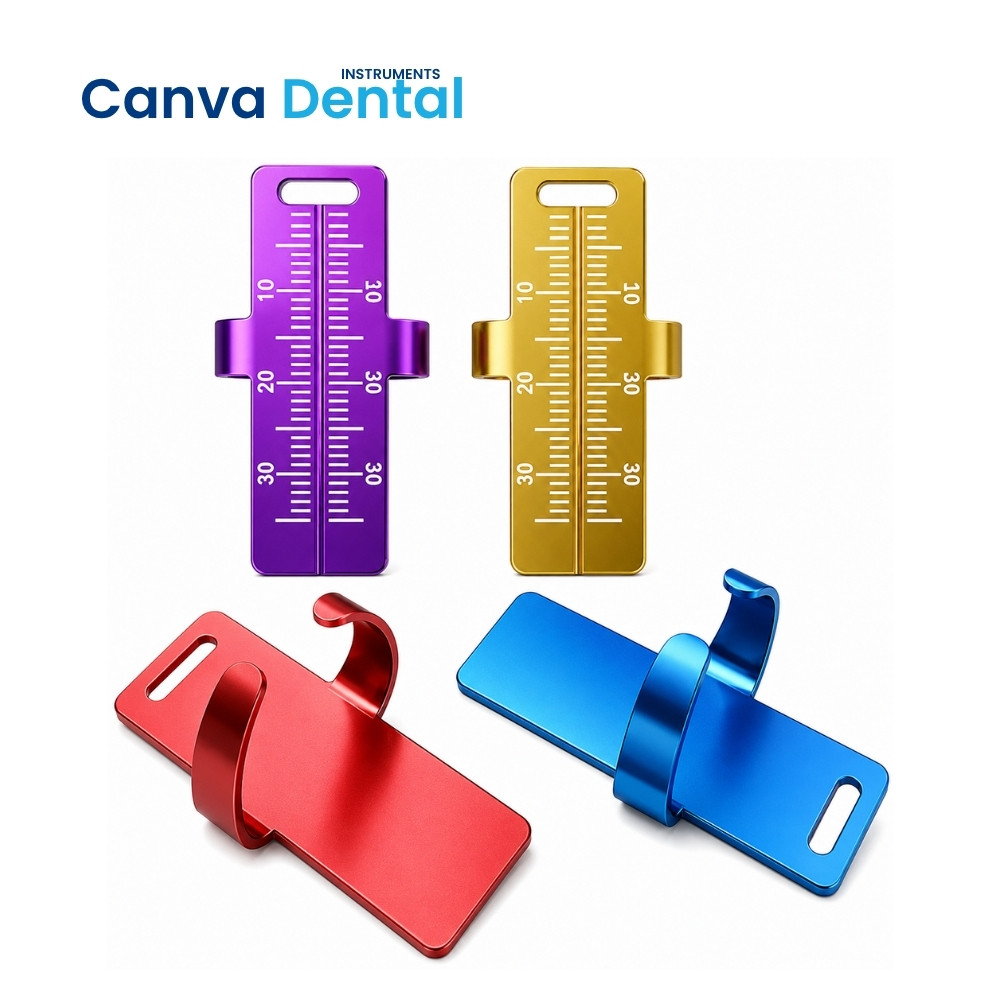
| Color | Pink, Blue, Golden, Purple, Red |
|---|
Reviews
There are no reviews yet.