



₨1,200
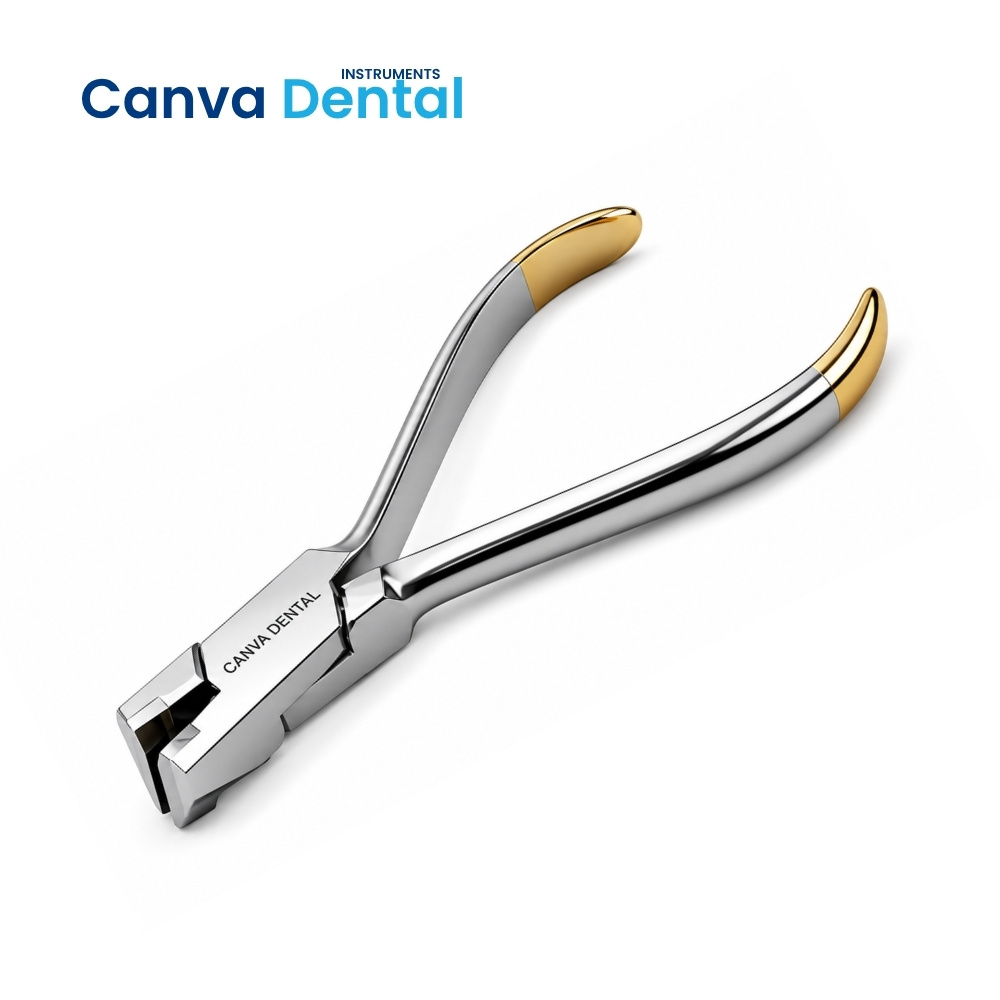
The Distal End Wire Cutter is an essential instrument in every orthodontic practice. Clinicians use it to trim excess archwire at the distal end of the last bracket tube. This cut prevents sharp wire ends from irritating or injuring the patient’s cheek. Because patient comfort and tissue safety depend on accurate wire trimming, every orthodontic adjustment tray must include a quality distal end cutter.
Furthermore, the Distal End Wire Cutter performs this task in a confined space. The molar region limits access. Standard wire cutters cannot reach the distal end cleanly. As a result, the dedicated distal end cutter uses a long, angled nose that accesses tight posterior spaces without disturbing the archwire position or adjacent brackets.
A distal end cutter dental instrument is a specialised orthodontic plier. It trims the excess archwire extending beyond the last molar tube. Specifically, the cutting blades sit at the end of a long narrow nose. This nose angles into the posterior buccal corridor without bending the archwire.
Moreover, the distal end cutter dental design differs from a general wire cutter. A general cutter places the blades mid-handle. This position limits intraoral reach. In contrast, the distal end cutter places the blades at the very tip of an extended nose. Consequently, the clinician cuts flush against the molar tube without the instrument body contacting adjacent teeth.
Specifically, using standard scissors or utility wire cutters for distal trimming creates two problems. First, the bulk of the instrument body contacts adjacent teeth. This prevents flush cutting. Second, the cut wire end pings off unpredictably. It can lodge in the gingiva or the throat. Therefore, a dedicated Distal End Wire Cutter solves both problems simultaneously. It reaches the correct position and controls the cut wire end.
Furthermore, standard orthodontic wire cutters cut wire at any point along the arch. They suit mid-arch trimming and ligature cutting. However, they cannot access the distal end of the last molar tube cleanly. Moreover, standard cutters lack a wire-hold mechanism. The cut wire end flies free after cutting. As a result, the Distal End Wire Cutter is always a separate, dedicated instrument. It does not replace the standard wire cutter on the tray.
Specifically, the orthodontic distal end cutting plier uses a long, narrow nose. This nose extends 20–30 mm beyond the hinge joint. The cutting blades sit at the very tip of the nose. This geometry allows the blades to reach the distal end of a molar tube. The handle remains outside the mouth during cutting.
Moreover, the nose angles slightly downward on most designs. This angle matches the natural approach direction to the lower molar region. Furthermore, upper arch variants use an upward-angled nose. As a result, upper and lower arch cutting positions both allow a comfortable, controlled cutting grip without awkward wrist rotation during the trim.
Furthermore, the cutting blades of the distal end cutter are flush-cut or semi-flush-cut. Flush-cut blades produce a flat wire end with no sharp bevel. This flat end reduces soft tissue irritation after cutting. In contrast, non-flush blades leave a small bevel on the cut wire end. Therefore, flush-cut distal end cutters produce a safer wire end. Most orthodontic practices prefer flush-cut designs for routine chairside use.
Specifically, blade hardness determines service life. High-carbon stainless steel blades cut stainless steel archwires cleanly over hundreds of cutting cycles. However, NiTi archwires are harder than stainless steel. Cutting NiTi wires blunts carbon steel blades faster. Moreover, some NiTi wires shatter rather than cut — scattering metal fragments. As a result, always use a dedicated NiTi wire cutter on NiTi archwires. Reserve the standard distal end cutter for stainless steel wires.
The safety hold wire cutter is the most clinically important distal end cutter variant. It adds a wire-holding mechanism to the cutting nose. Specifically, a small spring clip or grip pocket on the nose captures the cut wire end. This prevents the trimmed piece from falling into the patient’s mouth. Furthermore, the held fragment is visible and retrievable immediately after the cut. Consequently, the safety hold wire cutter is the recommended choice for all distal end trimming in routine orthodontic practice.
Specifically, every Distal End Wire Cutter in our range uses surgical-grade stainless steel throughout. High-carbon steel cutting blades maintain sharpness over hundreds of cutting cycles. Furthermore, all instruments withstand autoclave sterilization at 134°C in pre-vacuum cycles. The blade alignment and spring tension remain consistent across repeated sterilization. As a result, our cutters deliver clean, flush cuts from the first use through the full instrument service life.
Specifically, archwire cutter orthodontic instruments classify by nose geometry, blade type, and wire compatibility. Consequently, selecting the correct cutter for each task prevents blade damage and wire fragmentation during trimming:
| Cutter type | Nose design | Wire type | Key feature |
|---|---|---|---|
| Standard Distal End Wire Cutter | Long straight nose, flush blades | Stainless steel archwires | Flush cut — no wire-hold mechanism |
| Safety-Hold Distal End Cutter | Long nose + wire clip | Stainless steel archwires | Holds cut fragment — prevents aspiration risk |
| NiTi Wire Cutter | Short straight nose, hardened blades | Nickel-titanium archwires | Carbide or hardened blades resist NiTi hardness |
| Universal Wire Cutter | Short mid-handle blades | Ligatures, stainless wires | Mid-arch cuts only — not for distal end access |
| Long-Nose Ligature Cutter | Extended nose, small blades | Stainless and elastic ligatures | Accesses posterior ligatures — smaller blades |
Therefore, a complete orthodontic wire cutting tray setup includes at minimum a safety-hold Distal End Wire Cutter for stainless archwires, a separate NiTi wire cutter, and a universal wire cutter for ligature work. Each serves a distinct cutting task.
Moreover, distal end cutters are available in upper-arch and lower-arch nose angle variants. The upper-arch variant angles slightly upward. This suits the approach angle to the upper molar tube from below. The lower-arch variant angles slightly downward. This matches the approach to the lower molar from above. As a result, using the correct arch variant produces a more comfortable grip. It also places the blades more accurately against the tube end without awkward wrist angulation.
Specifically, the distal end cutter orthodontics instrument serves these clinical applications across all fixed appliance appointment types:
The wire trimming instrument orthodontic exists for one primary patient safety reason. A sharp archwire end protruding beyond the molar tube causes soft tissue ulceration. Specifically, the buccal mucosa contacts the wire end with every chewing movement. This repetitive contact produces a painful traumatic ulcer. The ulcer worsens with every meal. As a result, correct distal wire trimming at every archwire insertion appointment is a fundamental patient safety step.
Moreover, patients often present as emergencies because of a wire end. This appointment is avoidable. Furthermore, untrimmed wire ends erode patient confidence in the practice. They also increase treatment discomfort reports. Therefore, using a dedicated Distal End Wire Cutter — not scissors or general wire cutters — at every archwire insertion is the standard of clinical care in orthodontic practice.
Specifically, the cut wire fragment represents a swallowing and aspiration hazard. The fragment is 3–8 mm long. It is metallic, sharp, and difficult to locate visually after cutting. Furthermore, it can enter the pharynx instantly if not controlled. As a result, the safety-hold Distal End Wire Cutter is not merely a convenience feature. It is a direct patient safety upgrade over the standard design. Consequently, every orthodontic practice should use safety-hold variants as standard for all routine archwire trimming.
Furthermore, a sharp blade cuts wire cleanly in one action. The wire end is flat and smooth. In contrast, a blunt blade crushes the wire end rather than cutting it. This produces a jagged, spiked wire end. That end is more traumatic to soft tissue than an untrimmed wire. Moreover, blunt blades require greater closing force. This extra force risks blade misalignment at the hinge. As a result, blade sharpness is a clinical quality issue — not merely a maintenance issue.
Several long nose wire cutter dental instruments and cutting pliers are used in orthodontic practice. Understanding how the Distal End Wire Cutter compares to each helps clinicians equip their trays correctly:
| Instrument | Nose length | Wire-hold | Best use | Limitation vs Distal End Cutter |
|---|---|---|---|---|
| Safety-Hold Distal End Cutter | Long — 20–30 mm | Yes — spring clip | All routine distal archwire trimming | — |
| Standard Distal End Cutter | Long — 20–30 mm | No | Distal trimming with suction backup | Free wire fragment — aspiration risk |
| Universal Wire Cutter | Short — mid-handle | No | Mid-arch wire and ligature cuts | Cannot reach last molar tube end |
| NiTi Wire Cutter | Short | No | Nickel-titanium archwire trimming only | Overkill for stainless steel wires |
| Scissors | None | No | Elastic ligature cutting only | Cannot cut metal wire cleanly |
Consequently, the safety-hold Distal End Wire Cutter is the only instrument that combines posterior reach, flush cutting, and wire fragment retention in a single tool. No alternative provides all three functions together. Therefore, it is the correct primary choice for every routine archwire trimming task.
Before cutting, confirm the archwire is fully seated in all bracket slots and molar tubes. An unseated wire shifts position after cutting. This leaves a sharp end at the wrong length. Furthermore, confirm adequate retraction of the buccal mucosa. The cheek must be clear of the cutting zone. A dental mirror or cheek retractor achieves this. Select the correct nose angle variant — upper arch or lower arch — before approaching the cutting zone.
Because the Distal End Wire Cutter contacts saliva and oral tissue at every adjustment appointment, correct sterilization between patients is mandatory. All stainless steel distal end cutters in our range withstand autoclave sterilization at 134°C in pre-vacuum cycles. Furthermore, the spring hinge maintains blade alignment and opening tension across hundreds of autoclave cycles without loosening.
Moreover, ultrasonic pre-cleaning is essential before autoclaving. Wire metal particles and saliva collect in the blade junction and the safety-hold clip mechanism. Place the open instrument in an enzyme-based ultrasonic solution for 10 minutes after each appointment. Rinse thoroughly and dry completely before bagging and autoclaving. As a result, consistent pre-cleaning prevents metal particle accumulation that blunts blades and impairs the safety-hold spring mechanism over time.
However, always test blade sharpness before each appointment. Close the cutter on a scrap stainless steel wire segment. A sharp cutter severs the wire in a single smooth closure. A blunt cutter requires two or more closures or leaves a crushed end. Furthermore, confirm the blades close evenly — uneven closure indicates hinge wear or blade deformation. Replace the instrument if blades fail the sharpness test or close unevenly. Similarly, dental professionals follow sterilization guidance from the American Dental Association for all orthodontic instruments.
Our Distal End Wire Cutter range — including safety-hold variants, standard long-nose designs, upper-arch and lower-arch angle options, and NiTi-compatible wire cutters — supplies orthodontic specialist clinics, general dental practices with orthodontic services, teaching hospitals, and dental instrument distributors across Lahore, Karachi, Islamabad, Multan, Peshawar, Faisalabad, Rawalpindi, and all major cities in Pakistan. Furthermore, orthodontic departments at the University of Health Sciences Lahore, Dow University of Health Sciences Karachi, and Nishtar Medical University Multan use our wire cutting instruments in undergraduate and postgraduate orthodontic training sessions.
Because our instruments come from Sialkot — Pakistan’s internationally recognised dental instrument manufacturing hub — they carry the blade precision, spring reliability, and sterilization durability that institutional buyers and export clients require. Contact our team for current Distal End Wire Cutter Pakistan pricing, available design variants, bulk quotations for orthodontic departments and dental colleges, and delivery timelines.
What is a Distal End Wire Cutter used for?
Specifically, the Distal End Wire Cutter trims the excess archwire end beyond the last molar tube. This cut prevents the wire end from poking the patient’s cheek. The instrument uses a long nose to reach the posterior cutting zone. Furthermore, the safety-hold variant captures the cut fragment. This prevents the fragment from entering the patient’s mouth. As a result, it is a safety instrument as much as a wire-trimming tool.
What is the difference between a safety-hold and standard distal end cutter?
The standard Distal End Wire Cutter trims the wire but does not hold the cut fragment. The fragment flies free after cutting. In contrast, the safety hold wire cutter adds a spring clip to the nose. This clip grips the wire before and during the cut. Consequently, the trimmed piece stays on the instrument after cutting. Therefore, the safety-hold design is always the better clinical choice. It eliminates the wire fragment aspiration risk that the standard design carries.
Can I use a regular wire cutter instead of a distal end cutter?
No — a regular wire cutter cannot reach the distal end of the molar tube effectively. Its blades sit mid-handle. The instrument body contacts the adjacent teeth before the blades reach the molar tube exit. Moreover, regular cutters lack a wire-hold mechanism. Furthermore, the blade geometry of a standard wire cutter does not produce a flush cut against the molar tube. As a result, a dedicated Distal End Wire Cutter is always necessary for this specific task.
Can the Distal End Wire Cutter cut NiTi archwires?
Specifically, standard carbon steel distal end cutters should not cut NiTi wires. NiTi is harder than stainless steel. It blunts standard blades rapidly. Moreover, NiTi wires can shatter under cutting force — scattering metal fragments. Consequently, always use a dedicated NiTi wire cutter on nickel-titanium archwires. Reserve the standard Distal End Wire Cutter for stainless steel wires only. This protects both the instrument and the patient from metal fragment risk.
Is the Distal End Wire Cutter available in Pakistan?
Yes, Distal End Wire Cutter Pakistan supply is available through our direct sales team and authorised distributors in Lahore, Karachi, Islamabad, Multan, Peshawar, Faisalabad, and Rawalpindi. Because pricing in PKR depends on the design variant — safety-hold, standard, or upper/lower arch angle — and order quantity, contact our sales team for a current quotation. Bulk orders for orthodontic departments and dental colleges qualify for institutional pricing. Therefore, reach out for a tailored PKR price and delivery timeline.
Can the Distal End Wire Cutter be autoclaved?
Yes. All stainless steel Distal End Wire Cutters in our range withstand autoclave sterilization at 134°C in pre-vacuum cycles. Furthermore, ultrasonic pre-cleaning before each sterilization cycle removes metal particles and saliva from the blade junction and safety-hold clip. This preserves blade sharpness and clip spring function across repeated sterilization cycles. Our instruments maintain flush-cut blade precision and safety-hold clip performance throughout their full clinical service life.
For complete orthodontic instrument setups, explore all dental instruments here: CLICK
Reviews
There are no reviews yet.