



₨350
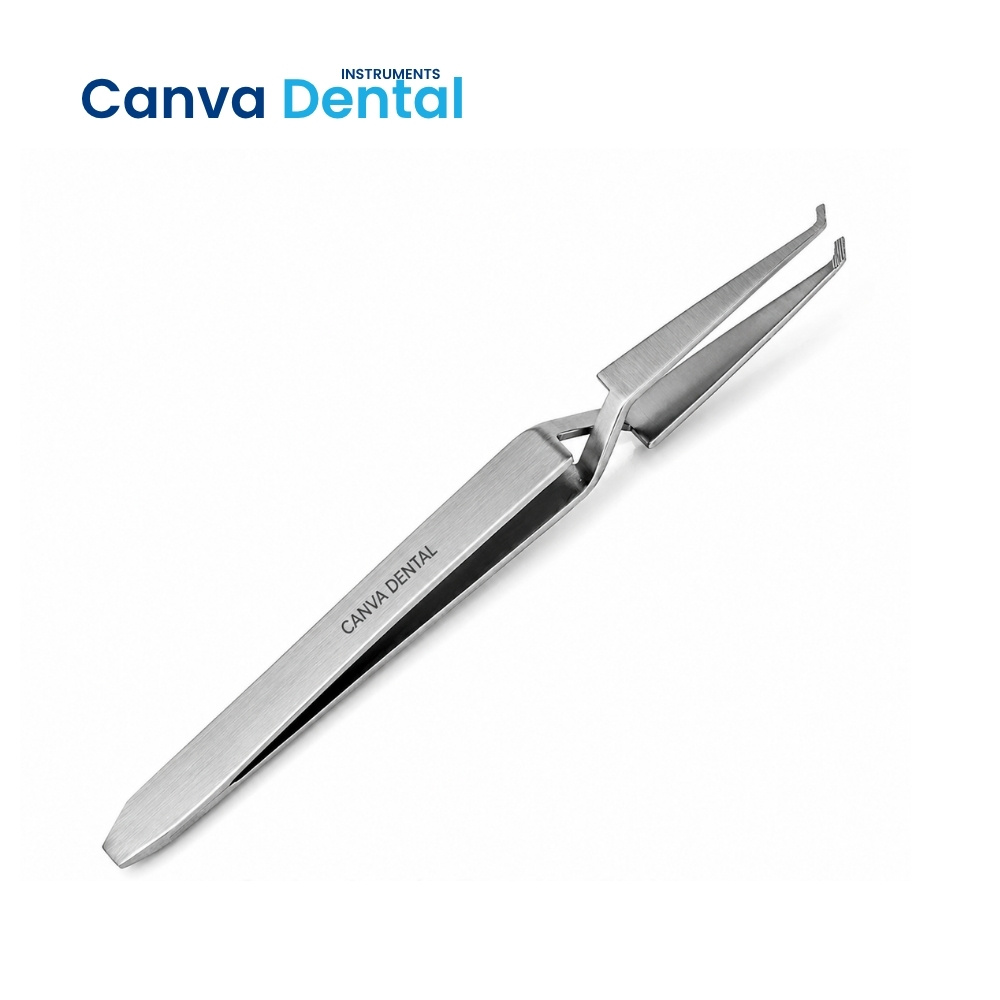
The Bracket Holder Orthodontic is an essential bonding instrument in every fixed appliance practice. Orthodontists and orthodontic assistants use it to grip, carry, and seat brackets onto prepared tooth surfaces. It keeps the bracket secure during placement. Because bracket position accuracy directly determines tooth movement quality, the bracket holder orthodontic is one of the most important instruments in the bonding appointment tray.
Furthermore, the bracket holder dental instrument protects both the bracket and the adhesive. It prevents finger contact with the bonding surface. It also keeps the bracket stable during the seating and light-curing steps. As a result, clinicians achieve more accurate and more reproducible bracket placement using a dedicated holder than with fingers or general tweezers.
A bracket holder dental instrument is a precision tweezers or forceps design. It grips an orthodontic bracket securely between two fine beaks. Specifically, the beaks engage the bracket wings or bracket body without touching the adhesive pad. This clean grip prevents contamination of the bonding base. Consequently, the adhesive surface remains uncontaminated from the tray to the tooth.
Moreover, the bracket holder dental instrument carries the bracket into the oral cavity. It places the bracket on the adhesive-coated tooth surface. The clinician then adjusts bracket position using the holder while the adhesive is still soft. As a result, the holder serves two distinct tasks — carrying and positioning — in one instrument.
Specifically, placing brackets with fingers introduces three problems. First, finger oils contaminate the adhesive pad. This reduces bond strength at the bracket base. Second, fingers lack the precision grip needed for fine bracket positioning. Third, gloved fingers are bulky. They obscure the clinician’s view of the bracket during seating. Therefore, a dedicated bracket holder orthodontic instrument solves all three problems in one step.
Furthermore, standard cotton tweezers cannot replace the bracket holder dental instrument. Cotton tweezers have broad, flat, serrated beaks. These beaks damage bracket wings. They also cannot engage the bracket in a stable, reproducible grip. In contrast, the bracket holder orthodontic uses narrow, precisely shaped beaks. These beaks match common bracket wing profiles. As a result, the bracket seats securely without rotation or slippage during placement and positioning.
Specifically, orthodontic tweezers differ from standard dental tweezers in beak geometry. Standard dental tweezers grip cotton rolls and dressings. Their beaks are wide and serrated. Orthodontic tweezers, however, grip small precision items. Their beaks are fine, smooth, and shaped to engage bracket wings without damaging them. Furthermore, orthodontic tweezers produce less spring force than dental tweezers. This gentler grip prevents bracket deformation during handling.
Moreover, orthodontic tweezers include several subtypes. The bracket holder orthodontic is the most common. It grips brackets during bonding. A ligature-placing tweezer is finer still — it handles elastomeric ligatures and modules. A band-seating tweezer has broader beaks for molar band handling. As a result, the orthodontic tweezers family covers multiple distinct tasks across the bonding and banding appointment workflow.
Specifically, non-locking orthodontic tweezers use a spring body. The beaks open when the clinician releases grip pressure. They close when the clinician squeezes. This spring action suits tasks requiring frequent bracket pickup and release. Furthermore, non-locking designs allow rapid single-hand operation. The clinician picks up a bracket, seats it, and releases without changing grip. Consequently, non-locking tweezers suit experienced operators with confident, fast bonding technique.
The locking bracket holder adds a ratchet or slide lock mechanism to the handle. Specifically, the lock engages after the beaks close on the bracket. The clinician then releases hand pressure. The bracket stays gripped without any squeezing effort. Furthermore, the lock frees both hands during the positioning step. One hand positions the bracket holder. The other hand uses the bracket positioning gauge to confirm height. As a result, the locking bracket holder is the preferred choice for operators using a two-hand bonding technique.
Specifically, every bracket holder orthodontic in our range uses surgical-grade stainless steel throughout. The steel grade provides corrosion resistance across hundreds of autoclave cycles. Furthermore, beak tips are precision-ground to a fine profile. This profile matches standard twin and self-ligating bracket wing dimensions. As a result, our holders produce a stable, non-damaging grip on all major bracket systems without tip modification.
Specifically, bracket placement tweezers classify by locking mechanism, beak profile, and arch position compatibility. Consequently, selecting the correct type improves bonding speed, accuracy, and bracket placement consistency across the full arch:
| Holder type | Mechanism | Beak design | Best for |
|---|---|---|---|
| Locking Bracket Holder | Ratchet or slide lock | Fine straight or curved | Two-hand bonding technique, gauge-confirmed placement |
| Non-Locking Spring Tweezers | Spring body, no lock | Fine straight | High-speed bonding, experienced single-hand technique |
| Posterior Curved Bracket Holder | Locking or spring | Curved angled beaks | Premolar and molar bracket access in restricted space |
| Self-Ligating Bracket Holder | Spring or locking | Narrow tip, fine profile | Self-ligating brackets with narrower wing profiles |
| Universal Bracket Tweezers | Spring body | Medium width, smooth | General use across multiple bracket system types |
Therefore, a complete bonding tray includes at least one locking bracket holder for anterior bracket placement with gauge confirmation. It should also include a curved posterior variant for premolar and molar bonding where straight beaks cannot access the bracket position cleanly.
Furthermore, self-ligating brackets require a finer beak profile. Their wing geometry is narrower than conventional twin brackets. Standard bracket holders may slip off the reduced wing surface. Therefore, a dedicated self-ligating bracket holder uses a narrow-tip beak. This tip engages the self-ligating bracket body rather than the wings. As a result, placement accuracy and grip security remain consistent across both conventional and self-ligating bonding appointments.
Specifically, the bracket bonding instrument serves these clinical applications across direct and indirect bonding procedures:
The bracket seating instrument quality directly affects bond failure rates. Specifically, an unstable grip causes the bracket to shift during adhesive seating. This shift leaves a void beneath the bracket base. Voids reduce bond strength significantly. As a result, brackets placed with an inadequate holder debond more frequently than those placed with a correctly designed instrument.
Moreover, adhesive contamination from finger contact is the leading cause of early bond failure. The bracket holder orthodontic prevents this contamination entirely. It keeps the adhesive pad clean from tray pickup through seating and curing. Consequently, every bonding appointment that uses a dedicated bracket holder produces lower bond failure rates than those relying on finger or cotton tweezers placement.
Furthermore, bracket position accuracy depends on instrument stability during the positioning step. Specifically, a locking bracket holder locks the bracket in a fixed grip. The clinician then uses both hands for positioning and gauge measurement. In contrast, a non-locking holder requires one hand to maintain grip pressure throughout. This single-hand constraint limits fine positional adjustment precision. Therefore, the locking bracket holder orthodontic instrument produces more consistent bracket heights across the full arch.
Specifically, the bracket holder orthodontic also serves an infection control function. Bracket handling by bare fingers contaminates the bracket base with skin lipids. These lipids inhibit adhesive bonding chemistry. Furthermore, gloved hands contaminate the bracket base with glove powder or talc residue in powdered gloves. Therefore, a bracket holder dental instrument that never contacts the adhesive pad eliminates this contamination pathway entirely across every bracket in the bonding appointment.
Several bracket placement forceps dental instruments assist with bonding procedures. Understanding how each compares to the bracket holder orthodontic helps clinicians build a complete, efficient bonding tray:
| Instrument | Grip type | Adhesive pad contact | Locking option | Limitation vs Bracket Holder |
|---|---|---|---|---|
| Bracket Holder Orthodontic | Fine precision beak | None — wing grip only | Yes — ratchet lock | — |
| Standard Cotton Tweezers | Broad serrated beak | High risk | Locking variants available | Beaks too broad — damages bracket wings |
| Mosquito Haemostat | Serrated locking beak | High risk | Yes — ratchet lock | Beaks crush bracket; no orthodontic tip profile |
| Gloved Fingers | Pinch grip | Always | No | Contaminates adhesive pad; limited positional control |
| Ligature Director | Hook tip | None | No | No bracket grip — ligature and archwire seating only |
Consequently, the bracket holder orthodontic is the only bonding tray instrument that combines a precision wing grip, zero adhesive pad contact, and locking bracket retention in a single autoclavable instrument. No alternative bonding instrument replicates all three functions together. Therefore, it is the correct and only appropriate choice for direct bracket placement in fixed appliance bonding.
Before the bonding appointment, confirm the correct bracket holder type is on the tray. Select a locking holder for anterior brackets where two-hand gauge confirmation is needed. Select a curved-beak variant for posterior premolar and molar bracket placement. Lay brackets in order on the bonding tray — upper right to upper left, then lower right to lower left. Confirm the holder beaks open and close smoothly. Check that the locking mechanism engages and releases cleanly before beginning.
Because the bracket holder dental instrument contacts saliva and adhesive during every bonding appointment, correct sterilization between patients is mandatory. All stainless steel bracket holders in our range withstand autoclave sterilization at 134°C in pre-vacuum cycles. Furthermore, the locking ratchet mechanism and spring body maintain function across hundreds of autoclave cycles without loosening or spring fatigue.
Moreover, ultrasonic pre-cleaning is essential before autoclaving. Cured adhesive residue collects on beak tips after bonding appointments. This residue alters beak profile geometry over time. It also prevents clean bracket grip on subsequent uses. Place the instrument in an enzyme-based ultrasonic solution for 10 minutes. Rinse thoroughly, dry completely, then bag and autoclave. As a result, consistent ultrasonic pre-cleaning maintains beak tip sharpness and adhesive-free surfaces across the full instrument service life.
However, always inspect the beak tips before each bonding appointment. Confirm beak tips close evenly and meet at the same point. Uneven closure prevents stable bracket grip. Furthermore, test the locking mechanism — it must engage positively and release cleanly without sticking. A ratchet that does not release smoothly slows the bonding sequence and risks dislodging a freshly seated bracket during instrument withdrawal. Our surgical-grade bracket holders maintain beak alignment and locking precision throughout their full clinical service life. Similarly, dental professionals follow guidance from the American Dental Association for orthodontic instrument sterilization and maintenance.
Our bracket holder orthodontic range — including locking ratchet holders, non-locking spring tweezers, curved-beak posterior variants, self-ligating bracket holders, and universal bracket tweezers in surgical-grade stainless steel — supplies orthodontic specialist clinics, general dental practices with orthodontic services, teaching hospitals, and dental instrument distributors across Lahore, Karachi, Islamabad, Multan, Peshawar, Faisalabad, Rawalpindi, and all major cities in Pakistan. Furthermore, orthodontic departments at the University of Health Sciences Lahore, Dow University of Health Sciences Karachi, Nishtar Medical University Multan, and Khyber Medical University Peshawar use our bracket bonding instruments in undergraduate and postgraduate fixed appliance training sessions.
Because our instruments originate from Sialkot — Pakistan’s internationally recognised orthodontic instrument manufacturing hub — they carry the beak precision, locking reliability, and sterilization durability that institutional buyers and international export clients require. Contact our team for current bracket holder Pakistan pricing, available design variants, bulk quotations for orthodontic departments and dental colleges, and delivery timelines for your clinic or institution.
What is a bracket holder orthodontic used for?
Specifically, the bracket holder orthodontic grips and carries orthodontic brackets from the bonding tray to the tooth surface during fixed appliance bonding. The precision beaks engage the bracket wings without touching the adhesive pad. This prevents adhesive contamination during transfer. Furthermore, the holder keeps the bracket stable during positional adjustment and light curing. As a result, clinicians achieve more accurate bracket placement with a dedicated holder than with fingers or general tweezers.
What is the difference between a locking and non-locking bracket holder?
The locking bracket holder uses a ratchet or slide mechanism. This mechanism holds the bracket closed without sustained grip pressure. Specifically, the lock frees both hands during positioning and gauge measurement. The non-locking holder, however, uses a spring body only. It requires continuous grip pressure to keep the beaks closed on the bracket. Consequently, the locking design suits two-hand bonding technique where the clinician needs a free hand for the positioning gauge. The non-locking design suits experienced operators with fast, single-hand bonding technique.
What is the difference between a bracket holder and orthodontic tweezers?
Orthodontic tweezers is a broader term. It covers all fine-tipped tweezers used in orthodontic practice. These include bracket holders, ligature-placing tweezers, and module placers. The bracket holder dental instrument is a specific subtype of orthodontic tweezers. It has beaks shaped to grip bracket wings precisely without adhesive pad contact. Therefore, all bracket holders are orthodontic tweezers. However, not all orthodontic tweezers are bracket holders — ligature tweezers and module placers have different beak profiles for different tasks.
Can a bracket holder orthodontic hold self-ligating brackets?
Yes — but the correct beak profile is essential. Standard bracket holders suit conventional twin bracket wings. Self-ligating brackets have narrower wing profiles. A standard holder may slip off the reduced wing surface. Therefore, use a dedicated self-ligating bracket holder with a narrow-tip beak for self-ligating systems. This narrow tip engages the bracket body rather than the wing. As a result, grip security and placement accuracy remain consistent on both conventional and self-ligating brackets.
Is the bracket holder orthodontic available in Pakistan?
Yes, bracket holder Pakistan supply is available through our direct sales team and authorised distributors in Lahore, Karachi, Islamabad, Multan, Peshawar, Faisalabad, and Rawalpindi. Because pricing in PKR depends on the variant — locking, non-locking, straight, or curved beak — and order quantity, contact our sales team for a current quotation. Bulk orders for orthodontic departments and dental colleges qualify for institutional pricing. Therefore, reach out with your specific requirements for a tailored PKR price and delivery timeline.
Can the bracket holder dental instrument be autoclaved?
Yes. All stainless steel bracket holders in our range withstand autoclave sterilization at 134°C in pre-vacuum cycles. Furthermore, ultrasonic pre-cleaning before each sterilization cycle removes cured adhesive residue from beak tips and the locking mechanism — preserving beak geometry and ratchet function across repeated sterilization cycles. Our surgical-grade bracket holders maintain precise beak closure and reliable locking performance throughout their complete clinical service life under standard orthodontic practice sterilization conditions.
For complete orthodontic bonding instrument setups, explore all dental instruments here: CLICK
Reviews
There are no reviews yet.