



₨850
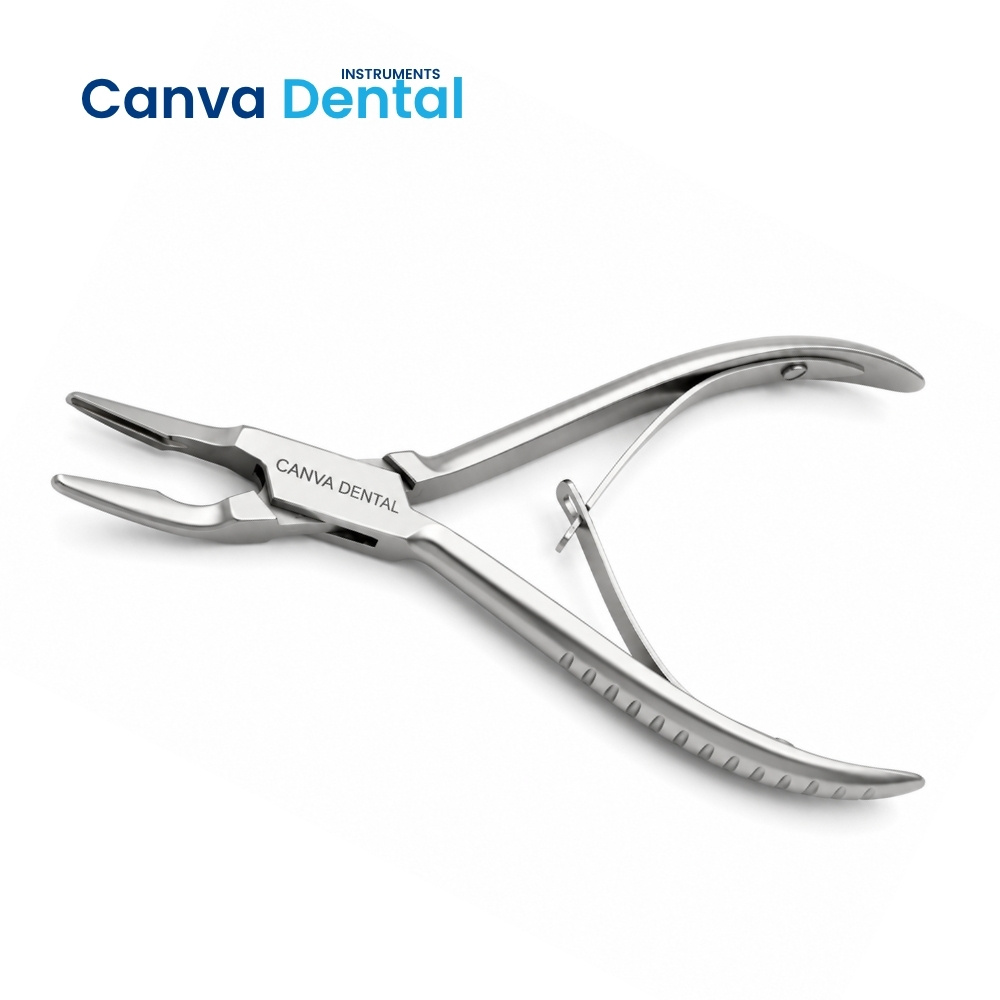
A Bone Rongeur is one of the most important bone management instruments in oral and maxillofacial surgery. Dental surgeons use this instrument to bite away, trim, and contour alveolar bone during extraction procedures, alveoloplasty, implant site preparation, and a wide range of oral surgical operations. Because smooth, well-contoured alveolar bone directly influences wound healing, denture fit, and implant success, every oral surgical team depends on a reliable Bone Rongeur to deliver precise bone removal at every procedure.
Furthermore, the Bone Rongeur — often called simply a rongeur in clinical settings — remains one of the few instruments that removes bone through a direct biting action, giving surgeons immediate tactile feedback and controlled removal with each jaw closure.
A rongeur is a heavy-duty surgical instrument with sharp, cup-shaped or flat cutting jaws that close under spring-loaded or ratchet tension to bite through and remove bone, cartilage, or fibrous tissue. In dentistry, the bone rongeur dental application focuses specifically on alveolar bone — the bone that surrounds and supports tooth roots — making it essential for socket refinement after extraction and for reshaping bony ridges before prosthetic or implant treatment.
The word “rongeur” comes from the French verb meaning “to gnaw” — an accurate description of how this instrument progressively removes bone through repeated biting strokes rather than cutting in a single pass. As a result, the rongeur gives surgeons precise, incremental control over bone removal that rasps, burs, and chisels alone cannot provide.
Unlike bone files that smooth bone surfaces through friction or osteotomes that split bone under mallet pressure, the bone rongeur dental instrument bites and removes actual bone fragments — making it both a cutting and a removal tool simultaneously.
Each Bone Rongeur in our range combines jaw precision, handle strength, and spring performance that demanding oral surgical procedures require consistently:
Several types of rongeur forceps exist, each designed for specific bone access requirements, jaw angles, and surgical field positions. Therefore, understanding the available designs helps clinicians select the most appropriate instrument for each procedure:
| Type | Jaw Design | Primary Application |
|---|---|---|
| Luer Rongeur | End-cutting cup jaws, straight | General alveolar bone trimming, socket smoothing |
| Blumenthal Rongeur | Angled cup jaws, offset | Posterior alveolar bone, angled access sites |
| Ruskin Rongeur | Double-action side-cutting jaws | Heavy bone removal, thick cortical bone |
| Ruskin-Liston Rongeur | Large side-cutting heavy jaws | Maxillofacial bone resection, large bone volumes |
| Friedman Rongeur | Fine angled cup jaws | Delicate bone trimming, implant site refinement |
| Stille-Luer Rongeur | Strong curved cup jaws | Dense bone, posterior mandible procedures |
| Kerrison Rongeur | Footplate-protected punch jaws | Spinal and neurosurgical bone removal |
Understanding the full range of bone rongeur uses helps surgical teams apply this instrument most effectively across different clinical scenarios. Although alveolar bone trimming after extraction is its most common application, bone rongeur uses extend across a broad range of oral surgical and preprosthetic procedures:
In rongeur oral surgery applications, the quality of bone removal directly affects every subsequent clinical step — from wound closure quality to prosthesis fit to implant osseointegration. Consequently, the Bone Rongeur must deliver sharp, clean bites that remove bone fragments completely without crushing the surrounding bone architecture or leaving rough projections that prevent primary wound closure.
Because the rongeur removes bone through repeated jaw closures, surgeons can control bone removal in small, incremental amounts — removing only what each clinical step requires rather than taking large uncontrolled cuts. Moreover, the immediate visual feedback from each bone fragment removed allows the surgeon to assess bone contour continuously and redirect instrument placement as the procedure progresses.
Furthermore, clean bone edges produced by sharp rongeur jaws heal more predictably than crushed or splintered bone margins. Therefore, maintaining sharp, well-aligned jaws on the Bone Rongeur is not merely a preference — it directly determines surgical outcome quality.
Several dental bone rongeur instrument alternatives exist for bone removal and contouring. Understanding how each compares to the rongeur helps clinicians build a complete oral surgery instrument tray:
| Instrument | Mechanism | Best For | Limitation vs Rongeur |
|---|---|---|---|
| Bone Rongeur | Biting jaw removal | Bulk bone removal, socket smoothing, alveoloplasty | — |
| Bone File | Friction rasping | Final surface smoothing after rongeur use | Removes very small amounts only |
| Osteotome | Chisel splitting | Bone splitting, sinus lifting, ridge expansion | No removal — splits and displaces only |
| Surgical Bur | Rotary cutting | Osteotomy preparation, fine contouring | Requires handpiece; heat generation risk |
| Bone Chisel | Mallet-driven wedge | Cortical bone splitting, torus reduction | Less precise; requires mallet force |
| Piezosurgery | Ultrasonic vibration | Delicate bone cutting near nerves and vessels | Slow; high equipment cost |
In most oral surgical workflows, the Bone Rongeur handles primary bone removal while the bone file refines the final surface. Therefore, these two instruments work in sequence rather than as alternatives — the rongeur removes bulk bone rapidly, and the bone file smooths residual sharp edges before wound closure.
Effective and safe bone removal with the Bone Rongeur depends on correct jaw positioning, controlled bite pressure, and systematic approach to bone contouring. Because improper technique risks soft tissue entrapment, bone fracture, or jaw damage, surgeons should follow these established rongeur technique principles:
Because the Bone Rongeur contacts bone, blood, and surgical wound tissue at every procedure, thorough sterilization after each patient use is non-negotiable. Fortunately, all stainless steel Bone Rongeurs in our range withstand repeated autoclave cycles at 134°C without corrosion, spring fatigue, or jaw deformation.
However, clinicians should inspect jaw sharpness and alignment before every procedure. Dull rongeur jaws crush bone rather than cutting cleanly — generating heat, increasing surgical force, and producing bone margins that heal more slowly. Additionally, the spring mechanism requires periodic inspection for fatigue or deformation, since a weak spring reduces jaw opening width and slows the cutting rhythm during extended bone removal sessions.
Furthermore, ultrasonic cleaning before autoclaving is strongly recommended for the Bone Rongeur because bone chips and blood debris accumulate inside the box joint and between the jaw blades — areas that manual cleaning cannot reach effectively. Therefore, ultrasonic cleaning followed by lubrication of the box joint before autoclaving extends instrument working life significantly.
Similarly, many healthcare professionals follow hygiene and sterilization guidance shared by the American Dental Association regarding clinical safety and surgical instrument maintenance.
We supply Bone Rongeurs — including Luer, Blumenthal, Ruskin, Friedman, and Stille-Luer designs — to dental clinics, oral surgery departments, maxillofacial surgery units, teaching hospitals, and dental instrument distributors across Lahore, Karachi, Islamabad, Multan, Peshawar, Faisalabad, Rawalpindi, and all major cities in Pakistan. Moreover, our institutional supply team handles bulk procurement orders for dental colleges and government hospital departments at competitive pricing.
Contact our team for current Bone Rongeur pricing in Pakistan, available types, and delivery timelines for your clinic or institution.
Q: What is a Bone Rongeur used for in dentistry?
A Bone Rongeur serves primarily for trimming, removing, and contouring alveolar bone during oral surgical procedures. Primary bone rongeur uses include alveoloplasty before denture fabrication, socket bone smoothing after extraction, pre-implant bone contouring, torus and exostosis reduction, and surgical bone access during third molar removal and apicoectomy procedures.
Q: What is the difference between a Bone Rongeur and a bone file?
A Bone Rongeur bites and removes actual bone fragments through jaw closure — making it ideal for bulk bone removal and contouring. A bone file, however, smooths bone surfaces through friction rasping and removes very small amounts of bone per stroke. In most oral surgical workflows, the rongeur removes primary bone volume first, and the bone file refines the final surface finish before wound closure.
Q: What are the different types of rongeur forceps used in oral surgery?
Common types of rongeur forceps include the Luer Rongeur for general alveolar bone trimming, the Blumenthal Rongeur for angled posterior access, the Ruskin Rongeur for heavy cortical bone removal, the Friedman Rongeur for delicate bone contouring near implant sites, and the Stille-Luer Rongeur for dense mandibular bone procedures. Each design addresses specific bone access angles and removal volumes that other types cannot handle as effectively.
Q: Can a Bone Rongeur be used for implant site preparation?
Yes. The bone rongeur dental application in implant surgery involves levelling irregular alveolar crests, removing sharp bony projections, and contouring the ridge to the correct width and height before implant placement. However, final osteotomy preparation requires surgical burs or piezosurgery rather than the rongeur, which handles only the initial bone contouring phase.
Q: How do I maintain my Bone Rongeur properly?
Inspect jaw sharpness and alignment before each procedure. Use ultrasonic cleaning to remove bone chips and debris from the box joint and jaw blades before autoclaving. Lubricate the box joint after cleaning and before sterilization to prevent corrosion and maintain smooth jaw action. Additionally, never apply lateral twisting force during bone removal — this misaligns the box joint and permanently reduces cutting efficiency.
Q: Is the Bone Rongeur autoclavable?
Yes. All stainless steel Bone Rongeurs in our range withstand autoclave sterilization at 134°C. Furthermore, ultrasonic cleaning before every sterilization cycle removes bone and blood debris from internal joint components — preserving jaw alignment, spring function, and cutting sharpness across many sterilization cycles.
For complete clinical setups, explore all dental instruments here: CLICK
| Size | Small, Large |
|---|
Reviews
There are no reviews yet.