



₨1,050
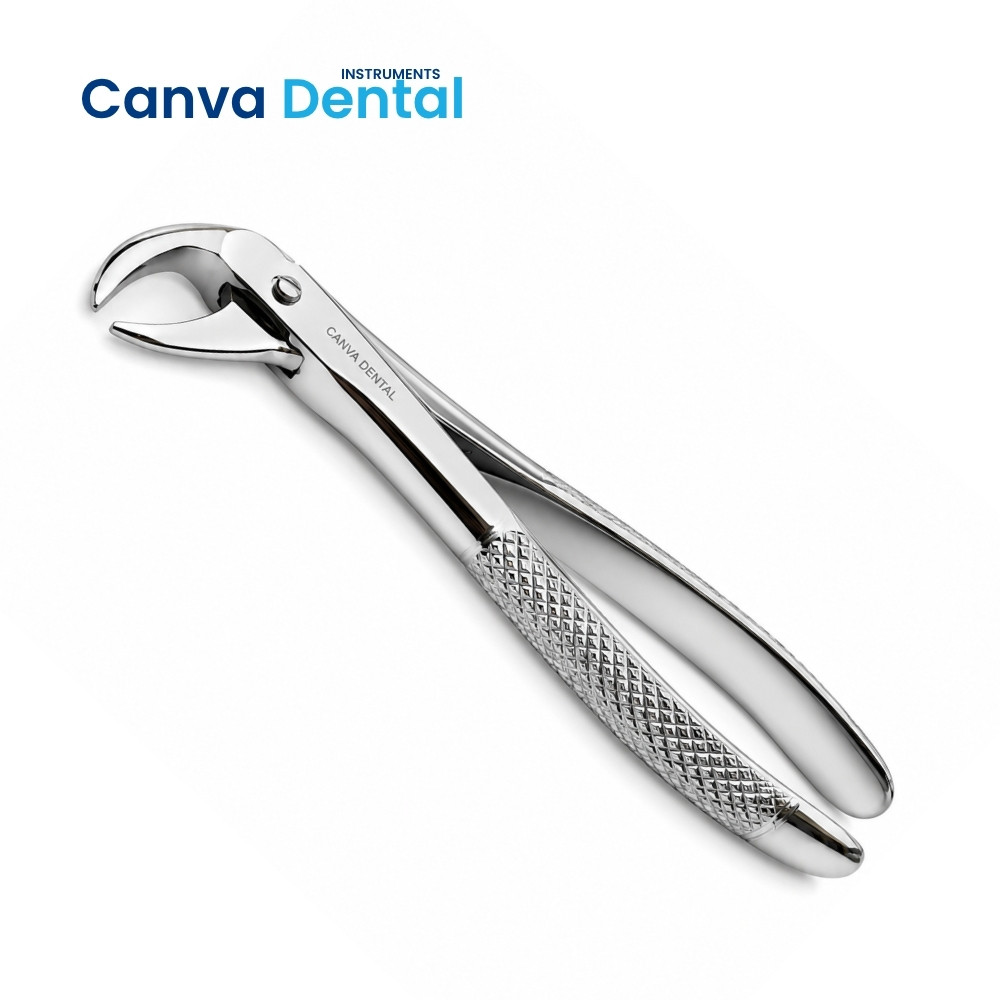
The 23 Extraction Forceps is a specifically designed dental extraction instrument for removing upper left maxillary molar teeth. Oral surgeons and general dentists rely on this forceps for delivering maxillary molars with secure root grip, controlled force application, and minimal trauma to surrounding alveolar bone and soft tissue. Because each forceps in the numbered dental system addresses a specific tooth type and arch position, the 23 Extraction Forceps delivers the beak geometry and handle angulation that upper molar extractions specifically require.
Furthermore, the 23 Extraction Forceps — part of the universally recognised dental forceps numbering system — gives clinicians a standardised instrument selection framework that ensures the correct beak design reaches the correct root anatomy at every extraction appointment.
Forceps 23 dental designation refers to a maxillary molar extraction forceps with a specific beak configuration designed to engage the bifurcation and root trunk of upper molar teeth on the left side of the maxillary arch. In the dental forceps numbering system, upper molar forceps typically come in paired left and right designs — with No. 23 covering the upper left maxillary molars and its mirror counterpart covering the upper right side.
The beak of the forceps 23 dental instrument features one pointed beak and one broader beak — the pointed beak engages the buccal bifurcation between the mesiobuccal and distobuccal roots, while the broader beak seats firmly against the palatal root. This asymmetric beak design is the defining characteristic of maxillary molar forceps and the key reason why correct left-right forceps selection matters for every upper molar extraction.
Moreover, the dental forceps numbering system standardises instrument selection across global dental practice — so a dentist trained anywhere in the world identifies No. 23 as the upper left molar forceps immediately, without needing to assess beak geometry each time.
Each 23 Extraction Forceps in our range combines precise beak geometry with handle strength and balance that upper molar extraction demands:
Understanding the full range of No. 23 forceps uses helps clinicians apply this instrument correctly across different extraction scenarios. Although upper left maxillary molar extraction is its primary designation, No. 23 forceps uses extend across several related clinical situations:
The dental forceps numbering system assigns a unique number to each forceps design based on the tooth type, arch position, and side of the mouth it addresses. Because the numbering system follows consistent anatomical logic, understanding it helps clinicians build a complete and correctly matched extraction forceps inventory:
| Forceps Number | Arch | Tooth Type | Side |
|---|---|---|---|
| No. 1 | Upper | Incisors and canines | Universal |
| No. 2 | Upper | Premolars | Universal |
| No. 17 | Lower | Molars | Universal |
| No. 22 | Upper | Molar — right side | Right (mirror of 23) |
| No. 23 | Upper | Molar | Left |
| No. 51 | Upper | Molar — cowhorn design | Universal |
| No. 67 | Lower | Roots and retained roots | Universal |
| No. 74 | Lower | Premolars | Universal |
| No. 79 | Lower | Incisors and canines | Universal |
Therefore, when building a complete extraction forceps set, pairing No. 23 with No. 22 covers both upper molar sides — giving the extraction tray full maxillary molar coverage for every patient appointment.
Several upper molar extraction forceps designs exist alongside the No. 23. Understanding how each compares helps clinicians select the most appropriate instrument for different upper molar extraction scenarios:
| Forceps | Beak Design | Best For | Key Difference |
|---|---|---|---|
| No. 23 (Left) | Pointed buccal + broad palatal beak | Upper left first, second, third molars | Standard left molar choice |
| No. 22 (Right) | Mirror of No. 23 | Upper right first, second, third molars | Right-side counterpart to No. 23 |
| No. 51 Cowhorn | Two pointed beaks — buccal and palatal | Upper molars with intact bifurcation | Both beaks pointed — universal upper molar |
| No. 53L | Angled bayonet beak design | Upper left third molar (wisdom tooth) | Extended reach for posterior access |
| Physics Forceps Upper Molar | Lever bumper system | Atraumatic upper molar extraction | No compression — buccal expansion only |
Consequently, a complete upper molar extraction kit includes No. 22 and No. 23 for routine left and right molar extractions, No. 51 cowhorn for strong bifurcation grip, and No. 53L for upper third molar surgical access — covering every upper molar presentation a busy dental practice encounters.
Achieving safe, efficient upper molar extraction with the 23 Extraction Forceps depends on correct beak placement, sequential force application, and patient positioning. Because improper technique increases root fracture risk and alveolar bone damage, clinicians should follow these established extraction principles for upper molar forceps delivery:
The 23 Extraction Forceps works most effectively as part of a systematically assembled extraction instrument tray. Because no single instrument covers all extraction requirements, pairing this forceps with complementary instruments ensures every upper molar extraction proceeds efficiently from start to finish:
| Instrument | Role in Upper Molar Extraction | Used Before or After No. 23? |
|---|---|---|
| Coupland Elevator No. 1–3 | Initial PDL loosening and socket expansion | Before |
| Minnesota Retractor | Cheek and soft tissue retraction during extraction | Throughout |
| 23 Extraction Forceps | Beak delivery of upper left molar | Primary instrument |
| Bone Rongeur | Socket bone trimming if sharp spicules present | After |
| Needle Holder + Suture | Wound closure if flap raised or socket requires suturing | After |
| Suture Cutting Scissor | Stitch removal at follow-up appointment | Post-op |
Because the 23 Extraction Forceps contacts roots, PDL tissue, and alveolar bone during every extraction, thorough sterilization after each patient use is non-negotiable. Fortunately, all stainless steel extraction forceps in our range withstand repeated autoclave cycles at 134°C without joint corrosion, beak deformation, or serration damage.
However, clinicians should inspect beak alignment and serration sharpness before each procedure. Misaligned beaks grip the root eccentrically and increase fracture risk under extraction force. Additionally, the box joint requires periodic lubrication with instrument-grade oil before autoclaving to maintain smooth opening and closing action across extended clinical use.
Furthermore, ultrasonic cleaning before autoclaving removes blood, PDL tissue, and bone debris from between the serrations and inside the box joint — areas that manual scrubbing cannot reach effectively — preserving both grip performance and joint longevity.
Similarly, many healthcare professionals follow hygiene and sterilization guidance shared by the American Dental Association regarding clinical safety and surgical instrument maintenance.
We supply 23 Extraction Forceps — alongside complete upper and lower extraction forceps sets covering all numbered designs — to dental clinics, oral surgery departments, teaching hospitals, and dental instrument distributors across Lahore, Karachi, Islamabad, Multan, Peshawar, Faisalabad, Rawalpindi, and all major cities in Pakistan. Moreover, our institutional supply team handles bulk procurement orders for dental colleges and government hospital departments at competitive pricing.
Contact our team for current 23 Extraction Forceps pricing in Pakistan, complete extraction forceps set configurations, and delivery timelines for your clinic or institution.
Q: What is the 23 Extraction Forceps used for?
The 23 Extraction Forceps is specifically designed for extracting upper left maxillary molar teeth — including the first, second, and fully erupted third molar. Its asymmetric beak design, with a pointed beak for buccal bifurcation engagement and a broad beak for palatal root grip, makes it the standard instrument choice for upper left molar extraction in general dental and oral surgical practice.
Q: What is the difference between forceps No. 22 and No. 23?
Forceps No. 22 and No. 23 are mirror-image instruments — No. 23 covers upper left molars while No. 22 covers upper right molars. The pointed-broad beak arrangement is reversed between the two designs to match the buccal bifurcation position on opposite sides of the maxillary arch. Therefore, using No. 22 on a left molar or No. 23 on a right molar reverses the beak engagement and compromises extraction safety.
Q: How does the dental forceps numbering system work?
The dental forceps numbering system assigns a unique number to each forceps design based on the arch, tooth type, and side it addresses. Lower numbers generally cover upper anterior and premolar teeth, while higher numbers address molars and arch-specific designs. Furthermore, paired numbers like 22 and 23 indicate mirror-image instruments for left and right sides of the same arch and tooth group.
Q: Should I use Coupland Elevators before applying the 23 Extraction Forceps?
Yes. Pre-extraction luxation with Coupland Elevators is strongly recommended before applying any extraction forceps, including the 23 Extraction Forceps. Elevating the tooth first loosens the periodontal ligament, expands the socket, and significantly reduces the force needed for forceps delivery — lowering root fracture risk and minimising trauma to the surrounding alveolar bone.
Q: Is the 23 Extraction Forceps autoclavable?
Yes. All stainless steel extraction forceps in our range withstand autoclave sterilization at 134°C. Additionally, ultrasonic cleaning before each sterilization cycle removes tissue debris from beak serrations and the box joint, maintaining grip performance and joint action across many sterilization cycles throughout the instrument’s clinical working life.
For complete clinical setups, explore all dental instruments here: CLICK
Reviews
There are no reviews yet.