



₨150
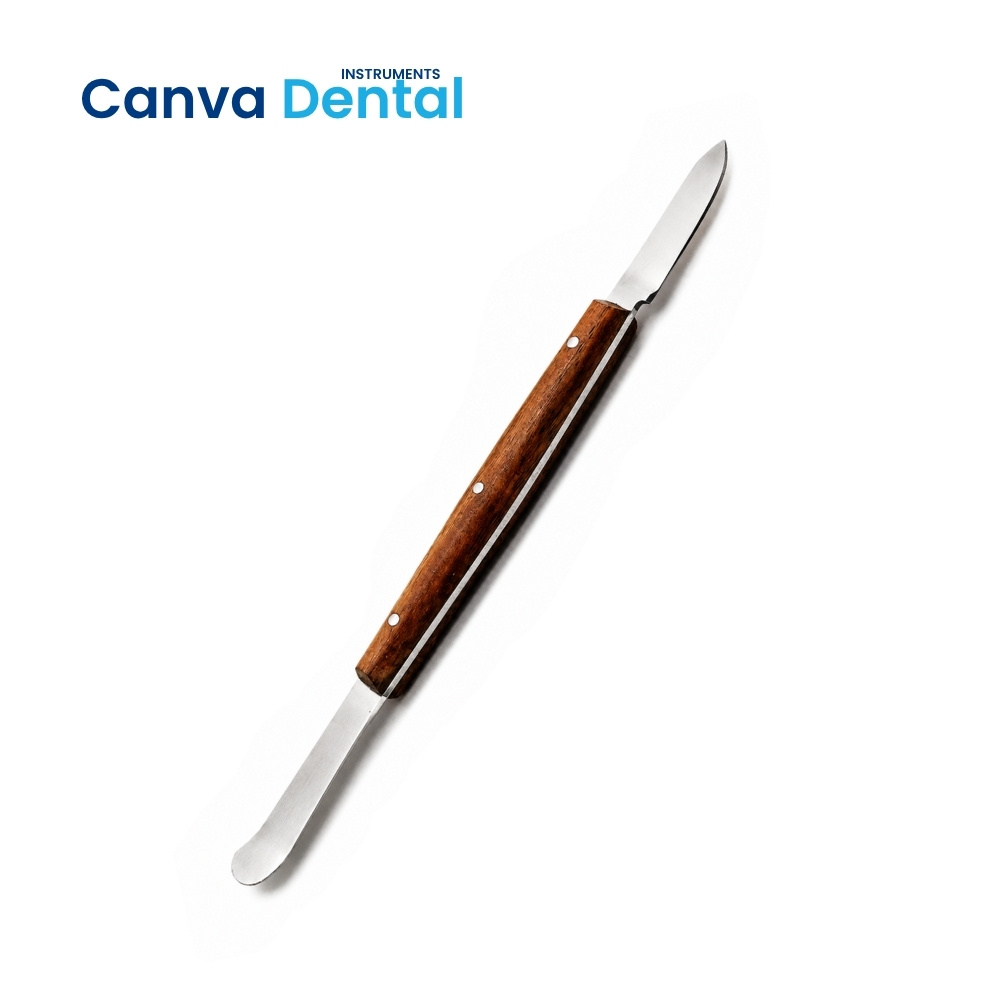
The Wax Knife is an essential instrument in prosthodontic, restorative, and dental laboratory practice. Clinicians and dental technicians use it to carve, shape, smooth, and manipulate dental wax during crown wax-up, denture base carving, and inlay pattern fabrication. Because accurate wax carving directly determines the quality of the final restoration, the Wax Knife is a fundamental instrument at every stage of indirect restorative work.
Furthermore, the Wax Knife Dental instrument works across all major wax types. It handles inlay wax, baseplate wax, boxing wax, and bite registration wax. As a result, dental schools, prosthodontic practices, and dental laboratories all depend on a well-maintained wax knife set for consistent, precise wax manipulation across multiple procedure types daily.
A Wax Knife Dental instrument is a fine-bladed hand instrument. Its blade cuts, carves, and smooths dental wax on stone models, impression trays, and cast preparations. Specifically, the blade heats over a flame or alcohol lamp. The heated blade then melts wax selectively. This allows the clinician or technician to add, remove, or blend wax precisely. Consequently, the wax knife produces accurate anatomical forms that match the desired restoration design.
Moreover, the Wax Knife Dental instrument also works cold. The cold blade trims and carves hardened wax. It removes excess wax from margins. It refines occlusal anatomy details. Furthermore, the blade edge scores wax surfaces for wax addition preparation. As a result, a single wax knife performs both hot and cold manipulation tasks across the full wax-up workflow.
Specifically, the knife name reflects the blade-like working end of the instrument. The working end has a thin, flat, angled blade. This blade resembles a small knife or scalpel. Furthermore, the blade comes in multiple profiles. Each profile suits a specific wax carving task. As a result, the “wax knife” term covers a family of blade profiles — not a single fixed design. Clinicians and dental technicians select blade profiles based on the specific wax carving task at hand.
Moreover, the Wax Knife Dental instrument differs from other wax instruments in its blade geometry. A wax spatula has a broad flat paddle blade. It spreads and smooths large wax areas. In contrast, the wax knife has a narrow, angled blade. It carves fine anatomical details. A PKT wax instrument has multiple tip profiles on a set of five instruments. These profiles suit specific crown wax anatomy carving tasks. Therefore, the wax knife, spatula, and PKT set each address different levels of wax detail in the same prosthodontic workflow.
Specifically, the wax carving knife dental instrument uses several standard blade profiles. The most common is the straight flat blade. This blade trims wax margins and removes excess wax from preparation edges. Furthermore, the angled or offset blade accesses posterior crown wax-up areas without the handle blocking vision. The pointed blade tip scores wax surfaces for cusp tip definition. As a result, a complete wax knife set covers anterior and posterior wax-up tasks from a small number of instruments.
Moreover, the double-ended wax knife is the most efficient design for clinical use. One end carries a broad blade for wax addition and smoothing. The opposite end carries a fine pointed blade for carving anatomical detail. Consequently, the clinician switches between bulk wax manipulation and fine carving by reversing the instrument. This reduces tray instrument count and speeds the wax-up workflow significantly.
Furthermore, wax knife blades use stainless steel or carbon steel. Stainless steel blades resist corrosion. They also autoclave cleanly after use. Carbon steel blades retain heat longer after flame heating. This longer heat retention allows more wax manipulation passes before reheating. However, carbon steel blades corrode faster without correct care. Therefore, most clinical wax knives use stainless steel. Carbon steel blades suit dedicated dental laboratory settings where autoclaving is less frequent.
Specifically, wax knife handles are lightweight and cylindrical. The cylinder fits naturally in a pencil grip. This grip provides maximum blade control during fine carving motions. Furthermore, the handle length is calibrated to the blade size. Short handles suit fine-detail PKT-style blades. Longer handles suit broad spatula blades. As a result, the handle geometry directly affects carving precision. A correctly proportioned handle reduces hand fatigue during extended crown wax-up sessions.
The PKT wax instrument set is the gold standard for crown wax-up in prosthodontic practice and dental laboratory work. PKT stands for Peter K. Thomas — the prosthodontist who developed the five-instrument set for precise occlusal wax anatomy carving. Specifically, the PKT set contains five instruments. Each has a unique blade or tip profile for a distinct stage of crown wax-up. As a result, the PKT set produces the most anatomically accurate crown wax patterns available from hand instruments.
Moreover, the five PKT instruments each address a specific task. PKT No.1 adds wax to the preparation. PKT No.2 carves posterior cusp ridges. PKT No.3 carves anterior tooth surfaces. PKT No.4 refines marginal ridges. PKT No.5 smooths and polishes the wax surface. Furthermore, all five PKT instruments use the same heat-application technique as the standard wax knife. Therefore, clinicians who master basic wax knife technique can progress to PKT instrument use without learning an entirely new set of manual skills.
Specifically, the standard Wax Knife suits general wax carving tasks. It removes excess, trims margins, and performs basic shaping. The PKT set, however, produces refined anatomical occlusal morphology. It creates individual cusps, ridges, fossae, and grooves with instrument-specific tip profiles. Consequently, complete denture and simple inlay wax-ups suit the standard wax knife. Complex full-crown and posterior cusp wax-ups benefit from the PKT set. Therefore, a fully equipped prosthodontic laboratory stocks both standard wax knives and a complete PKT instrument set for different levels of wax anatomy precision.
Specifically, every Wax Knife in our range uses surgical-grade stainless steel for the blade and handle body. The steel grade maintains blade sharpness and edge geometry across repeated use and sterilization cycles. Furthermore, the blade surface is smooth and polished. This polish prevents wax from sticking to the blade during carving. All instruments withstand autoclave sterilization at 134°C in pre-vacuum cycles. As a result, our wax knives maintain full carving performance and blade integrity throughout their clinical service life.
Specifically, dental wax instruments classify by blade geometry and the wax manipulation task they perform. Consequently, selecting the correct instrument for each task produces cleaner wax carving results with less material wastage and less wax surface damage:
| Instrument type | Blade design | Best for | Key feature |
|---|---|---|---|
| Standard Wax Knife | Straight or angled flat blade | Wax trimming, margin definition, basic shaping | Most versatile — suits all wax types |
| Wax Spatula Dental | Broad flat paddle blade | Wax spreading, denture base smoothing | Large blade face covers broad wax surfaces efficiently |
| PKT No.1 | Round-tipped wax addition paddle | Adding wax to crown preparation | Rounded tip holds molten wax for controlled addition |
| PKT No.2 | Angled half-moon blade | Posterior cusp ridge carving | Half-moon geometry follows cusp ridge contours |
| PKT No.3 | Pointed carving tip | Anterior crown wax anatomy | Fine tip creates incisal edge and lingual concavity |
| PKT No.4 | Flat-sided carving blade | Marginal ridge definition | Flat side creates crisp, even marginal ridges |
| PKT No.5 | Round polishing nib | Wax surface smoothing | Round nib smooths wax surface without removing material |
Therefore, a complete wax instrument set for prosthodontic work includes at minimum two standard wax knives in different blade profiles and a complete PKT five-instrument set. This combination covers every wax manipulation task from initial wax addition through to final surface smoothing before casting or pressing.
Furthermore, most professional wax knives are reusable stainless steel instruments. They withstand repeated heating, carving, and autoclave sterilization cycles. However, disposable wax knife tips are available for high-infection-risk clinical environments. These single-use tips attach to a reusable handle body. As a result, disposable tip systems reduce cross-contamination risk between patients in clinical settings where wax registration or bite wax procedures occur at chairside.
Specifically, the full range of Wax Knife uses covers these prosthodontic and restorative laboratory applications:
The prosthodontic wax instrument determines the accuracy of every wax pattern before casting. Specifically, a well-carved crown wax-up produces a casting that requires minimal adjustment at try-in. A poorly carved wax-up produces a casting that needs extensive occlusal grinding and contouring. Each grinding adjustment removes material that cannot be replaced. Consequently, wax carving quality at the laboratory stage directly determines chairside adjustment time and final restoration longevity.
Moreover, wax margin accuracy determines crown seating and marginal fit. A clean, sharp wax margin at the preparation line produces a tight, sealed cast margin. A rough or torn wax margin produces a casting margin gap. This gap allows microleakage and secondary decay beneath the crown. As a result, blade sharpness and carving precision at the wax stage are patient health issues — not merely technical preferences.
Furthermore, occlusal anatomy accuracy in the wax-up directly affects the patient’s bite comfort and chewing efficiency after crown placement. Specifically, a crown with anatomically correct cusp heights, fossa depths, and ridge contours distributes occlusal load evenly across the restored tooth. In contrast, a flat or inaccurately carved occlusal surface concentrates load on single points. This concentration causes post-operative sensitivity and accelerated wear on the opposing dentition. Therefore, skilled Wax Knife use and PKT wax instrument technique produce restorations that function comfortably from the first appointment after crown delivery.
Specifically, three problems arise from poor Wax Knife technique. First, overheating damages the wax margin. The margin becomes rounded and imprecise. The casting fits poorly. Second, cold carving with a blunt blade tears the wax surface. Torn surfaces contain micro-voids. These voids produce casting surface defects. Third, uneven wax addition produces variable wall thickness in the crown pattern. Variable thickness causes casting distortion during cooling. As a result, the final crown requires extensive adjustment or complete remake. Therefore, correct wax knife technique — controlled heating, sharp blades, and consistent carving pressure — prevents all three failure modes.
Several dental wax carving instruments exist for different wax manipulation tasks. Understanding how the Wax Knife Dental compares to each helps clinicians and dental technicians equip their laboratory bench correctly:
| Instrument | Blade design | Primary use | Limitation vs Wax Knife Dental |
|---|---|---|---|
| Wax Knife Dental | Narrow angled flat blade | Wax trimming, margin carving, detail work | — |
| Wax Spatula Dental | Broad flat paddle | Large surface wax smoothing | Too broad for fine margin and cusp carving detail |
| PKT Instrument Set | 5 specialist profiles | Full anatomical crown wax-up | Specialist use — requires training; higher cost |
| Plastic Instrument | Angled flat blade | Composite shaping at chairside | Not heat-compatible; no wax melting function |
| Burnisher (Ball) | Round smooth ball tip | Wax surface polishing and smoothing | Polishes only — cannot cut, trim, or add wax |
| Modelling Spatula | Various paddle profiles | Impression wax, boxing wax spreading | Lacks fine carving blade for detail margin work |
Consequently, the Wax Knife Dental is the most versatile single instrument in the wax carving instrument family. It trims, carves, adds, and smooths wax across the full range of prosthodontic wax manipulation tasks. No single alternative instrument replicates this complete wax carving function range.
Before beginning any wax carving task, confirm the blade is clean and free of old wax residue. Old wax on the blade transfers contamination to fresh wax. Wipe the cold blade with a soft cloth before heating. Hold the wax knife handle in a pencil grip. Bring the blade close to the alcohol lamp flame — not into it. Heat for one to two seconds only. Test temperature on a wax scrap immediately. The blade should melt wax slowly on contact — not instantly. Adjust heat time until the correct temperature is confirmed before applying the blade to the wax pattern.
Because the Wax Knife Dental contacts wax, impression materials, and oral fluids during chairside use, correct sterilization between patients is mandatory for all clinical wax knives. All stainless steel wax knives in our range withstand autoclave sterilization at 134°C in pre-vacuum cycles. Furthermore, the blade geometry and handle finish remain consistent across hundreds of sterilization cycles without warping, discolouration, or blade deformation.
Moreover, ultrasonic pre-cleaning before autoclaving removes old wax residue, impression material, and organic debris from the blade and blade-handle junction. Place the instrument in an ultrasonic cleaning solution for 10 minutes. For laboratory-use instruments, wipe the blade with a dry cloth to remove gross wax before placing in the ultrasonic bath. Rinse thoroughly, dry completely, then bag and autoclave. As a result, consistent pre-cleaning prevents wax build-up that hardens on the blade and alters edge geometry over time.
However, always inspect blade sharpness before each wax carving session. A sharp blade edge trims wax cleanly in a single pass. A blunt blade tears the wax surface. Torn wax margins produce casting defects. Furthermore, inspect the blade for deformation from repeated heating. An overheated blade may develop slight warping over time. A warped blade changes the angle of contact with the wax surface. Replace any wax knife showing blade edge blunting or blade warping before use. Similarly, dental professionals follow sterilization guidance from the American Dental Association for all clinical dental instruments.
Our Wax Knife Dental range — including standard wax knives in multiple blade profiles, wax spatulas, complete PKT five-instrument sets, and double-ended wax carving instruments in surgical-grade stainless steel — supplies prosthodontic specialist practices, dental laboratories, teaching hospitals, restorative dental clinics, and dental instrument distributors across Lahore, Karachi, Islamabad, Multan, Peshawar, Faisalabad, Rawalpindi, and all major cities in Pakistan. Furthermore, prosthodontics and dental technology departments at the University of Health Sciences Lahore, Dow University of Health Sciences Karachi, Nishtar Medical University Multan, and Khyber Medical University Peshawar use our wax instruments in undergraduate and postgraduate crown wax-up and complete denture training programmes.
Wax Knife Dental price in Pakistan varies by instrument type — standard wax knife, PKT set, or combination wax spatula — and by order quantity. Because individual instrument prices and complete set prices differ significantly, we recommend contacting our sales team directly for a current PKR quotation. Furthermore, bulk orders for dental colleges, dental laboratory supply chains, and hospital prosthodontic departments qualify for institutional pricing. Therefore, reach out for a tailored Wax Knife Dental price and delivery timeline specific to your clinic, laboratory, or institution.
What is a Wax Knife Dental instrument used for?
Specifically, the Wax Knife Dental instrument carves, trims, adds, and smooths dental wax during crown wax-up, denture carving, inlay pattern fabrication, and bite registration procedures. The blade heats over a flame for molten wax addition and blending. It also works cold for sharp carving and margin definition. Furthermore, the Wax Knife covers both laboratory bench work and chairside wax manipulation tasks. As a result, it is one of the most frequently used instruments in dental prosthetics and indirect restorative dentistry.
What are the main Wax Knife uses in dentistry?
The primary Wax Knife uses include: crown and bridge wax pattern carving before casting; complete denture base wax carving for gingival contour and tissue surface anatomy; inlay and onlay direct wax pattern fabrication; occlusal rim trimming and shaping during denture construction; bite registration wax trimming at chairside; boxing wax manipulation before model pouring; and diagnostic wax-up for smile design presentations. Furthermore, the PKT wax instrument set — an extension of the standard Wax Knife family — adds anatomically specific blade profiles for full posterior crown cusp and ridge wax anatomy in complex prosthodontic restorations.
What is the difference between a Wax Knife and a wax spatula?
The Wax Knife has a narrow, angled blade designed for trimming, carving, and adding wax in precise small amounts. The wax spatula dental instrument has a broad, flat paddle blade. It spreads wax over large surface areas and smooths denture base wax uniformly. Consequently, the wax knife suits detail carving and margin definition work. The wax spatula suits bulk wax handling and surface smoothing tasks. Therefore, a complete wax instrument tray uses both — the spatula for initial wax spreading and the wax knife for all subsequent carving and margin refinement.
What is the PKT wax instrument and how does it relate to the Wax Knife?
The PKT wax instrument set is a five-piece specialist wax carving set developed by prosthodontist Peter K. Thomas. Each of the five instruments has a unique blade profile for a specific crown wax anatomy task. Specifically, PKT No.1 adds wax, No.2 carves posterior ridges, No.3 carves anterior surfaces, No.4 defines marginal ridges, and No.5 smooths the surface. Furthermore, all five PKT instruments use the same heat-over-flame technique as the standard Wax Knife. Therefore, the PKT set is the specialist evolution of the standard wax knife — using the same technique principles with anatomy-specific blade profiles for full posterior crown wax anatomy precision.
What is the Wax Knife Dental price in Pakistan?
Wax Knife Dental price in Pakistan depends on the instrument type — individual standard wax knife, complete PKT five-piece set, or combination wax spatula and knife set. Because prices in PKR vary by configuration and order quantity, contact our sales team directly for a current quotation. Specifically, individual wax knives are available at per-instrument pricing. Complete PKT sets carry set pricing. Furthermore, bulk orders for dental colleges and dental technology departments qualify for institutional volume pricing. Therefore, reach out to our team for a tailored current Wax Knife Dental price and delivery timeline for your location in Pakistan.
Can the Wax Knife Dental instrument be autoclaved?
Yes. All stainless steel Wax Knives in our range withstand autoclave sterilization at 134°C in pre-vacuum cycles. Furthermore, ultrasonic pre-cleaning before each sterilization cycle removes hardened wax residue from the blade edge and handle surface — preserving blade sharpness and heat distribution consistency across repeated sterilization cycles.
For complete prosthodontic and restorative instrument setups, explore all dental instruments here: CLICK
Reviews
There are no reviews yet.