



₨450
The DG 16 Probe is a specialist endodontic instrument used in every root canal treatment procedure. Clinicians use it to locate canal orifices on the pulp chamber floor. It also explores the access cavity for additional or hidden canals. Because missed canals are the leading cause of root canal treatment failure, the DG 16 Probe is a critical diagnostic instrument in endodontic practice.
Furthermore, the DG 16 endodontic probe is specifically designed for pulp chamber exploration. Standard dental explorers cannot access deep pulp chambers effectively. Their tip geometry does not suit canal orifice detection. As a result, the DG 16 Probe has become the standard endodontic explorer used in teaching hospitals, specialist endodontic practices, and general dental clinics worldwide.
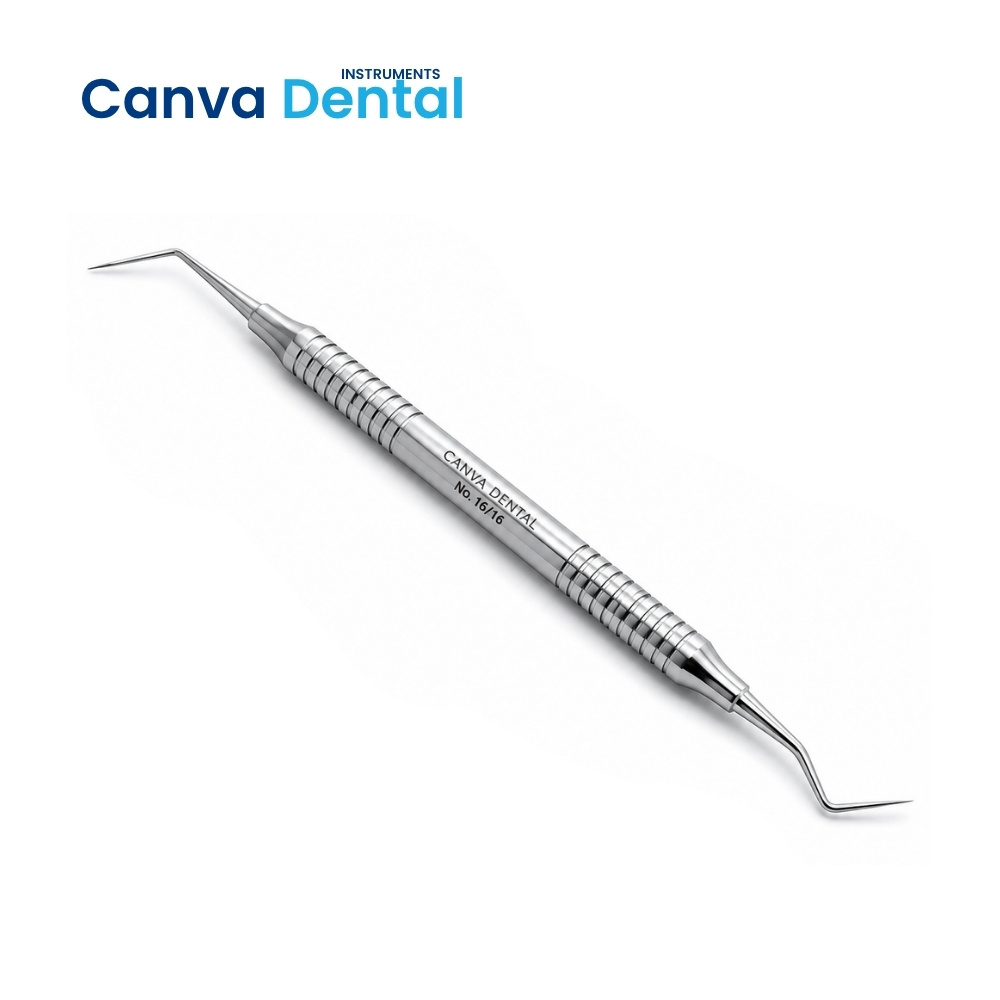
A probe DG 16 is a double-ended endodontic explorer. It has two angled, sharp tips on opposite ends of a single handle. Specifically, each tip is fine, rigid, and angled to enter the pulp chamber and locate canal orifices. The instrument uses tactile feedback. The clinician feels a slight drop when the tip enters a canal orifice. Consequently, this tactile detection identifies canals that visual inspection alone cannot reveal.
Moreover, the DG 16 Probe differs fundamentally from a standard dental explorer. A standard explorer detects caries on tooth surfaces. Its tip is designed for surface dragging. In contrast, the DG 16 endodontic probe explores the pulp chamber floor. Its tips angle precisely for vertical probing into narrow orifice spaces. Therefore, the two instruments are not interchangeable — the DG 16 is a dedicated endodontic detection instrument.
Specifically, the designation “DG 16” refers to the instrument’s design classification. DG stands for the probe’s tip geometry series. The number 16 identifies the specific angulation and length of the tips within that series. Furthermore, the DG 16 classification is recognised universally across dental instrument catalogues. Clinicians searching for “probe DG 16” or “DG 16 endodontic explorer” are always referring to this specific double-ended canal detection instrument. As a result, the DG 16 name has become synonymous with endodontic canal orifice detection across clinical practice.
Furthermore, the DG 16 differs from the standard No.17 or shepherd’s hook explorer in three key ways. First, the tips are longer and more acutely angled. This angulation allows vertical entry into the pulp chamber. Second, the tip shafts are thinner. This allows entry into narrow orifices. Third, the tip flexibility is lower. The rigid tip transmits drop-in tactile sensation clearly to the clinician’s fingers. Consequently, no standard explorer replicates the canal detection performance of the DG 16 Probe in endodontic access appointments.
Specifically, the DG 16 endodontic explorer uses a double-ended design. One tip angles to the left. The opposite tip angles to the right. This mirror-image configuration covers both the mesial and distal canal orifice positions. The clinician reverses the instrument to probe different areas without picking up a second instrument. Furthermore, the double-ended design reduces tray instrument count. As a result, a single DG 16 Probe provides full pulp chamber coverage from one instrument.
Moreover, each tip on the DG 16 measures approximately 5–7 mm from the shank bend. This length allows the tip to reach the pulp chamber floor on most adult teeth. Specifically, upper molars have deeper pulp chambers. Their chamber floor sits 2–4 mm below the pulp roof. The DG 16 tip length is calibrated to reach this floor level reliably. As a result, the probe locates orifices on the deepest accessible pulp chamber floors in routine endodontic practice.
Furthermore, the tip angulation of the endodontic explorer probe is the instrument’s most critical design feature. Each tip bends at two points. The first bend angles the tip away from the handle shaft. This allows the tip to enter the access cavity without the handle blocking vision. The second bend angles the tip toward the pulp chamber floor. Specifically, this double-bend geometry positions the working end perpendicular to the pulp floor. Consequently, the clinician probes every quadrant of the pulp chamber floor cleanly from a single handle position.
Moreover, the DG 16 Probe uses a lightweight, knurled or smooth cylindrical handle. This handle transmits tactile sensation from the tip to the clinician’s fingers efficiently. Specifically, a lightweight handle reduces hand fatigue during systematic pulp floor probing. Furthermore, the balanced handle sits naturally between the thumb and index finger. This pencil grip provides maximum tactile sensitivity. As a result, the clinician detects the subtle drop-in sensation of canal orifice entry reliably across all tooth types and chamber depths.
Specifically, every DG 16 Probe in our range uses surgical-grade stainless steel throughout. The steel grade provides tip rigidity — essential for accurate tactile drop-in detection. Furthermore, the tip surface is smooth and polished. This smooth surface slides cleanly across the pulp chamber floor without scratching the dentine. All instruments withstand autoclave sterilization at 134°C in pre-vacuum cycles. Tip angulation and handle balance remain consistent across hundreds of sterilization cycles. As a result, our DG 16 Probes maintain full diagnostic performance throughout their clinical service life.
Specifically, endodontic explorer probes classify by tip geometry, number of working ends, and the clinical detection task they serve. Consequently, selecting the correct probe type for each clinical scenario optimises canal detection accuracy:
| Probe type | Tip design | Ends | Best for |
|---|---|---|---|
| DG 16 Probe | Double-bend angled, fine rigid tip | Double-ended | Canal orifice detection on pulp chamber floor |
| Standard Endodontic Explorer (No.17) | Single-bend angled tip | Single-ended | General canal exploration, less deep access |
| DG 16 with Briault Probe | DG 16 on one end, Briault tip on other | Double-ended | Combined canal detection and interproximal caries assessment |
| Extended Tip Endodontic Probe | Longer fine tip, deeper reach | Double or single | Deeply calcified chambers, elderly patients with receded pulp |
| NiTi Flexible Explorer | Flexible NiTi tip | Single or double | Curved canal systems, calcified orifices needing flexible approach |
Therefore, the DG 16 Probe is the first-choice endodontic explorer for routine canal orifice detection. Extended tip and flexible variants supplement it for calcified or anatomically complex cases. The standard No.17 explorer can serve as a backup but does not match the DG 16’s pulp floor probing precision.
Furthermore, the DG 16 Probe is available in double-ended and single-ended configurations. The double-ended design is the clinical standard. It provides left and right mirror-image tip coverage from one instrument. The single-ended variant suits clinicians who prefer a lighter instrument. It also suits practices using cassette-based tray systems. As a result, both configurations deliver identical tip performance. The choice depends on tray setup preference rather than clinical detection capability.
Specifically, the canal orifice probe dental instrument serves these clinical applications across all root canal treatment appointments:
The root canal probe instrument directly determines whether all canals receive treatment. Missed canals are the single most common cause of root canal treatment failure. Specifically, a canal left uninstrumented and unfilled harbours bacteria and pulp tissue. These sustain periapical infection despite apparently complete treatment of the other canals. As a result, the patient presents with persistent pain and periapical pathology. The treatment fails — requiring retreatment or surgical intervention.
Moreover, canal detection is not always straightforward. Upper first molars frequently have four canals. Lower first molars sometimes have three. Lower premolars occasionally have two. Furthermore, many of these additional canals are not visible on the standard periapical radiograph. Consequently, systematic DG 16 Probe exploration of the pulp chamber floor is the primary method for detecting these anatomical variations before they become missed canal failures.
Specifically, the MB2 canal of the upper first molar is the most frequently missed canal in endodontic practice. Research confirms it is present in 70–93% of upper first molars. However, it sits mesial and slightly palatal to the MB1 orifice. Standard vision often misses it. The DG 16 Probe locates it by systematic probing 2–3 mm mesial to the MB1 orifice. Furthermore, the fine tip detects the drop-in sensation at the MB2 orifice even when the orifice is partially covered by a dentine fin. As a result, consistent DG 16 Probe use significantly reduces MB2 miss rates in upper molar root canal treatment.
Furthermore, a missed canal has predictable consequences. The untreated canal supports bacterial growth after obturation. This growth produces periapical bone loss on the follow-up radiograph. The patient reports persistent or recurrent pain. Retreatment is required. Moreover, retreatment is technically more difficult than initial treatment. Old gutta-percha, sealer, and post cement must be removed before the missed canal is accessible. As a result, the clinical and financial cost of one missed canal far exceeds the time cost of systematic DG 16 Probe exploration at the initial appointment.
Several instruments assist with canal detection and pulp chamber exploration. Understanding how the DG 16 compares helps clinicians equip their endodontic tray correctly:
| Instrument | Tip design | Canal detection | Limitation vs DG 16 Probe |
|---|---|---|---|
| DG 16 Probe | Double-bend fine rigid tip | Excellent — specific orifice drop-in | — |
| Standard Explorer (No.17) | Single-bend angled tip | Good — less deep chamber access | Single bend limits perpendicular pulp floor contact |
| Standard Dental Probe (BPE) | Blunt graduated tip | Poor — not designed for canal detection | Blunt tip cannot detect canal orifice drop-in tactile sensation |
| Microscope Exploration Only | No probe — visual only | Good under magnification | Requires dental operating microscope — not always available |
| NiTi Flexible Explorer | Flexible curved tip | Good for curved canals | Flexible tip reduces tactile drop-in clarity on calcified floors |
Consequently, the DG 16 Probe is the most clinically specific instrument for pulp chamber floor orifice detection. Its double-bend tip geometry, fine rigid shaft, and mirror-image double-ended design provide a combination that no other standard endodontic instrument replicates in a single tool.
Before using the DG 16 Probe, confirm the access cavity is fully complete. All pulp chamber roof must be removed. The chamber floor must be fully visible under magnification or fibre-optic illumination. Furthermore, remove all blood and pulp tissue from the chamber floor. A clean, dry floor is essential for accurate tactile probing. Debris on the chamber floor masks the drop-in sensation at canal orifices. Confirm rubber dam isolation is in place before beginning systematic probing.
Because the DG 16 Probe contacts pulp tissue and dentine during every endodontic appointment, correct sterilization between patients is mandatory. All stainless steel DG 16 Probes in our range withstand autoclave sterilization at 134°C in pre-vacuum cycles. Furthermore, the fine tip angulation and handle balance remain consistent across hundreds of autoclave cycles without tip deformation or handle corrosion.
Moreover, ultrasonic pre-cleaning before autoclaving removes pulp tissue, blood, and sodium hypochlorite residue from the fine tips and handle surface. Place the instrument in an enzyme-based ultrasonic cleaning solution for 10 minutes after each endodontic appointment. Rinse thoroughly, dry completely, then bag and autoclave. As a result, consistent pre-cleaning prevents organic residue that corrodes fine tips and degrades tactile sensitivity over repeated sterilization cycles.
However, always inspect both tips before each clinical use. Specifically, confirm both tips are straight, unbroken, and free of bending at the tip shafts. A bent tip changes the angulation geometry. This changes where the tip contacts the pulp floor during probing. Furthermore, a bent tip may not enter a canal orifice at the correct angle — causing the clinician to miss a canal that a straight tip would detect. Replace any DG 16 Probe showing tip bending or fracture before clinical use. Similarly, dental professionals follow sterilization guidance from the American Dental Association for all endodontic instruments.
Our DG 16 Probe range — including double-ended standard designs, single-ended variants, extended-tip designs for deeply calcified chambers, and DG 16 with Briault combination probes in surgical-grade stainless steel — supplies endodontic specialist practices, general dental clinics, teaching hospitals, and dental instrument distributors across Lahore, Karachi, Islamabad, Multan, Peshawar, Faisalabad, Rawalpindi, and all major cities in Pakistan. Furthermore, endodontic departments at the University of Health Sciences Lahore, Dow University of Health Sciences Karachi, Nishtar Medical University Multan, and Khyber Medical University Peshawar use our DG 16 endodontic probes in undergraduate and postgraduate root canal training programmes.
Because our instruments originate from Sialkot — Pakistan’s internationally recognised dental instrument manufacturing hub — they carry the tip precision, steel quality, and sterilization durability that institutional buyers and international export clients require. Contact our team for current DG 16 Probe Pakistan pricing, available design variants, bulk quotations for endodontic departments and dental colleges, and delivery timelines for your clinic or institution.
What is a DG 16 Probe used for in dentistry?
Specifically, the DG 16 Probe is an endodontic explorer probe used to locate canal orifices on the pulp chamber floor during root canal access preparation. The fine, angled tips detect canal orifice positions through a tactile drop-in sensation. Furthermore, the probe detects additional canals — such as the MB2 in upper molars — that visual inspection alone cannot reliably identify. As a result, the DG 16 Probe is the primary canal detection instrument in endodontic access cavity preparation appointments worldwide.
What does DG 16 mean in the probe name?
Specifically, DG identifies the tip geometry series of the endodontic explorer probe. The number 16 identifies the precise angulation and tip length within that series. Both together identify this specific double-ended canal detection instrument in dental instrument catalogues globally. Furthermore, clinicians searching for “probe DG 16” or “DG 16 endodontic explorer” are always referring to the same instrument. Therefore, the DG 16 designation functions as a universal clinical identifier across all dental instrument suppliers and procurement systems.
What is the difference between a DG 16 Probe and a standard dental explorer?
The DG 16 Probe has a double-bend angled tip designed specifically for vertical probing into the pulp chamber. The standard dental explorer has a single-bend tip designed for horizontal dragging across tooth surfaces. Consequently, the DG 16 tip positions itself perpendicular to the pulp chamber floor for accurate orifice detection. The standard explorer contacts the floor at an oblique angle — reducing tactile sensitivity and missing narrow orifice entrances. Therefore, the DG 16 is always the correct instrument for endodontic canal orifice detection.
How do you detect the MB2 canal using the DG 16 Probe?
Specifically, after locating the MB1 orifice, probe the pulp chamber floor 2–3 mm mesial to the MB1 position. Direct the fine tip toward the mesio-palatal area of the chamber. Apply light vertical pressure with short dragging passes. The MB2 orifice produces a clear drop-in sensation when the tip enters it. Furthermore, if the floor is calcified, the tip detects a slight softness or roughness at the MB2 position even before the full drop-in occurs. As a result, systematic probing with the DG 16 locates the MB2 canal in the majority of upper first molar cases.
Is the DG 16 Probe available in Pakistan and what is the price?
Yes, DG 16 Probe Pakistan supply is available through our direct sales team and authorised dental instrument distributors in Lahore, Karachi, Islamabad, Multan, Peshawar, Faisalabad, and Rawalpindi. Because pricing in PKR depends on the variant — standard double-ended, single-ended, extended tip, or combination — and order quantity, contact our sales team for a current quotation. Bulk orders for endodontic departments and dental colleges qualify for institutional pricing. Therefore, reach out with your specific requirements for a tailored PKR price and delivery timeline.
Can the DG 16 Probe be autoclaved?
Yes. All stainless steel DG 16 Probes in our range withstand autoclave sterilization at 134°C in pre-vacuum cycles. Furthermore, ultrasonic pre-cleaning before each sterilization cycle removes pulp tissue and sodium hypochlorite residue from fine tips — preserving tip geometry and tactile sensitivity across repeated sterilization cycles. Always inspect both tips for bending before each clinical use. Our surgical-grade DG 16 Probes maintain precise tip angulation and tactile performance throughout their full clinical service life.
For complete endodontic instrument setups, explore all dental instruments here: CLICK
Reviews
There are no reviews yet.