



₨1,200
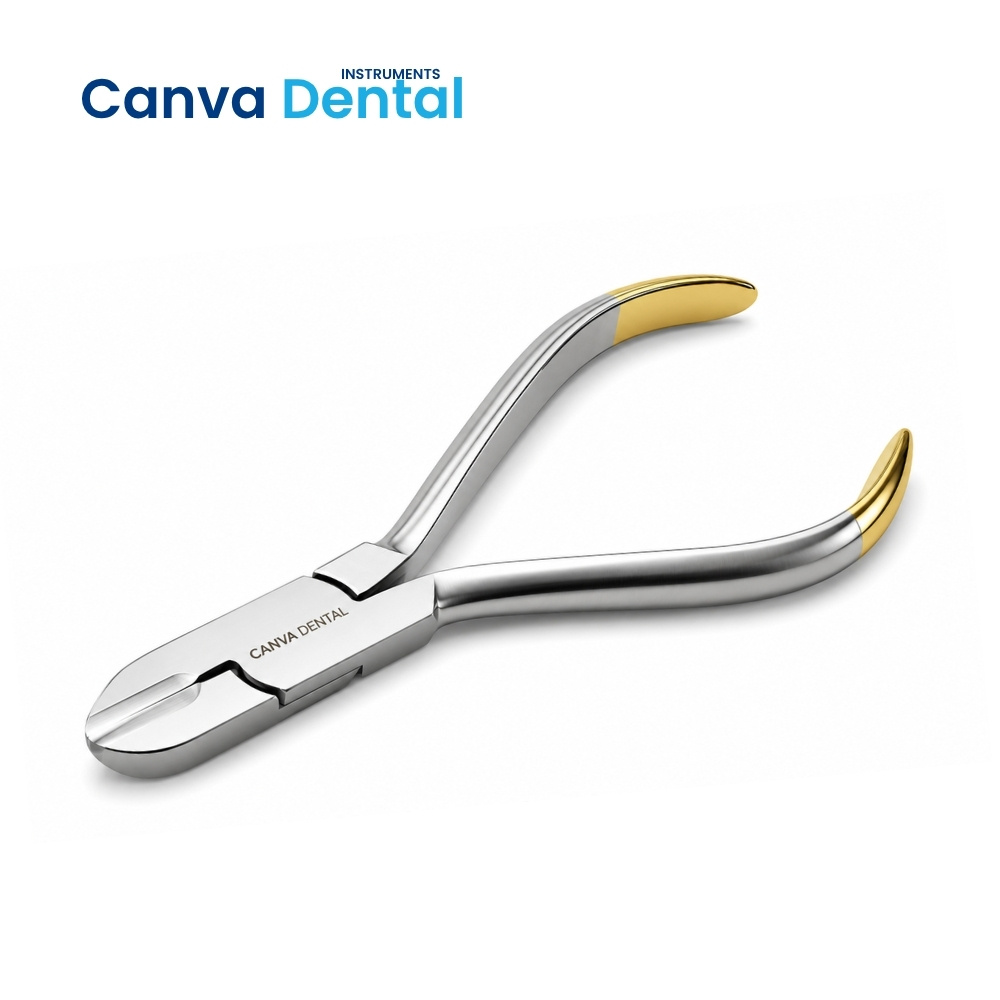
A Straight Wire Cutter is an essential cutting instrument in orthodontic and dental practice. Orthodontists and dental teams use this instrument to cut archwires, ligature wires, and elastic ties quickly and cleanly. Accurate wire cutting is critical at every stage of fixed appliance treatment. Poor cuts leave sharp wire ends that lacerate the patient’s cheek and tongue. Therefore, every orthodontic instrument tray requires a reliable wire cutter as a daily-use instrument.
In addition to fixed appliance work, the wire cutter dental instrument serves across removable appliance fabrication, dental laboratory work, and surgical wire management. As a result, dental teams across every specialty consider it a fundamental chairside instrument.
A wire cutter dental instrument is a plier-style cutting tool with two hardened steel blades that close under hand pressure. The blades meet at a precise cutting edge to shear through metal wire cleanly. The straight design means both blades align along a direct axis. This allows the clinician to approach the wire from a predictable angle. Moreover, the compact jaw profile accesses posterior oral spaces without obstruction. Consequently, the straight wire cutter suits both anterior and posterior wire cutting tasks effectively.
The cutting edges on quality orthodontic wire cutters are tungsten carbide or high-carbon steel. These materials maintain sharp cutting performance across many cutting cycles. Standard stainless steel blades dull much faster. Therefore, investing in a cutter with hardened cutting edges extends instrument working life considerably.
Straight wire cutters align the cutting jaws directly ahead of the handle. Angled or offset wire cutters position the jaws at an angle to the handle axis. The straight design provides better visual access to the cutting point. It also delivers a more direct force transfer from handle to blade. However, angled designs suit posterior distal wire trimming better in some cases. Therefore, most orthodontic practices stock both designs for complete wire-cutting coverage.
Each straight wire cutter in our range delivers the cutting precision and durability that high-volume orthodontic practice demands:
Several orthodontic wire cutter designs exist. Understanding each type helps clinicians build a complete cutting instrument set for every wire management task:
| Type | Jaw Position | Best Application |
|---|---|---|
| Straight Wire Cutter | Direct forward alignment | Anterior archwire, ligature cutting, general wire trimming |
| Angled Wire Cutter | Offset at 45° or 90° | Posterior distal wire trimming, molar tube area access |
| Distal End Cutter | Short stepped offset jaw | Cutting archwire flush at the distal of the last tube |
| Ligature Cutter | Fine narrow blades | Cutting thin stainless steel and elastic ligature ties |
| Heavy Wire Cutter | Wide reinforced blades | Cutting 0.9mm and 1.0mm heavy archwire and lingual wires |
Therefore, the straight wire cutter handles the majority of routine chairside cutting. Angled and distal end designs address the specific posterior access requirements. Stocking both designs ensures complete coverage for every cutting scenario encountered during fixed appliance treatment.
| Cutter Grade | Wire Gauge Capacity | Typical Use |
|---|---|---|
| Fine Gauge | 0.4 – 0.6 mm | Ligature wire, elastic modules, fine NiTi wires |
| Standard Gauge | 0.6 – 0.8 mm | Standard stainless steel archwires — most common use |
| Heavy Gauge | 0.8 – 1.0 mm | Rectangular heavy archwires, lingual appliance wires |
The complete range of straight wire cutter uses extends across fixed appliance orthodontics, removable appliance work, and dental laboratory wire fabrication. Although archwire trimming is the most frequent application, straight wire cutter uses cover every wire cutting need in a busy orthodontic practice:
The archwire cutter orthodontic function requires specific technique knowledge. Archwires vary significantly in gauge, alloy, and hardness. Each variable affects the correct cutter selection and cutting approach.
Nickel-titanium (NiTi) archwires are harder than stainless steel. They dull standard cutting edges faster. Therefore, NiTi archwires require a cutter with hardened tungsten carbide blades. Standard steel-blade cutters chip when used on NiTi wire repeatedly. Moreover, NiTi wires have shape memory. They spring back after cutting. This means the cut end can flick sharply toward the patient. Consequently, always control the wire end during cutting to prevent patient injury.
Stainless steel archwires cut more easily. However, they still require sharp blade edges. A dull cutter crushes rather than shears stainless steel wire. This leaves a flattened, burr-edged cut end. Furthermore, that burr end irritates soft tissue and must be smoothed or replaced. Therefore, maintaining cutter sharpness protects both wire quality and patient comfort at every appointment.
Round archwires cut cleanly with a single blade closure. Rectangular archwires require more force. The wider cutting surface demands sharper blades and more precise jaw alignment. In addition, rectangular wires spring more aggressively on cutting. Therefore, position the free wire end toward the mirror or cheek retractor when cutting rectangular archwire. This prevents the cut end from contacting the patient’s soft tissue.
Several instruments cut wire in dental and orthodontic practice. Understanding how the straight wire cutter compares to alternatives helps clinicians select the correct instrument for each cutting task:
| Instrument | Blade Design | Primary Use | Key Difference from Straight Cutter |
|---|---|---|---|
| Straight Wire Cutter | Forward-aligned blades | Archwire, ligature, general wire cutting | — |
| Distal End Cutter | Short stepped offset | Flush wire trimming at last molar tube | Designed for distal tube access — retains cut piece |
| Ligature Cutter | Fine narrow blades | Thin ligature wire and elastic module removal | Finer blades — not suited for archwire gauge |
| Heavy Wire Cutter | Wide reinforced blades | 0.9mm+ heavy archwire and lingual wires | Greater jaw force — overkill for standard wire |
| Suture Wire Cutter | Scissor-style blades | Stainless steel suture wire in surgical procedures | Scissor action — not suited for orthodontic round wire |
| Wire Scissors | Serrated scissor blades | Soft wire — nylon, elastics, suture thread | Not rated for stainless steel archwire gauge |
Therefore, the straight wire cutter handles the largest range of routine orthodontic cutting tasks. It serves as the primary cutting instrument on most orthodontic trays. Distal end cutters and ligature cutters address the specific access requirements that the straight design cannot cover.
Position the blades around the wire at the intended cut point. Confirm the blades sit perpendicular to the wire axis. An angled blade position produces a diagonal cut. This leaves a pointed wire end that causes soft tissue trauma. Moreover, hold the free wire end with cotton pliers or a finger before closing the blades. This prevents the cut fragment from becoming a projectile or aspiration risk. In addition, keep the patient’s mouth partly closed during posterior wire cutting. This reduces the distance any fragment could travel if control is lost.
Apply a single firm, smooth closing stroke to complete the cut. Avoid sawing or partial cuts. Partial cuts stress the cutting edges and produce ragged wire ends. After cutting, inspect the remaining wire end immediately. A clean cut produces a smooth, flat end. A crushed or jagged end indicates a dull cutter. Furthermore, run a gloved fingertip along the cut end to confirm no sharp burr remains before dismissing the patient. Consequently, patients leave every appointment without a poking wire risk.
All stainless steel straight wire cutters in our range withstand autoclave cycles at 134°C. However, blade sharpness requires specific care between sterilization cycles. Cutting edges dull progressively through use. Therefore, test the cutter on a scrap wire piece before each session. A sharp cutter shears cleanly with moderate hand pressure. A dull cutter requires excessive force and crushes rather than cuts. In addition, never drop the cutter onto hard surfaces. Blade edge impact on hard surfaces produces micro-chips that dramatically shorten the cutting life.
Inspect the blade edges under direct light after every few sessions. Look for visible nicks, rounding, or misalignment at the blade tip contact point. Moreover, ultrasonic cleaning before autoclaving removes wire fragments and metal debris from the blade edges. This preserves edge geometry longer than manual wiping alone achieves. Furthermore, when blade wear produces consistently crushed wire ends rather than clean shear cuts, replace the instrument immediately. Continuing to use a dull cutter damages wire quality, increases patient discomfort, and risks blade fracture under excessive cutting force.
We supply straight wire cutters — in standard, heavy gauge, and NiTi-rated designs — to orthodontic practices, general dental clinics, dental laboratories, teaching hospitals, and instrument distributors across Lahore, Karachi, Islamabad, Multan, Peshawar, Faisalabad, Rawalpindi, and all major cities in Pakistan. Moreover, our institutional supply team handles bulk procurement for dental college orthodontic departments at competitive pricing.
Contact our team for current straight wire cutter pricing in Pakistan, available designs, and delivery timelines for your clinic or institution.
Q: What is a straight wire cutter used for in orthodontics?
A straight wire cutter cuts archwires, ligature wires, and elastic ties during fixed appliance orthodontic treatment. Primary straight wire cutter uses include archwire trimming at insertion, distal wire shortening after placement, ligature tail cutting after bracket tying, emergency poking wire trimming, and archwire removal. In addition, it cuts wire during removable appliance fabrication and laboratory wire preparation. It is one of the most frequently used instruments at every orthodontic appointment.
Q: What is the difference between a straight wire cutter and a distal end cutter?
A straight wire cutter aligns the blades directly ahead of the handle. It suits general archwire and ligature cutting tasks across both arches. A distal end cutter, however, carries a short offset stepped jaw. This jaw trims the archwire flush at the distal of the last molar tube. Moreover, distal end cutters often retain the cut wire fragment between the blades. This prevents the fragment from falling into the patient’s throat. Therefore, both instruments are complementary — the straight cutter handles general cutting and the distal end cutter manages posterior tube trimming.
Q: Can a straight wire cutter cut NiTi archwires?
Only NiTi-rated straight wire cutters with tungsten carbide blades safely cut NiTi archwires. Standard steel-blade cutters chip immediately on NiTi wire. Consequently, always confirm the cutter’s NiTi rating before use. Furthermore, NiTi wire springs back after cutting. Always control the free wire end during cutting to prevent the cut fragment from contacting soft tissue or becoming a swallowing risk.
Q: How do I know when my straight wire cutter needs replacing?
A sharp straight wire cutter shears wire cleanly with moderate hand pressure. It produces a flat, smooth cut end. A dull cutter requires excessive force. It crushes rather than shears the wire. This leaves a jagged or flattened wire end. In addition, visible blade edge nicking under direct light confirms wear. Replace the instrument when these signs appear. Continuing to use a dull cutter risks blade fracture and patient injury from sharp burr ends left on cut wire.
Q: Is the straight wire cutter autoclavable?
Yes. All stainless steel straight wire cutters in our range withstand autoclave sterilization at 134°C. However, ultrasonic cleaning before autoclaving removes metal fragments from blade edges. This preserves cutting sharpness longer. In addition, never drop the cutter onto hard surfaces before sterilization. Impact chips the blade edge instantly. Label NiTi-rated cutters separately from standard cutters. This prevents accidental damage from cutting incompatible wire gauges.
Reviews
There are no reviews yet.