



₨100 – ₨380Price range: ₨100 through ₨380
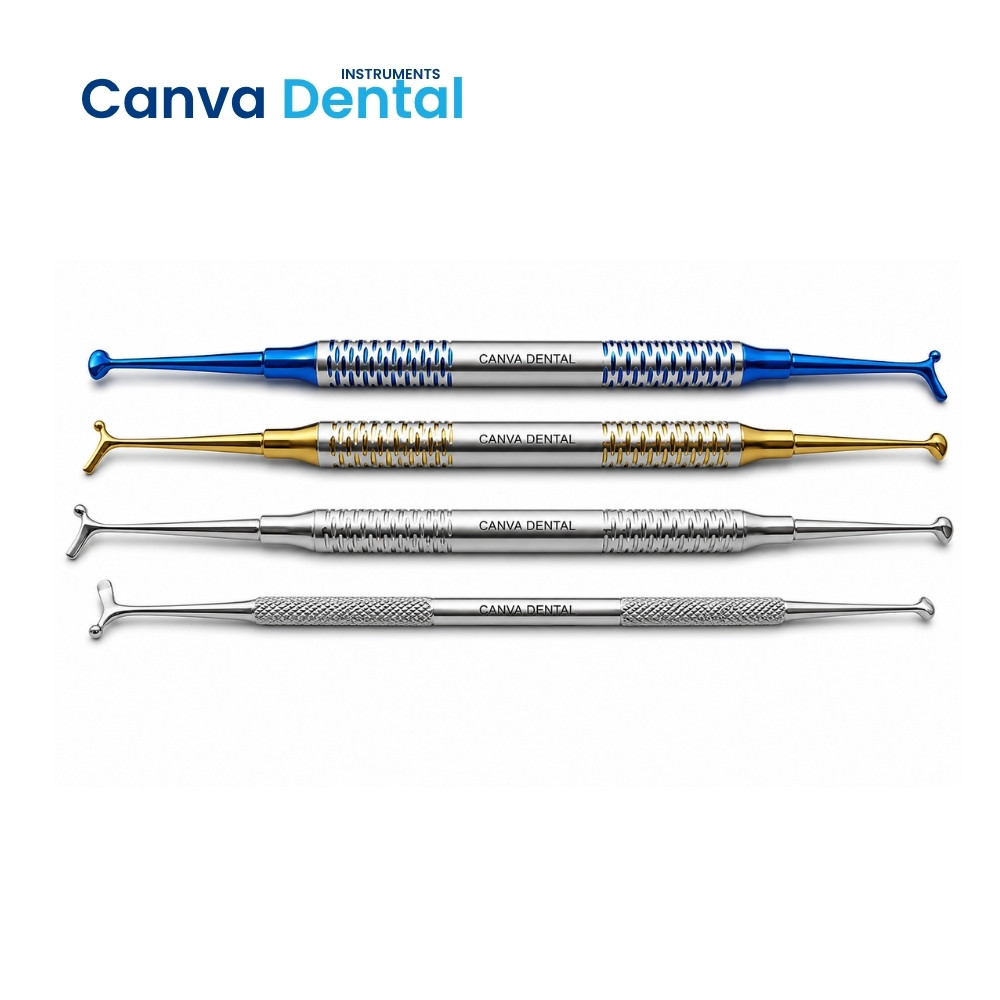
The Egg Shaped Burnisher is one of the most widely used finishing instruments in restorative dental practice. Dentists and dental students rely on this instrument to smooth, adapt, and polish freshly placed amalgam and composite restorations — improving marginal adaptation, surface texture, and restoration longevity after material placement. Because smooth, well-adapted restoration margins directly reduce microleakage, secondary caries risk, and patient discomfort, the egg shaped burnisher dental instrument remains a fundamental component of every restorative instrument tray worldwide.
In addition to its primary burnishing role, the egg shaped working end provides a versatile contact surface that adapts comfortably to occlusal fossae, proximal surfaces, and marginal ridges — making it effective across a broader range of restoration anatomy than flat or pointed burnisher designs. As a result, dental teams consider this the most clinically versatile burnisher design in general restorative practice.
A dental burnisher instrument is a smooth, polished hand instrument used to smooth freshly placed restorative material, adapt margins, improve surface texture, and condense surface layers of amalgam before the material fully sets. Unlike carvers that remove material to create anatomy, burnishers work the surface of existing material — smoothing irregularities, sealing marginal gaps, and producing a refined surface finish that resists corrosion and plaque accumulation more effectively than unfinished restoration surfaces.
The egg shaped burnisher specifically carries an oval, convex egg-shaped working end that provides a large, smooth contact surface for broad-area restoration finishing. Therefore, the egg-shaped profile applies burnishing force across the entire fossa or cusp area in a single stroke rather than requiring multiple overlapping passes with a narrower instrument tip. Consequently, clinicians achieve more uniform surface adaptation with fewer strokes, reducing procedural time without compromising the quality of the finished restoration surface.
The ovoid geometry of the egg burnisher dental working end suits occlusal restoration anatomy naturally — the convex egg profile matches the concave curvature of occlusal fossae and the convex curvature of marginal ridges, producing intimate contact between the instrument surface and the restoration material across the full working area. Moreover, the smooth, blunt egg shape cannot scratch or groove restoration surfaces during use, unlike angular or pointed burnisher designs that risk creating surface defects when applied with excessive pressure. In addition, the egg shape adapts equally well to anterior and posterior restorations — providing a single-instrument solution for most burnishing requirements in a complete restorative tray setup.
Each egg shaped burnisher in our range delivers the surface quality, handle balance, and working end precision that restorative finishing practice demands consistently:
Several dental burnisher types exist, each designed for specific restoration surfaces, material types, and finishing requirements. Understanding the available types helps clinicians build a complete restorative instrument tray that addresses every burnishing scenario:
| Burnisher Type | Working End | Primary Application |
|---|---|---|
| Egg Shaped Burnisher | Oval convex egg profile | Occlusal fossae, marginal ridges, broad-area amalgam and composite finishing |
| Ball Burnisher | Spherical ball tip | Pit and fissure adaptation, interproximal surface burnishing, gingival margin sealing |
| Beaver Tail Burnisher | Wide flat paddle | Class I and Class II amalgam condensation and surface smoothing |
| Acorn Burnisher | Acorn-shaped tip | Occlusal anatomy carving and marginal ridge finishing in amalgam |
| Football Burnisher | Elongated oval | Central fossa finishing, broad occlusal surface adaptation |
| T-Bar Burnisher | T-shaped flat head | Labial composite surface smoothing, anterior restoration finishing |
Therefore, stocking the egg shaped burnisher alongside a ball burnisher and a beaver tail design covers the three most common burnishing scenarios in general restorative practice — broad occlusal surfaces, confined pit and fissure areas, and flat amalgam condensation — without requiring an extensive burnisher inventory on every restorative tray.
In addition to shape, the restorative material being finished influences which burnisher design performs best. For amalgam, the egg shaped burnisher works at both the pre-set and post-set stages — initially to adapt margins and seal the amalgam against cavity walls, then to smooth the final set surface. For composite resin, however, clinicians use the egg burnisher before light-curing to smooth incremental layers and remove excess material from margins — using the smooth surface to blend the increment boundary rather than polishing a set surface.
The complete range of burnisher dental uses extends across amalgam restorations, composite placements, glass ionomer work, and provisional crown fabrication. Although amalgam surface finishing represents the most traditionally cited application, burnisher dental uses cover every stage where smooth surface adaptation improves restoration quality:
The amalgam burnisher dental role of the egg shaped design deserves specific attention because pre-carve burnishing with this instrument significantly improves amalgam restoration quality — a step that many clinicians skip, unaware of the clinical evidence supporting its benefit.
When the clinician burnishes freshly condensed amalgam with the egg shaped burnisher before carving, the smooth working end compresses the surface layer of amalgam alloy — expelling excess mercury to the surface, increasing surface density, and sealing the marginal interface against the cavity walls. Research demonstrates that pre-carve burnishing reduces marginal gap width, improves marginal seal quality, and produces a denser, harder surface layer that resists tarnish and corrosion more effectively than unburnished amalgam across the restoration’s clinical life.
In addition, the burnishing action removes the outermost mercury-rich surface layer — the weakest part of set amalgam — through mechanical compression rather than carving. Consequently, the restoration surface exposed after carving consists of the denser, mercury-depleted alloy underneath, which polishes more effectively and maintains its surface quality longer than the mercury-rich outer layer would.
After anatomical carving, applying the egg shaped burnisher in light circular strokes over the occlusal surface removes carver marks, smooths any remaining surface irregularities, and produces the initial gloss that characterises a well-finished amalgam restoration. Furthermore, using the egg profile across the marginal ridge areas confirms that the carved anatomy meets the adjacent tooth structure smoothly — running the instrument from the restoration surface onto the natural tooth surface and back produces an immediate tactile indication of any remaining step defect or marginal irregularity.
Several restorative instruments address surface finishing and marginal adaptation. Understanding how the egg burnisher dental instrument compares to related instruments helps clinicians build a logical finishing instrument sequence for their restorative tray:
| Instrument | Working Mechanism | Primary Use | Relationship to Egg Burnisher |
|---|---|---|---|
| Egg Shaped Burnisher | Surface smoothing and compression | Broad occlusal burnishing, amalgam pre/post-carve | — |
| Amalgam Carver (Hollenback) | Material removal to create anatomy | Occlusal anatomy carving in amalgam | Used before burnisher — carves anatomy |
| Ball Burnisher | Point contact smoothing | Pit and fissure, interproximal margin | Complementary — different surface area |
| Plastic Instrument | Material placement and adaptation | Composite and GIC placement | Used before burnisher — places material |
| Composite Finishing Disc | Abrasive surface reduction | Composite surface polishing | Used after burnisher — final polish |
| Dental Condenser | Compressive force application | Amalgam condensation into cavity | Used before burnisher — condenses material |
Consequently, the logical restorative sequence places the egg shaped burnisher between condensation and carving for amalgam — and between incremental placement and light-curing for composite — making it a pivotal instrument that bridges material compaction and final surface finishing across both major restorative material types.
Hold the egg shaped burnisher in a modified pen grasp with the ring finger as an intraoral fulcrum resting on a stable tooth near the restoration. Apply moderate, even pressure through the working end — enough to compress the surface material without deforming the underlying restoration anatomy. Moreover, working strokes should travel across the restoration surface in overlapping elliptical or circular paths rather than linear back-and-forth motions — circular burnishing covers the surface uniformly and adapts the egg profile to curved restoration contours more effectively than straight strokes.
For amalgam restorations, apply pre-carve burnishing immediately after final condensation — while the amalgam remains in the dough stage before initial set. After anatomical carving with appropriate carvers, apply post-carve burnishing with the egg shaped burnisher as the final manual finishing step before the patient bites on articulating paper. In addition, for composite restorations, use the egg burnisher on each increment surface before curing — applying light pressure in a blending motion to smooth the surface and ensure margin contact before the light tip activates the increment. Consequently, integrating burnishing at the correct procedural stage produces measurably better surface quality than applying the instrument only as an afterthought at the end of the restorative appointment.
All stainless steel egg shaped burnishers in our range withstand repeated autoclave cycles at 134°C without surface deformation, handle corrosion, or working end scratching. However, maintaining the mirror-polished working end surface is essential for effective burnishing — a scratched or corroded egg surface transmits those surface irregularities to the restoration material during burnishing strokes rather than producing the smooth finish the instrument is designed to deliver.
In addition, ultrasonic cleaning before autoclaving removes restorative material residue from the working end surface and handle-shank junction effectively — preserving the polish that makes the egg burnisher effective and ensuring sterilization penetration to all surfaces. Furthermore, inspecting the egg shaped working end under direct light before each procedure confirms that the surface remains smooth and free from scratches — replacing the instrument when surface degradation becomes visible ensures every restorative procedure benefits from the smooth, streak-free burnishing surface that produces optimal restoration quality.
We supply egg shaped burnishers — in standard and large egg head sizes, in single-ended and double-ended designs — to restorative dental clinics, dental teaching hospitals, general dental practices, and instrument distributors across Lahore, Karachi, Islamabad, Multan, Peshawar, Faisalabad, Rawalpindi, and all major cities in Pakistan. Moreover, our institutional supply team handles bulk procurement for dental college restorative departments and hospital dental units at competitive pricing.
Contact our team for current egg shaped burnisher pricing in Pakistan, available designs, and delivery timelines for your clinic or institution.
Q: What is an egg shaped burnisher used for in dentistry?
An egg shaped burnisher smooths, adapts, and finishes freshly placed restorative materials — primarily amalgam and composite resin. Primary burnisher dental uses include pre-carve and post-carve burnishing of amalgam restorations, incremental composite layer smoothing before light-curing, marginal adaptation against cavity walls, proximal contact establishment through matrix bands, and glass ionomer surface finishing during the initial setting window. The egg-shaped working end specifically suits broad occlusal surfaces, fossae, and marginal ridges where its convex profile produces uniform surface contact across the full restoration area.
Q: What is the difference between an egg shaped burnisher and a ball burnisher?
An egg shaped burnisher carries an oval convex working end suited for broad-area occlusal finishing — its larger surface area covers fossae and marginal ridges efficiently in fewer strokes. A ball burnisher, however, carries a small spherical tip suited for confined areas — pit and fissure burnishing, interproximal surface adaptation, and gingival margin sealing where the egg profile is too wide for targeted contact. Therefore, both instruments complement each other in a restorative tray rather than performing identical functions — the egg burnisher handles broad surfaces and the ball burnisher addresses confined areas requiring precise point contact.
Q: When should the egg shaped burnisher be applied during amalgam restoration?
The egg shaped burnisher applies at two stages during amalgam restoration. First, pre-carve burnishing occurs immediately after final condensation — while the amalgam remains in the dough stage — using the smooth egg surface to compress the material, seal the marginal interface, and improve surface density before carving begins. Second, post-carve burnishing occurs after anatomical carving is complete — using the egg profile to remove carver marks, smooth the final surface, and check marginal continuity between restoration and natural tooth structure before the patient closes on articulating paper.
Q: Can the egg shaped burnisher be used for composite restoration finishing?
Yes. For composite resin, the egg shaped burnisher adapts incremental layers before light-curing — applying light pressure to smooth the increment surface and blend the margin against cavity walls before activating the curing light. However, the burnisher dental function applies to uncured composite only — once an increment has been light-cured, the set surface requires polishing burs, discs, or rubber polishing cups rather than hand burnishing. Therefore, integrating the egg burnisher into the incremental layering sequence rather than applying it only at the final surface stage produces measurably better layer bonding and marginal adaptation in the finished composite restoration.
Q: Is the egg shaped burnisher autoclavable?
Yes. All stainless steel egg shaped burnishers in our range withstand autoclave sterilization at 134°C. However, maintaining the mirror-polished working end surface requires ultrasonic cleaning before autoclaving — restorative material residue that sets on the egg surface during the procedure reduces burnishing effectiveness if not removed before sterilization. In addition, inspecting the working end surface regularly for scratches and replacing the instrument when polished surface quality deteriorates ensures consistent burnishing performance across every restorative procedure.
| Type | Normal, Hollow silver, Golden, Plasma |
|---|
Reviews
There are no reviews yet.