



₨250 – ₨380Price range: ₨250 through ₨380
The Condenser Dental instrument is a core restorative tool in every dental operatory. Clinicians use it to pack, condense, and adapt filling materials into prepared cavities. It works across amalgam, composite, glass ionomer, and obturation materials. Because proper condensation eliminates voids and ensures adaptation to cavity walls, every restoration depends on this instrument for its strength and longevity.
Furthermore, the condenser dental instrument appears at multiple stages of patient treatment. Restorative dentists use it for direct filling procedures. Endodontists use it during root canal obturation. As a result, a well-stocked dental tray always includes at least one condenser variant matched to the restorative material being placed.
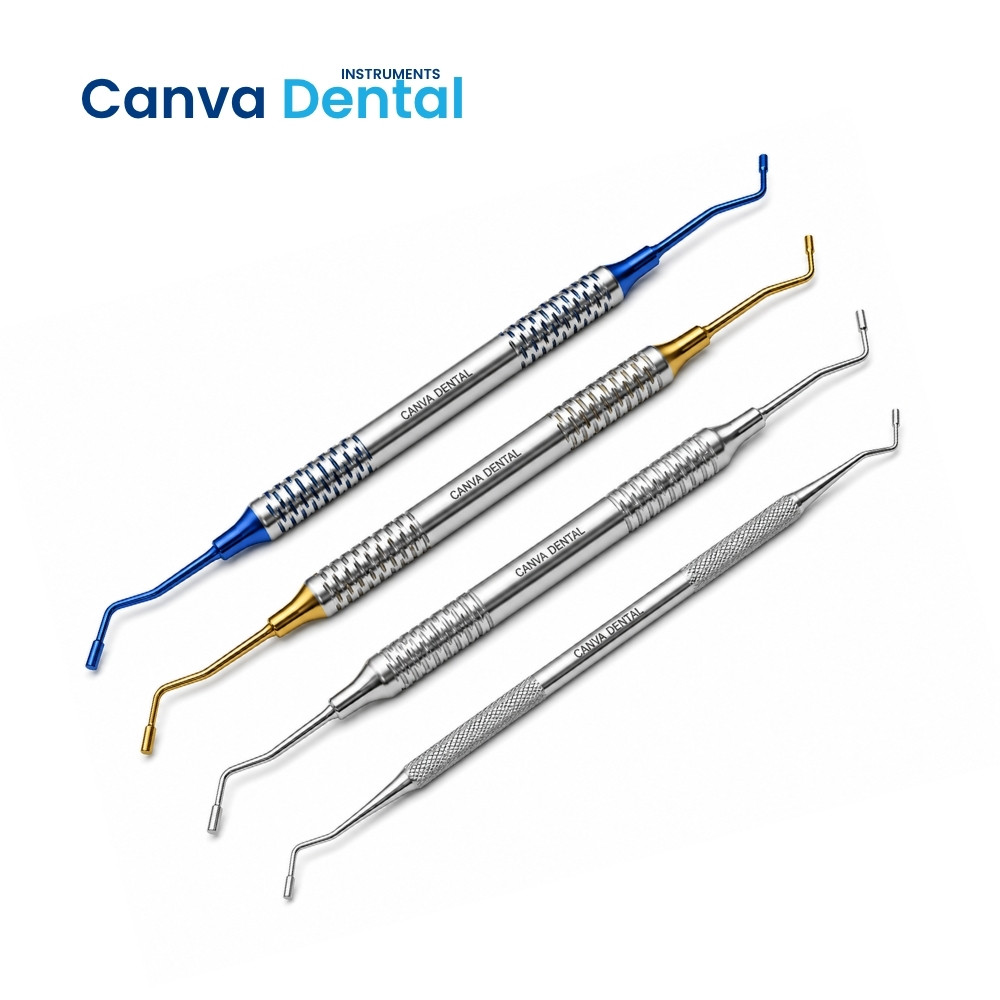
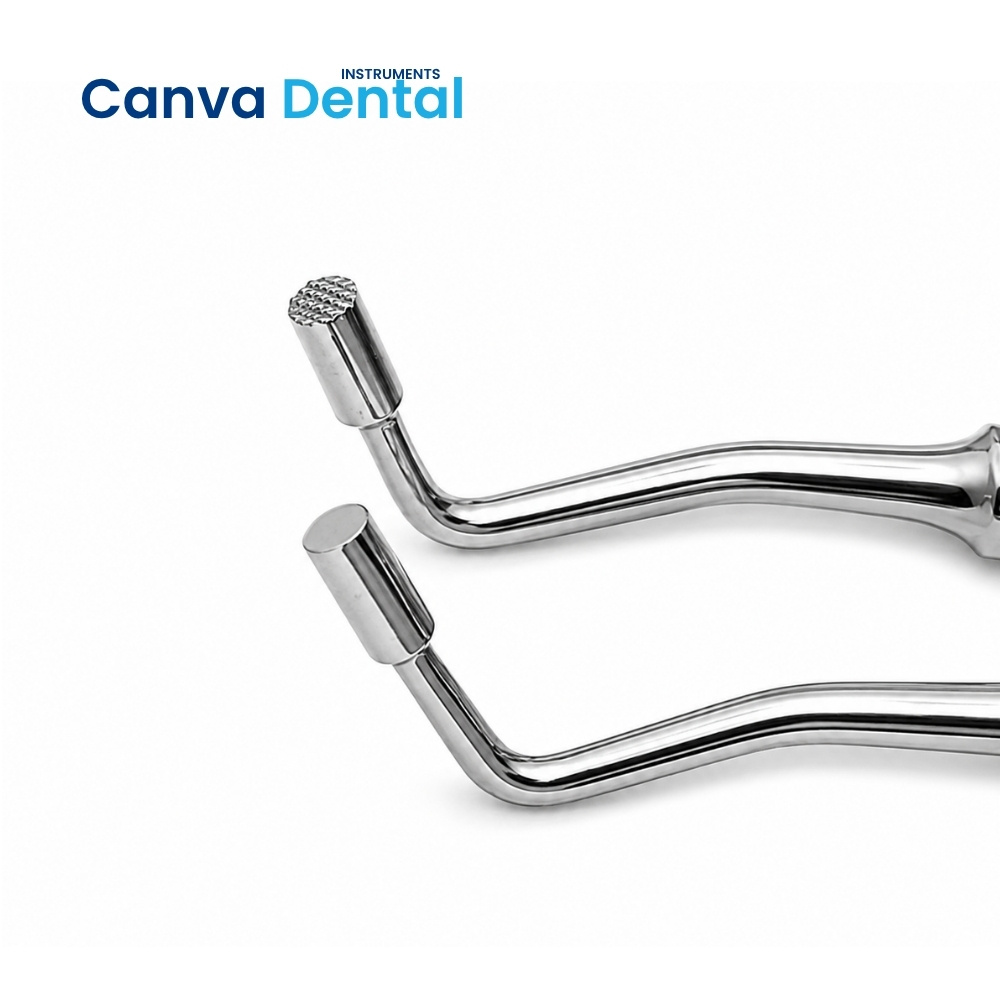
A Condenser Dental instrument is a hand instrument with a flat, serrated, or smooth working tip. Clinicians press this tip against soft restorative material inside the prepared cavity. The tip compresses the material against the cavity floor and walls. Specifically, this compression eliminates air pockets, removes excess material, and adapts the filling to the prepared tooth surface.
Moreover, the condenser dental instrument works through a direct apical pressing motion. The clinician applies controlled downward force through the handle. The working tip transmits that force to the filling material. Consequently, each press advances the condensation front incrementally — working from the deepest cavity point outward to the margin.
Furthermore, many clinicians use “condenser” and “plugger” interchangeably. However, a technical distinction exists between the two. A condenser has a flat or serrated tip for compressing soft materials in restorative cavities. A plugger has a round, smooth tip designed specifically for endodontic obturation. Therefore, the correct term depends on the material and procedure being performed. In this guide, “condenser dental” covers both restorative and endodontic variants.
Specifically, poorly condensed restorations fail for predictable reasons. Air voids beneath the filling surface allow moisture penetration and secondary decay. Poor wall adaptation allows microleakage at the cavity margin. As a result, a correctly used Condenser Dental instrument is not a finishing step — it is the foundational quality control action that determines whether the completed restoration survives in function for years or fails within months.
The amalgam condenser is the most widely used condenser dental variant in general dental practice. Clinicians use it to pack amalgam alloy into class I, II, and V cavity preparations immediately after mixing. Specifically, condensation of freshly mixed amalgam forces the alloy against every surface of the prepared cavity. This removes excess mercury, aligns the alloy crystals, and produces a dense, void-free restoration base.
Moreover, amalgam condensation requires progressive incremental packing. Each increment is condensed separately before the next is added. Consequently, this layered condensation approach produces a denser final restoration than single-pass placement. The amalgam condenser tip is therefore used dozens of times per restoration — making tip sharpness, handle comfort, and tip geometry critical quality factors in instrument selection.
Furthermore, amalgam condensers are available in multiple tip diameters — typically 0.6 mm, 0.8 mm, 1.0 mm, 1.5 mm, and 2.0 mm. Smaller tips access narrow isthmus areas and proximal box floors. Larger tips condense the broader occlusal table. Therefore, a double-ended amalgam condenser with two different tip sizes on one handle reduces tray instrument count. It also allows the clinician to switch tip sizes without picking up a second instrument during the condensation sequence.
Specifically, amalgam condenser tips are either serrated or smooth. Serrated tips grip the amalgam surface during condensation. This grip prevents the tip from sliding across the soft alloy. As a result, serrated tips deliver more efficient condensation force per press than smooth tips on freshly mixed amalgam. However, smooth tips suit the final surface passes where minimal material displacement is needed before carving begins.
The composite condenser addresses a specific challenge that amalgam condensers cannot solve. Composite resin sticks to metal tip surfaces during condensation. This sticking pulls the placed composite away from the cavity wall as the tip lifts. Therefore, composite condensers use non-stick coated tips — typically titanium nitride, PTFE, or satin-finished stainless steel — that release cleanly from composite without adhesion.
Moreover, composite condensers use a ball-tip or flat paddle tip design. These geometries spread and adapt the composite increment across the cavity floor without dragging or tearing the material. Consequently, each composite increment adapts to the previous layer and the cavity walls without introducing voids at the increment interface — the most common source of composite restoration failure in posterior teeth.
Furthermore, composite condensation follows a strict incremental protocol. No increment should exceed 2 mm in depth. Each increment is condensed and light-cured before the next is placed. Specifically, the composite condenser tip adapts the increment into proximal boxes, axiopulpal line angles, and cusp areas that a brush or placement instrument cannot reach with sufficient pressure. As a result, the composite condenser is an active restorative instrument — not simply a shaping tool used after placement.
Specifically, composite condenser tips are available in three main materials. Titanium nitride coated tips offer the best non-stick performance and the longest tip service life. PTFE-coated stainless steel tips are economical and effective for routine composite placement. Plastic or nylon composite instruments suit single-use clinical situations. Therefore, high-volume composite practices should invest in titanium nitride tipped composite condensers for consistent non-stick performance across all appointment sessions.
The endodontic condenser dental instrument — also called a plugger — serves a specific function in root canal obturation. Clinicians use it to vertically compact warm or cold gutta-percha within the root canal after placement. Specifically, the plugger tip presses the master gutta-percha cone apically and laterally against the canal walls. This compaction fills the canal three-dimensionally without leaving voids at the apical seal.
Moreover, vertical condensation of warm gutta-percha produces the most complete three-dimensional obturation of all root canal filling techniques. The endodontic condenser dental tip penetrates the softened gutta-percha mass. It advances incrementally from coronal to apical. Consequently, the obturation mass adapts to every irregularity and lateral canal in the root canal system — producing a hermetic seal that prevents bacterial re-colonisation of the treated canal.
Furthermore, endodontic condensers follow ISO sizing standards. Plugger tip diameters range from size 25 to size 100. Smaller sizes reach the apical third of narrow canals. Larger sizes compact the coronal and middle thirds. Therefore, a complete endodontic tray carries at least three to four plugger sizes — confirming fit in the canal at each size before the obturation sequence begins.
Specifically, the condenser dental instrument serves both cold lateral and warm vertical obturation techniques. In cold lateral condensation, the plugger compacts the gutta-percha mass after a spreader creates space for accessory cones. In warm vertical condensation, the plugger follows a heated heat carrier to compact the softened gutta-percha apically in successive waves. As a result, the endodontic condenser is the active compaction instrument in both obturation systems used in modern root canal practice.
Specifically, every Condenser Dental instrument in our range uses surgical-grade stainless steel throughout. The steel grade provides full corrosion resistance across hundreds of autoclave sterilization cycles. Furthermore, tip hardness is maintained under repeated condensation force without tip deformation or flattening over time. As a result, our condensers deliver consistent tip geometry and condensation performance from the first use through the full instrument service life.
Specifically, restorative condenser instruments classify by the filling material they are designed to condense and the clinical procedure they serve. Consequently, selecting the correct condenser type for each material prevents tip adhesion, inadequate condensation force, and material displacement during the restoration procedure:
| Condenser type | Tip design | Material condensed | Key feature |
|---|---|---|---|
| Amalgam Condenser | Flat, serrated, multiple diameters | Amalgam alloy | Serrated grip prevents tip sliding on soft alloy |
| Composite Condenser | Ball or paddle tip, non-stick coated | Composite resin, compomers | Non-stick coating prevents composite adhesion to tip |
| Endodontic Plugger | Round smooth tip, ISO 25–100 | Gutta-percha, root canal sealers | ISO-sized tip for calibrated apical compaction depth |
| Glass Ionomer Condenser | Flat smooth tip, small diameter | Glass ionomer cement, RMGIC | Smooth tip prevents material adhesion during setting phase |
| Gold Foil Condenser | Serrated, multiple tip angles | Direct gold restorations | Multiple angulations for gold foil compaction in all cavity zones |
| MTA / Bioceramic Condenser | Small flat tip, stainless steel | MTA, calcium silicate materials | Resistant to alkaline bioceramic materials during endodontic repair |
Therefore, a complete restorative and endodontic instrument set includes at minimum an amalgam condenser set, a composite condenser, and an endodontic plugger set. These three variants cover the most common condensation tasks in general and specialist dental practice.
Moreover, double-ended condenser instruments combine two tip sizes or two tip types on a single handle. This design reduces the total number of instruments on the restorative tray. Furthermore, it allows the clinician to switch between a small tip for narrow areas and a large tip for open cavity zones without setting down the instrument. As a result, double-ended condensers improve tray efficiency and procedural speed in high-volume restorative practice.
Specifically, the dental condenser serves the following restorative applications across all standard cavity classifications:
The plugger dental instrument and restorative condenser share a common clinical purpose — eliminating voids in the placed material. Voids in amalgam restorations allow corrosion product accumulation and secondary decay beneath the filling surface. Voids in composite restorations create stress concentration points that cause cohesive fracture under occlusal loading. Therefore, the quality of condensation directly determines restoration longevity in both amalgam and composite restorations.
Specifically, research consistently shows that properly condensed amalgam restorations outlast poorly condensed ones by many years in clinical service. Moreover, properly condensed composite restorations show significantly lower marginal staining, reduced microleakage, and superior fracture resistance. As a result, the condenser dental instrument is not a passive accessory — it is the primary determinant of restoration quality after the cavity preparation is complete.
Furthermore, three specific clinical failures follow directly from inadequate condensation technique. First, voids at the pulpal floor allow bacterial microleakage that produces secondary decay and post-operative sensitivity. Second, poor marginal adaptation allows dye penetration and marginal breakdown under occlusal stress. Third, coronal voids in endodontic obturation allow bacterial re-entry into the root canal system — causing treatment failure and periapical pathology recurrence. Consequently, correct condenser dental technique at each procedure prevents these three failure modes before the restoration is completed.
Moreover, effective condensation requires sustained repetitive force across many presses. Hand fatigue during condensation causes the clinician to reduce press force before adequate compaction is achieved. Specifically, a lightweight handle with a knurled grip surface reduces finger fatigue. It also maintains force consistency across the full condensation sequence. Therefore, handle ergonomics are a direct clinical quality factor — not merely a comfort preference — when selecting a condenser dental instrument for high-volume restorative practice.
Several restorative instruments work alongside the Condenser Dental instrument during filling procedures. Understanding how each one differs helps clinicians build a logical, complete restorative tray setup:
| Instrument | Primary function | Material contact | Limitation vs Condenser Dental |
|---|---|---|---|
| Condenser Dental | Material compaction and void elimination | All restorative materials | — |
| Plastic Instrument | Material placement and initial shaping | Composite, GIC, wax | Shapes but does not compact; no condensation force delivery |
| Burnisher | Surface smoothing and margin adaptation | Amalgam, gold | Smooths surface only; does not compact internal material mass |
| Carver | Occlusal anatomy carving | Amalgam, wax | Removes material; does not add condensation density |
| Endodontic Spreader | Lateral canal space creation | Gutta-percha | Creates space for accessory cones; does not compact the main mass |
| Composite Brush | Surface wetting and initial adaptation | Composite resin | No compaction force; surface adaptation only |
Consequently, the Condenser Dental instrument is the only restorative instrument whose primary function is material compaction — eliminating voids and maximising material density within the prepared cavity. No other instrument in the restorative tray replicates this function.
Before the restorative procedure, confirm that the correct condenser type is on the tray for the material being placed. Select an amalgam condenser with a serrated tip for amalgam, a non-stick composite condenser for composite, and the correct ISO-sized plugger for endodontic obturation. Furthermore, check tip condition before beginning — a deformed or blunted tip delivers uneven condensation force and leaves voids in the filled material. Lay out multiple tip sizes for amalgam and endodontic cases to allow size switching during the condensation sequence.
Because the Condenser Dental instrument contacts restorative materials, dentine, and pulpal tissue in every procedure, correct sterilization between patients is a clinical and regulatory requirement. All stainless steel condensers in our range withstand autoclave sterilization at 134°C in pre-vacuum cycles. Furthermore, they tolerate 121°C gravity displacement cycles without tip deformation, coating degradation, or handle loosening across their full service life.
Moreover, ultrasonic pre-cleaning is essential before autoclaving condenser dental instruments. Amalgam residue, composite resin, glass ionomer cement, and gutta-percha all adhere to tip surfaces and serrations during clinical use. Place the instrument in an enzyme-based ultrasonic cleaning solution for 10 minutes immediately after the procedure. Rinse thoroughly and dry completely before bagging and autoclaving. As a result, pre-cleaning prevents material build-up that blunts tip serrations and degrades non-stick coatings over repeated sterilization cycles.
However, always inspect the working tip before each clinical session. Confirm that the tip face is flat and undamaged on flat-tip amalgam and composite variants. Check that the serrations are sharp and intact. Verify that non-stick coatings show no flaking or pitting that could transfer coating particles into the restoration. Furthermore, check endodontic plugger tips for bending or tip fracture — a bent plugger tip produces eccentric force direction that displaces gutta-percha laterally rather than compacting it apically. Our surgical-grade stainless steel condensers maintain tip geometry and coating integrity across hundreds of sterilization cycles under standard clinical sterilization conditions.
Similarly, many dental professionals follow sterilization guidance recommended by the American Dental Association to maintain instrument integrity across all restorative procedure types.
Our Condenser Dental instrument range — including amalgam condensers, composite condensers, endodontic plugger sets, glass ionomer condensers, and MTA placement condensers — supplies restorative dental clinics, endodontic specialist practices, teaching hospitals, and dental instrument distributors across Lahore, Karachi, Islamabad, Multan, Peshawar, Faisalabad, Rawalpindi, and all major cities in Pakistan. Furthermore, restorative dentistry and endodontics departments at the University of Health Sciences Lahore, Dow University of Health Sciences Karachi, Nishtar Medical University Multan, and Khyber Medical University Peshawar use our condenser dental instruments in their undergraduate and postgraduate clinical training programmes.
Because our instruments originate from Sialkot — Pakistan’s internationally recognised dental instrument manufacturing hub — they carry the tip precision, material quality, and sterilization durability that both institutional buyers and international export clients require. Contact our team for current Condenser Dental Pakistan pricing, available variants and set configurations, bulk order quotations for dental colleges and hospital departments, and delivery timelines for your clinic or institution.
What is a Condenser Dental instrument used for?
Specifically, the Condenser Dental instrument packs, compresses, and adapts restorative filling materials inside prepared cavities. Clinicians use it for amalgam, composite, glass ionomer, and root canal obturation materials. The tip applies direct downward force that eliminates air voids and adapts the material to every surface of the prepared tooth. Because void-free restorations resist microleakage and secondary decay, the condenser dental instrument is the primary quality control tool in every direct restorative procedure.
What is the difference between an amalgam condenser and a composite condenser?
The amalgam condenser uses a serrated stainless steel tip. The serrations grip the soft amalgam alloy and prevent tip sliding during condensation passes. The composite condenser, however, uses a non-stick coated tip — titanium nitride or PTFE. This coating prevents composite resin from adhering to the tip during placement. Therefore, using an amalgam condenser on composite resin causes the material to pull away from the cavity walls as the tip lifts — leaving voids that the non-stick composite condenser prevents.
What is an endodontic condenser dental instrument?
The endodontic condenser dental instrument — also called a plugger — compacts gutta-percha within the root canal during obturation. It has a smooth round tip sized to ISO standards from 25 to 100. Specifically, clinicians use it to vertically compact warm softened gutta-percha from the coronal third toward the apex. As a result, the plugger creates a three-dimensional hermetic seal within the canal system. It works in both cold lateral and warm vertical obturation techniques used in modern root canal practice.
What sizes do dental condensers come in?
Amalgam condensers are available in tip diameters from 0.6 mm to 2.0 mm. Smaller tips suit narrow isthmus and proximal box areas. Larger tips condense the broader occlusal cavity table. Furthermore, endodontic pluggers follow ISO sizing from 25 to 100 — matching the canal preparation size at each root canal level. As a result, a complete condenser dental set covers all cavity sizes and all canal diameters across restorative and endodontic procedures in general and specialist practice.
Is the Condenser Dental instrument available in Pakistan?
Yes, Condenser Dental Pakistan supply is available through our direct sales team and authorised distributors in Lahore, Karachi, Islamabad, Multan, Peshawar, Faisalabad, and Rawalpindi. Because pricing in PKR depends on the condenser variant — amalgam, composite, endodontic, or combination set — and the order quantity, contact our sales team for a current quotation. Bulk orders for dental colleges and hospital restorative departments qualify for institutional pricing. Therefore, reach out with your specific requirements for a tailored PKR price and delivery timeline.
Can Condenser Dental instruments be autoclaved?
Yes. All stainless steel Condenser Dental instruments in our range withstand autoclave sterilization at 134°C in pre-vacuum cycles. Furthermore, ultrasonic cleaning before sterilization removes amalgam residue, composite resin, and gutta-percha from tip serrations and non-stick coated surfaces — preserving tip geometry and coating integrity across repeated sterilization cycles. Our surgical-grade condensers maintain full condensation performance and tip precision throughout their complete clinical service life under standard dental practice sterilization conditions.
For complete restorative and endodontic instrument setups, explore all dental instruments here: CLICK
| Type | Silver striated, Silver non-striated, Plasma Striated, Plasma non-striated, Golden striated, Golden non-striated |
|---|
Reviews
There are no reviews yet.