



₨380 – ₨400Price range: ₨380 through ₨400
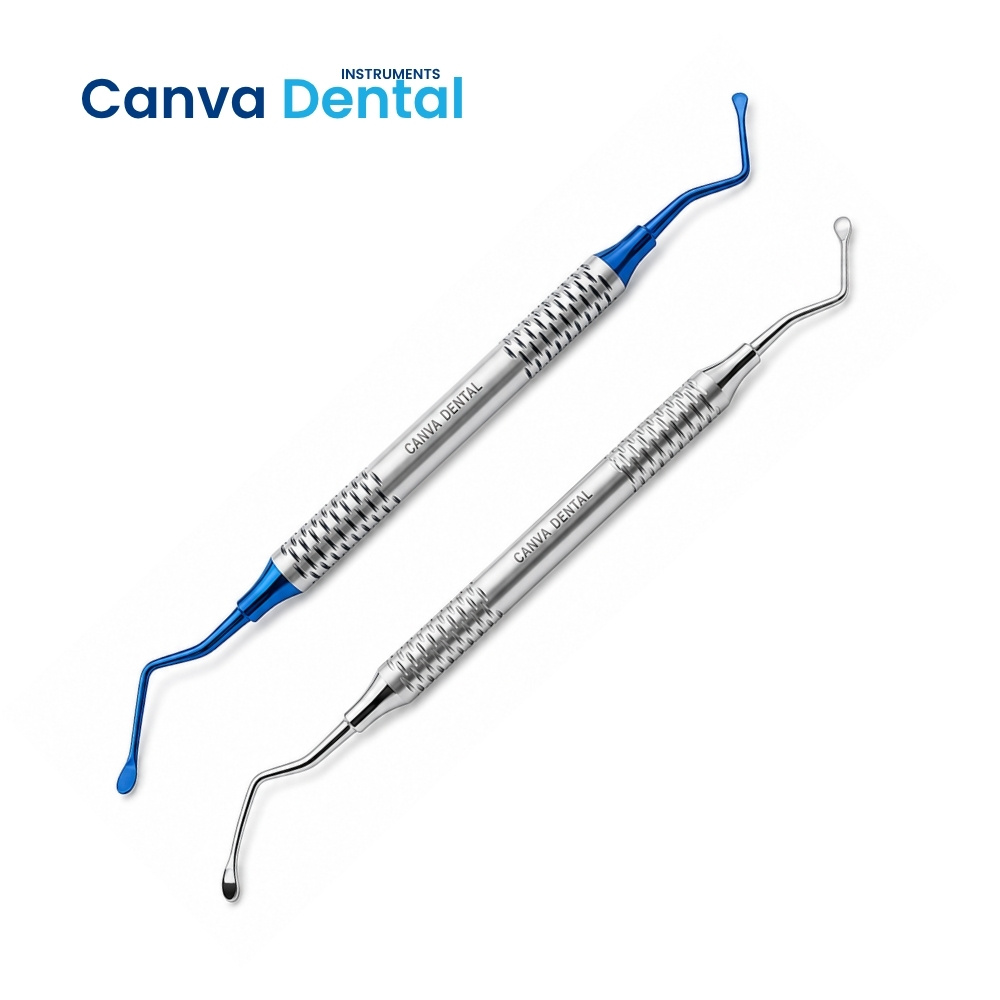
The Lucas Bone Curette is one of the most important soft and hard tissue management instruments in oral surgery and dental extraction practice. Oral surgeons, general dentists, and dental teams use this instrument to remove granulation tissue, periapical pathology, infected bone, and debris from extraction sockets, periapical lesion sites, and osseous surgical fields. Because thorough socket debridement directly determines healing quality and post-surgical outcomes, the Lucas Bone Curette remains a fundamental instrument in every oral surgical instrument tray.
In addition to socket cleaning, this surgical bone curette addresses a wide range of tissue removal tasks across oral surgery, endodontic surgery, and periodontal procedures — wherever diseased tissue, granulomas, or necrotic bone must be removed from a confined surgical site with precise manual control. As a result, dental teams performing extractions, apicoectomies, and implant site preparation consistently rely on the Lucas curette as a standard component of their surgical instrument setup.
A bone curette dental instrument is a spoon-shaped or cup-shaped surgical scraping tool designed to remove soft tissue, granulation tissue, and debris from bony cavities, extraction sockets, and periapical lesion sites. The Lucas Bone Curette specifically features a sharp-edged, angled cup working end on a long, curved shank — a design that allows the working tip to reach deep socket floors and curved periapical areas that straight instruments cannot access effectively.
Unlike excavators that remove carious dentine from tooth cavities, the surgical bone curette scrapes tissue from bony cavities — applying the cup edge against the socket or lesion wall and pulling tissue away from the bone surface through a scooping or scraping stroke. Therefore, the instrument delivers tissue removal from the hardest-to-reach areas of an extraction socket or surgical field without requiring direct visual access at every stroke.
The Lucas Bone Curette distinguishes itself from standard surgical curettes through its characteristic deeply offset, angled shank combined with a cup-shaped working end — rather than the shallow-angled blade designs used in periodontal curettes. Moreover, Lucas curettes come in a matched set of numbered sizes — each carrying a progressively larger cup diameter — allowing surgeons to select the instrument that best matches the socket or lesion dimension being debrided. Consequently, this size-matched approach ensures the cup edge contacts the socket wall efficiently across the full range of tooth socket sizes encountered in clinical practice.
Each Lucas Bone Curette in our range delivers the surgical precision, material durability, and access geometry that demanding oral surgical procedures require consistently:
Lucas bone curette sizes follow a numbered system — most commonly No. 85, No. 86, and No. 87 — where the number corresponds to progressively larger cup diameters and working end dimensions. Selecting the correct size for each socket or lesion ensures the cup edge contacts the socket wall efficiently without either missing tissue with an undersized cup or traumatising adjacent bone with an oversized working end:
| Lucas Number | Cup Diameter | Best Application |
|---|---|---|
| No. 85 (Small) | ~3 mm | Anterior socket debridement, small periapical lesions, fine granulation tissue removal |
| No. 86 (Medium) | ~4 mm | Premolar sockets, moderate periapical cysts, standard post-extraction debridement |
| No. 87 (Large) | ~5 mm | Molar sockets, large periapical lesions, extensive granulation tissue in posterior sites |
Therefore, stocking all three sizes as a complete Lucas set ensures the surgeon always selects the cup that matches the socket dimension — producing efficient, complete tissue removal with fewer strokes rather than repeatedly passing an undersized cup around a larger socket perimeter.
For periapical curettage during apicoectomy procedures, size selection depends on the periapical lesion diameter confirmed on preoperative radiographic assessment. Small lesions around anterior roots typically respond well to the No. 85, while larger periapical granulomas or cysts around molar roots may require the No. 86 or No. 87 to remove all pathological tissue from the bony cavity walls in a systematic sequence of strokes. Moreover, always beginning with a smaller cup and progressing to the correctly matched size prevents overextension beyond the lesion boundary.
The full range of bone curette uses extends across oral surgery, endodontic surgery, periodontal surgery, and implant procedures. Although post-extraction socket debridement represents the most frequent application, bone curette uses cover a significantly broader clinical spectrum wherever diseased tissue must be removed from a bony surgical cavity:
As a periapical curette dental instrument, the Lucas Bone Curette plays a critical role in every apicoectomy procedure — removing the periapical lesion that endodontic root canal treatment alone cannot resolve when persistent periapical pathology requires surgical intervention.
After raising the mucoperiosteal flap and creating the bony window to access the periapical area, the surgeon uses the Lucas curette to systematically debride the periapical crypt. Starting at the coronal aspect of the bony window, the cup engages the lesion wall and applies a scooping stroke toward the apex — progressively removing granulation tissue and cyst lining from all walls of the bony cavity. Moreover, the angled shank of the Lucas design allows the cup to reach the apical and lingual aspects of the lesion that straight instruments cannot access from the buccal surgical approach.
In addition, thorough periapical curettage before root-end resection and retrograde filling reduces contamination of the surgical site and improves visibility of the resected root surface. Furthermore, removing all pathological tissue before retrograde preparation prevents infected debris from entering the resected canal end during ultrasonic retrograde preparation — a contamination risk that compromises the outcome of the surgical endodontic procedure.
Incomplete periapical curettage — leaving residual granuloma or cyst lining tissue on the bony cavity walls — represents the primary cause of surgical endodontic failure through lesion recurrence. Because the remaining tissue retains inflammatory cells and bacterial biofilm, it drives continued periapical bone destruction even after apparently successful root-end filling. Therefore, systematic, complete debridement with the correctly sized Lucas Bone Curette is not merely a procedural detail but a critical determinant of long-term surgical success.
Several instruments address tissue and bone removal in oral surgical fields. Understanding how the Lucas Bone Curette compares to related instruments helps clinicians build a logically organised surgical tray that covers all tissue management requirements:
| Instrument | Working End | Primary Use | Relationship to Lucas Curette |
|---|---|---|---|
| Lucas Bone Curette | Cup-shaped angled end | Socket debridement, periapical curettage, granulation tissue | — |
| Bone Rongeur | Biting jaw mechanism | Bulk bone removal, alveoloplasty | Used before — removes bone; Lucas removes soft tissue |
| Bone File | Rasping surface | Final bone surface smoothing | Used after Lucas — refines bone surface after tissue removal |
| Periodontal Curette | Rounded toe, semi-circular | Subgingival root planing, pocket debridement | Different zone — periodontal pocket vs bony socket |
| Minnesota Retractor | Flat blade | Soft tissue retraction during surgery | Complementary — holds flap while Lucas debrids socket |
| Frazier Suction Tip | Narrow suction cannula | Blood and irrigant removal from surgical site | Complementary — clears field while Lucas works |
Therefore, in a well-organised oral surgical tray, the Lucas Bone Curette works in concert with the Bone Rongeur for initial bone management, the Bone File for final surface refinement, and the Frazier Suction Tip for continuous field clearance — each instrument addressing a distinct phase of the surgical tissue management sequence.
Before inserting the Lucas Bone Curette into an extraction socket or surgical field, confirm that the flap or adjacent soft tissue is adequately retracted — the curved shank requires unobstructed entry into the socket without soft tissue resistance that could displace the instrument during advancement. Insert the cup into the socket with the opening facing the socket wall, then apply a firm pull stroke from the socket floor toward the crest — drawing granulation tissue out of the socket rather than pushing it further apically.
In addition, work systematically around the full circumference of the socket — buccal, lingual, mesial, distal, and apical walls in sequence — rather than curetting randomly. This systematic approach confirms complete tissue removal from all socket walls before the clinician withdraws the instrument and transitions to the next surgical step.
When the cup contacts clean bone rather than soft tissue, the stroke produces a distinct scraping sound and firm resistance without material removal. Consequently, this tactile and auditory feedback confirms complete debridement of each wall — a reliable end-point indicator that does not require direct visual confirmation at the base of a deep socket. However, applying excessive force after this resistance is felt risks perforating the socket wall — particularly in anterior alveolar bone where buccal cortical plate thickness may be less than 1mm in some patients.
All stainless steel Lucas Bone Curettes in our range withstand repeated autoclave cycles at 134°C without cup deformation, edge damage, or shank distortion. However, the cup interior collects blood, bone particles, and soft tissue debris during every procedure — making immediate pre-cleaning essential before material dries and adheres to the cup surface. Rinsing the instrument under running water immediately after removal from the surgical site prevents debris accumulation that complicates subsequent ultrasonic cleaning.
In addition, clinicians should inspect the cup edge before each procedure — a sharp Lucas curette catches tissue efficiently with minimal hand pressure, while a dull edge pushes tissue against the bone wall rather than removing it cleanly. Therefore, running a fingernail lightly across the cup rim confirms whether the edge catches (sharp) or glides (dull). Furthermore, a dull cup edge requires professional sharpening or instrument replacement — continued use with a blunt curette results in incomplete socket debridement, increased tissue trauma, and a false sense of completion when the socket wall feels firm only because the dull edge cannot engage residual granulation tissue.
We supply Lucas Bone Curettes — in sizes No. 85, No. 86, and No. 87, available individually or as complete three-piece sets — to oral surgery departments, general dental clinics, endodontic surgical practices, teaching hospitals, and instrument distributors across Lahore, Karachi, Islamabad, Multan, Peshawar, Faisalabad, Rawalpindi, and all major cities in Pakistan. Moreover, our institutional supply team handles bulk procurement for dental college oral surgery departments and hospital surgical units at competitive pricing.
Contact our team for current Lucas Bone Curette pricing in Pakistan, complete set availability, and delivery timelines for your clinic or institution.
Q: What is the Lucas Bone Curette used for in dentistry?
The Lucas Bone Curette removes granulation tissue, periapical pathology, infected debris, and soft tissue from extraction sockets, periapical lesion sites, and osseous surgical cavities. Primary bone curette uses include post-extraction socket debridement, periapical curettage during apicoectomy, cyst enucleation, implant and bone graft site preparation, alveolitis debridement, and sequestrectomy during osteomyelitis management. In addition, it serves as the primary tissue removal instrument during endodontic surgical procedures where periapical lesions require complete excision for long-term treatment success.
Q: What is the difference between Lucas Bone Curette sizes 85, 86, and 87?
Lucas bone curette sizes differ in cup diameter — No. 85 carries the smallest cup at approximately 3mm for anterior sockets and small periapical lesions, No. 86 provides a medium 4mm cup for premolar sockets and moderate lesions, and No. 87 offers the largest cup at approximately 5mm for molar sockets and extensive periapical pathology. Selecting the size that matches the socket dimension ensures bilateral wall contact during each stroke, producing complete tissue removal with fewer passes rather than repeatedly chasing residual tissue with an undersized cup.
Q: How does the Lucas Bone Curette differ from a periodontal curette?
Although both instruments carry curved working ends and operate through scooping strokes, they address entirely different anatomical zones and tissue types. The Lucas Bone Curette works within bony sockets and periapical cavities — removing granulation tissue, cyst lining, and infected debris from bone-walled spaces. A periodontal curette, however, works within the periodontal pocket along the root surface — removing calculus and biofilm from cementum through root planing strokes. Therefore, these two instruments serve complementary roles in different clinical contexts rather than being interchangeable alternatives.
Q: Why is complete socket debridement with the Lucas Bone Curette important?
Thorough socket debridement removes pathological tissue that would otherwise prevent normal clot formation, delay healing, and maintain a source of bacterial contamination within the healing socket. Specifically, retained periapical granulomas and cyst linings contain inflammatory cells and biofilm that continue driving bone destruction after extraction — leading to delayed healing, socket infection, and increased alveolitis risk. Consequently, complete debridement with a correctly sized Lucas curette at the time of extraction removes this pathological tissue and creates a clean socket environment that heals predictably with minimal complications.
Q: Is the Lucas Bone Curette autoclavable?
Yes. All stainless steel Lucas Bone Curettes in our range withstand autoclave sterilization at 134°C. However, rinsing the cup and shank immediately after use prevents blood and tissue debris from drying inside the cup interior — ultrasonic cleaning before autoclaving then removes remaining organic material effectively. In addition, inspecting the cup edge after each sterilization cycle confirms that sharpness remains adequate for the next clinical use, since repeated autoclaving without edge maintenance can progressively reduce the cutting efficiency that effective socket debridement requires.
| Types | Silver, Plasma |
|---|
Reviews
There are no reviews yet.