



₨850
The Bracket Positioning Gauge is one of the most precise measurement instruments in orthodontic clinical practice. Orthodontists and orthodontic assistants use this instrument to measure the exact height of each bracket from the incisal edge or cusp tip of every tooth before bonding — ensuring that every bracket in the arch sits at the correct vertical position for the prescribed prescription to deliver its intended tooth movement. Because even a 0.5 mm error in bracket height translates directly into unwanted tooth rotation, tipping, or torque expression at the end of treatment, the bracket positioning gauge is a non-negotiable precision tool in every orthodontic bonding appointment.
Furthermore, the Bracket Positioning Gauge serves as the clinical bridge between the bracket prescription on the laboratory model and the actual bonding position on the tooth surface in the patient’s mouth. As a result, orthodontic practices that use a consistent, calibrated bracket placement gauge produce more predictable tooth movement outcomes, require fewer archwire adjustment appointments to correct bracket position errors, and deliver treatment results that match the planned occlusal goals more reliably than those relying on visual estimation alone.
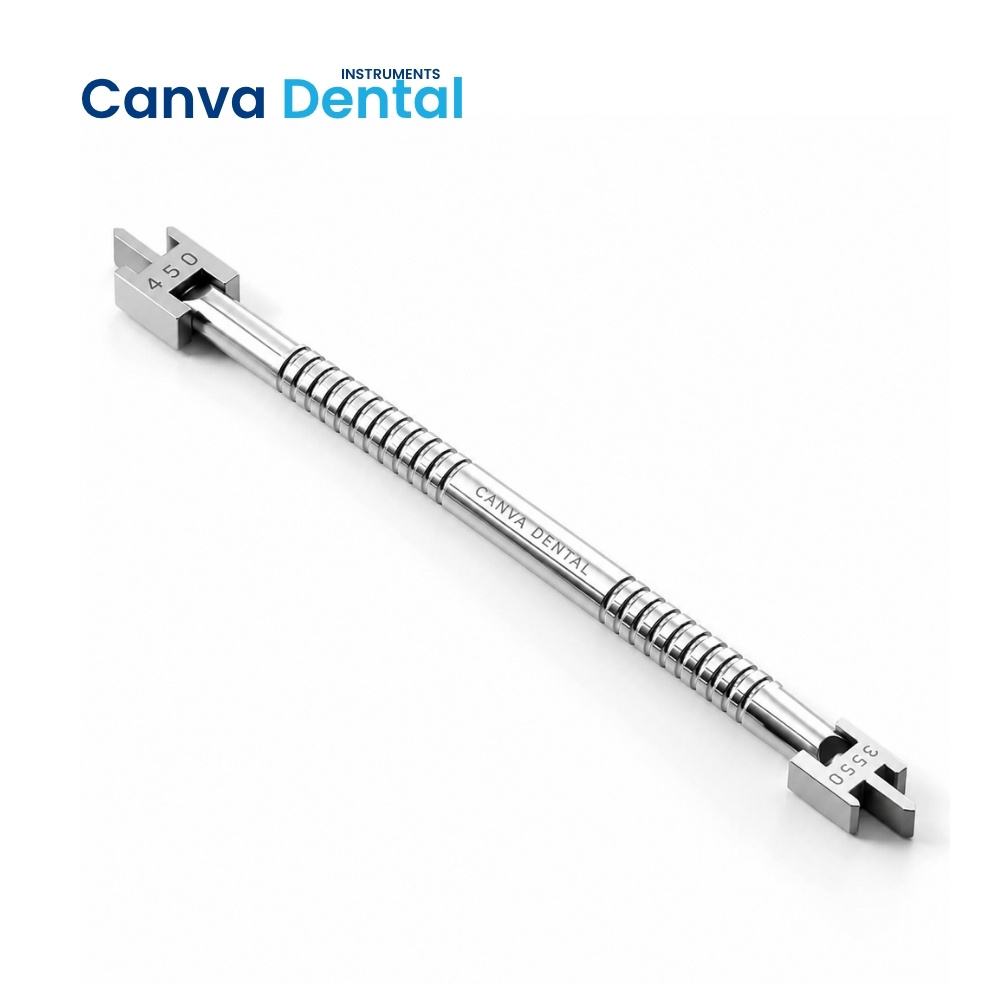
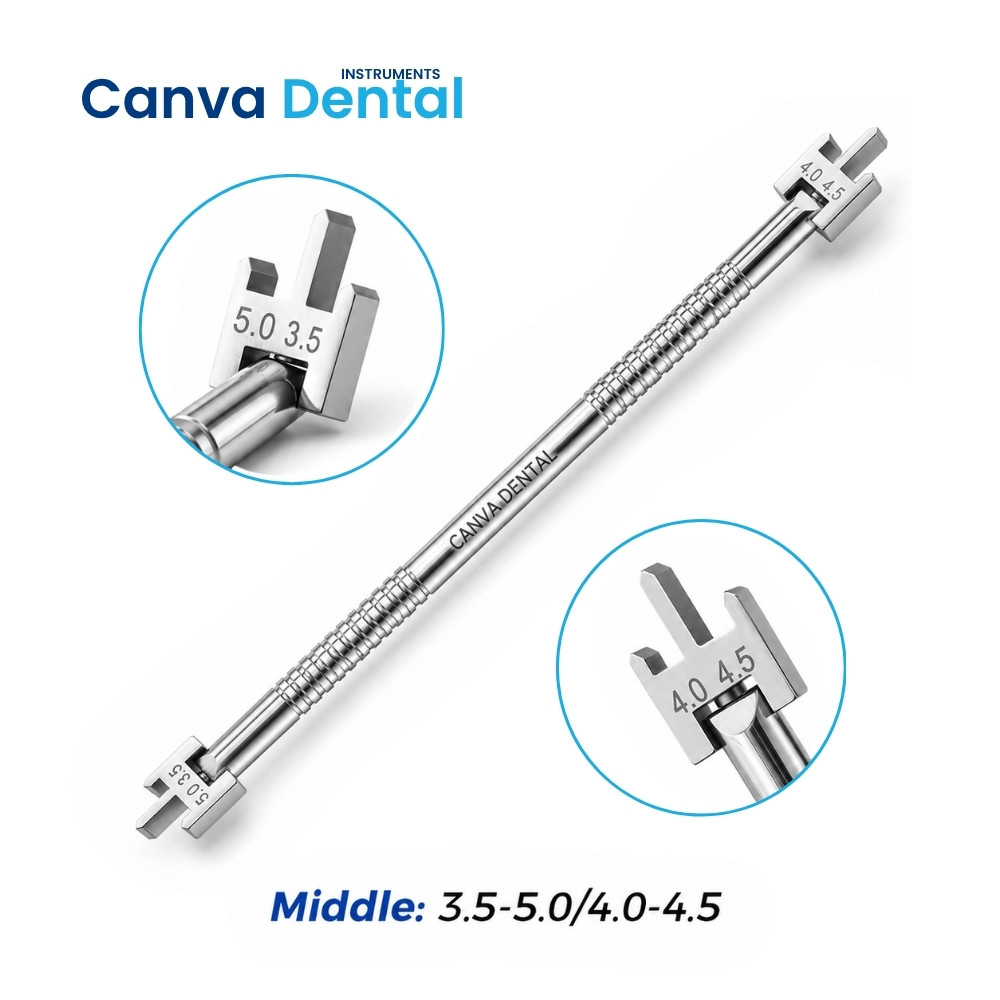
A Bracket Positioning Gauge — also called an orthodontic bracket gauge, bracket placement gauge, or bracket height gauge — is a precision measuring instrument with one or more calibrated millimetre arms or contact points that the clinician places against the tooth surface to measure the exact vertical distance from the incisal edge or cusp tip to the proposed bracket bonding position. The gauge confirms that each bracket will sit at the exact height specified by the bracket prescription before the adhesive sets — eliminating the guesswork and visual estimation errors that make manual bracket placement inconsistent across operators and appointment sessions.
The orthodontic bracket gauge operates on a deceptively simple mechanical principle that delivers clinically significant precision. One arm of the gauge rests on the incisal edge or cusp tip of the tooth — the reference anatomical point — while the second arm or contact surface indicates the target bracket bonding height measured in millimetres from that reference. When both arms contact their respective surfaces simultaneously, the clinician has confirmed the correct bracket height before pressing the bracket into the adhesive. Consequently, this two-point contact measurement eliminates the most common source of bracket position error — parallax and visual angle variation between different operators or between the same operator at different appointments.
Every modern orthodontic bracket prescription encodes specific angulation, torque, and in-out values into the bracket base — these values only express correctly when the bracket sits at the precise height its manufacturer calibrated the prescription for. Specifically, a bracket placed 1 mm too gingivally places the slot at the wrong vertical position relative to the crown centre of resistance, causing the archwire to express the wrong torque and angulation vectors throughout the entire treatment mechanics phase. Therefore, the bracket positioning gauge is not merely a convenience instrument — it is the precision tool that activates the full clinical value of the bracket prescription the orthodontist selected.
Visual estimation of bracket height — using anatomical landmarks, ruler lines drawn on the tooth, or operator experience alone — introduces a measurement variability of 0.5–1.5 mm between operators and appointment sessions, as multiple clinical studies have documented. The Bracket Positioning Gauge reduces this variability to under 0.1 mm when used correctly and consistently. Moreover, visual estimation cannot account for variations in tooth crown height between individual patients — the upper central incisor in one patient may have a clinical crown height of 9.5 mm while another patient’s measures 11.5 mm, requiring entirely different bracket heights for the same prescribed vertical position relative to the crown centre. The bracket height gauge measures from the incisal edge directly, automatically accommodating individual crown height variation without requiring any adjustment to the operator’s technique.
The term orthodontic gauge covers several related measurement instruments used across different stages of orthodontic treatment planning and clinical execution. Understanding which specific gauge addresses which clinical measurement task helps orthodontic practices build a complete, accurate measurement instrument set for their bonding and archwire workflows.
The Bracket Positioning Gauge is the most widely used orthodontic gauge in direct bonding appointments — it measures bracket height from the incisal or cusp reference point. However, the broader orthodontic gauge family also includes arch width gauges that measure intercanine and intermolar arch widths for archwire selection, archwire measuring gauges that confirm wire dimension before insertion, torque gauges that measure archwire torque angles during treatment mechanics, and band size gauges that measure molar crown circumferences for preformed band selection. Because each gauge in this family addresses a distinct measurement task, a well-equipped orthodontic practice maintains multiple gauge types rather than relying on the bracket positioning gauge alone for all measurement needs.
Specifically, the Bracket Positioning Gauge holds the most critical position within the orthodontic gauge family because bracket height error is the single most consequential positioning mistake in orthodontic bonding — it affects every stage of tooth movement from the first archwire to the final detailing wire. In contrast, minor errors in arch width measurement or archwire dimension confirmation produce smaller, more easily corrected treatment deviations. Therefore, practices that invest in only one precision gauge instrument should prioritise the bracket positioning gauge above all other orthodontic measurement tools.
The Bracket Height Gauge function is the core clinical purpose of the bracket positioning gauge, and understanding how bracket height measurement works in practice clarifies why this instrument is essential rather than optional in a bonding appointment. Bracket height refers to the vertical distance from the incisal edge of anterior teeth — or the cusp tip of posterior teeth — to the centre of the bracket slot, measured in millimetres along the labial surface of the crown.
Standard bracket height prescriptions for the Andrews straight-wire appliance specify bracket slot centre heights of approximately 4.0–4.5 mm for upper central incisors, 3.5–4.0 mm for upper lateral incisors, 4.5–5.0 mm for upper canines, 4.0 mm for upper first premolars, 3.5–4.0 mm for upper second premolars, and equivalent measurements for lower arch brackets — all measured from the incisal or cusp reference point. Because these measurements vary by tooth type, arch position, and individual crown height, the bracket height gauge must be adjustable to set different target heights for each tooth in the bonding sequence.
Fixed bracket height gauges set a single non-adjustable measurement — typically 4.0 mm or 4.5 mm — and suit practices using a single bracket height prescription across all teeth in a simplified bonding protocol. Adjustable bracket height gauges allow the clinician to set any measurement between 3.0 mm and 6.0 mm by sliding or rotating the measurement arm to the required position, accommodating every tooth type and every individual crown height variation across the full arch. Furthermore, double-ended bracket positioning gauges provide two fixed measurement settings on a single instrument — typically 3.5 mm and 4.5 mm — covering the most common anterior and posterior bracket heights without requiring a separate adjustable gauge for routine bonding appointments.
Specifically, every Bracket Positioning Gauge in our range incorporates these professional-grade measurement and material features:
Orthodontic practices select different bracket placement gauge designs based on bonding protocol complexity, bracket prescription requirements, and operator preference. Consequently, stocking the correct gauge type for each clinical workflow ensures consistent, accurate bracket positioning across every bonding appointment:
| Gauge type | Design | Best for | Key difference |
|---|---|---|---|
| Adjustable Bracket Positioning Gauge | Sliding or rotating arm, lockable, full mm scale | All tooth types, variable crown heights, full arch bonding | Sets any height 3–6 mm; most versatile option |
| Fixed Double-Ended Gauge | Two fixed contact points, single instrument | Practices using two standard heights for anterior and posterior | No adjustment needed; faster for routine bonding |
| Boone Gauge | Flat ruler with multiple preset notch positions | Simplified bonding protocols, undergraduate training | Multiple fixed positions; less precise than sliding arm |
| Digital Orthodontic Gauge | Digital readout, electronic measurement arm | High-precision specialist practices, research settings | Digital display; higher cost; requires battery |
| Combination Gauge | Bracket height + arch width on one instrument | Comprehensive measurement in a single chairside tool | Two measurement functions; larger instrument body |
An adjustable bracket positioning gauge with a locking arm mechanism suits the majority of general orthodontic practices because it accommodates every tooth type and individual crown height variation across the full arch in a single instrument — reducing the number of separate gauges required on the bonding tray and simplifying the instrument setup for each appointment.
Specifically, the full range of Bracket Positioning Gauge uses extends across multiple stages of orthodontic bonding, rebonding, and bracket position assessment in both general and specialist orthodontic practice. Dental teams rely on this bracket placement tool for the following clinical applications:
The Bracket Positioning Gauge functions as the primary quality control instrument at the most consequential stage of orthodontic treatment setup — the bonding appointment. Every tooth movement that occurs during orthodontic treatment is a direct mechanical consequence of where the bracket sits on the tooth surface. The archwire delivers its prescribed forces through the bracket slot, and the slot’s position relative to the crown’s centre of resistance determines whether those forces produce the intended tooth movement or a deviation from the treatment plan.
As a precision orthodontic measuring instrument, the bracket positioning gauge ensures that the clinician’s physical bracket placement matches the prescription’s design intent at every tooth in the arch. Furthermore, consistent gauge use eliminates inter-operator variability in bracket height — allowing different operators in the same practice, or the same operator at different appointment sessions, to achieve equivalent bracket positions without relying on subjective visual judgement that changes with operator fatigue, lighting conditions, and viewing angle.
Specifically, the three most common bracket positioning errors that the bracket height gauge prevents are: vertical height error (bracket too high or too low), which causes unintended torque and angulation expression; mesiodistal position error (bracket too mesial or too distal), which causes rotation errors; and angulation error (bracket tilted on the tooth surface), which mimics tip prescription errors. Of these three error types, vertical height error is the most common and the most directly preventable with consistent bracket positioning gauge use. Research published in peer-reviewed orthodontic literature confirms that manual bracket placement without a positioning gauge produces clinically significant height errors in approximately 30–40% of brackets placed, requiring bracket repositioning at subsequent appointments to correct the resulting tooth movement deviations.
Moreover, consistent bracket height accuracy across the full arch directly affects archwire progression speed and total treatment duration. When all brackets sit at precisely the correct height, each successive archwire expresses its prescribed tooth movement cleanly from the first insertion — allowing the orthodontist to progress through the initial, intermediate, and finishing archwire sequences on schedule. In contrast, bracket height errors require one or more additional appointments to identify the mispositioning, rebond the affected bracket, and allow the archwire to re-level the corrected bracket position before treatment can progress — adding weeks or months to the total treatment duration and requiring additional appointments that the patient, the practice, and the treatment plan did not anticipate.
Several bracket bonding instruments assist with different aspects of the direct bonding procedure, and understanding how the Bracket Positioning Gauge compares to each alternative helps orthodontic practices build a complete, efficient bonding instrument tray:
| Instrument | Primary function | Measurement capability | Limitation vs Bracket Positioning Gauge |
|---|---|---|---|
| Bracket Positioning Gauge | Bracket height measurement and confirmation | Full mm scale, adjustable | — |
| Bracket Placement Forceps | Bracket handling and seating | None — placement only | No measurement function; places but does not verify height |
| Dental Ruler / Millimetre Probe | General length measurement | Linear scale only | No incisal reference contact point; requires two-hand use |
| Bonding Template / Transfer Tray | Indirect bonding position transfer | Pre-set positions from model | Requires separate lab fabrication; not a chairside gauge |
| Visual Estimation / Ruler Line | Approximate height reference | ±0.5–1.5 mm variability | Operator-dependent; not reproducible across sessions |
Consequently, the Bracket Positioning Gauge is the only chairside orthodontic bonding instrument that combines a calibrated millimetre reference scale with a two-point incisal-edge-to-bracket contact measurement system in a single hand-held autoclavable tool. No alternative bonding instrument replicates this function without requiring additional instruments, laboratory fabrication, or operator estimation that introduces the positional variability the gauge eliminates.
Before the bonding appointment, prepare a bracket height chart listing the target millimetre height for every tooth in the bonding sequence based on the bracket prescription and the patient’s individual crown height measurements taken from study models or digital scans. Confirm that the bracket positioning gauge is sterile and that the measurement arm slides and locks smoothly before beginning. Set the gauge arm to the target height for the first tooth to be bonded — typically the upper central incisor — and lock the arm in position before picking up the bracket or entering the oral cavity.
Because the Bracket Positioning Gauge contacts tooth surfaces, saliva, and adhesive residue during every bonding appointment, correct sterilization between every patient is a clinical and regulatory requirement. All stainless steel bracket positioning gauges in our range withstand repeated autoclave cycles at 134°C in pre-vacuum steam sterilization and at 121°C in gravity displacement cycles — without dimensional change, scale fading, or arm mechanism degradation across their full clinical service life.
Moreover, ultrasonic pre-cleaning before autoclaving removes composite adhesive residue that adheres to the contact tips and the measurement scale markings during bonding appointments. Place the gauge in an enzyme-based ultrasonic cleaning solution for 10 minutes after each bonding session, paying particular attention to the sliding arm mechanism where adhesive debris accumulates and can impair smooth arm movement over time. Rinse thoroughly, dry completely, then bag and autoclave as standard protocol.
However, always inspect and test the locking mechanism before each bonding appointment. An arm locking mechanism that holds loosely allows the set measurement to shift during intraoral instrument positioning — producing a false reading that the clinician may not detect before the adhesive cures. Our precision-engineered bracket positioning gauges feature a positive-click locking mechanism that holds the set measurement securely through the full bonding sequence and releases cleanly for the next measurement setting.
Similarly, many dental professionals follow sterilization and infection control guidance recommended by the American Dental Association to maintain clinical safety and instrument integrity across all orthodontic procedure types.
Our Bracket Positioning Gauge range — including adjustable sliding arm gauges, fixed double-ended gauges, Boone-style gauges, and combination orthodontic measuring instruments in surgical-grade stainless steel — supplies orthodontic specialist clinics, general dental practices with orthodontic services, teaching hospitals, and dental instrument distributors across Lahore, Karachi, Islamabad, Multan, Peshawar, Faisalabad, Rawalpindi, and all major cities in Pakistan. Furthermore, orthodontic departments at the University of Health Sciences Lahore, Dow University of Health Sciences Karachi, Nishtar Medical University Multan, and Khyber Medical University Peshawar use our orthodontic gauge instruments as part of their standard undergraduate and postgraduate bonding training setups. Because our instruments originate from Sialkot — Pakistan’s internationally recognised surgical and dental instruments manufacturing hub — they carry the measurement precision, material quality, and sterilization durability that institutional orthodontic buyers and international export clients consistently require.
Contact our team for current Bracket Positioning Gauge Pakistan pricing, available gauge types and configurations, bulk order quotations for orthodontic departments and dental colleges, and delivery timelines for your clinic or institution.
What is a Bracket Positioning Gauge used for in orthodontics?
>>>>>>>>>>>>>>>>>>>>>>>>>>>>>>>>>>>>>>>>>>>>>>>>>>>>>>>>>>>>>>>>>>>Specifically, the Bracket Positioning Gauge is a precision orthodontic measuring instrument that orthodontists and orthodontic assistants use to measure and confirm the exact vertical height of each bracket from the incisal edge or cusp tip of every tooth before bonding the bracket to the tooth surface. The gauge ensures each bracket sits at the millimetre height prescribed by the bracket system — activating the correct torque, angulation, and in-out values encoded in the bracket base. Because even a 0.5 mm bracket height error produces measurable deviations in tooth movement direction and magnitude, the bracket positioning gauge is a clinical necessity rather than an optional convenience in every bonding appointment.
What is the difference between a Bracket Height Gauge and a Bracket Positioning Gauge?
>>>>>>>>>>>>>>>>>>>>>>>>>>>>>>>>>>>>>>>>>>>>>>>>>>>>>>>>>>>>>>>>>>>The Bracket Height Gauge and Bracket Positioning Gauge refer to the same clinical instrument — the terms are used interchangeably across different orthodontic manufacturers, training programmes, and clinical textbooks. Both terms describe the same two-arm millimetre measurement instrument that rests on the incisal edge and confirms bracket height before bonding.
What bracket height measurements does the gauge cover?
>>>>>>>>>>>>>>>>>>>>>>>>>>>>>>>>>>>>>>>>>>>>>>>>>>>>>>>>>>>>>>>>>>>Standard bracket height prescriptions for straight-wire appliances range from approximately 3.0 mm for lower posterior teeth to 5.0 mm for upper canines, depending on the specific bracket prescription, the patient’s crown height, and the clinician’s preferred bracket height protocol. Our adjustable Bracket Positioning Gauge covers the full range from 3.0 mm to 6.0 mm in 0.5 mm increments — accommodating all standard straight-wire prescriptions across Andrews, Roth, MBT, and other major bracket systems without requiring separate gauges for different tooth types or arch positions.
Is the Bracket Positioning Gauge available in Pakistan and what is the price?
>>>>>>>>>>>>>>>>>>>>>>>>>>>>>>>>>>>>>>>>>>>>>>>>>>>>>>>>>>>>>>>>>>>Yes, Bracket Positioning Gauge Pakistan supply is available through our direct sales team and authorised dental instrument distributors in Lahore, Karachi, Islamabad, Multan, Peshawar, Faisalabad, and Rawalpindi. Its pricing is 500 to 1500 PKR.
Reviews
There are no reviews yet.