



₨20 – ₨90Price range: ₨20 through ₨90
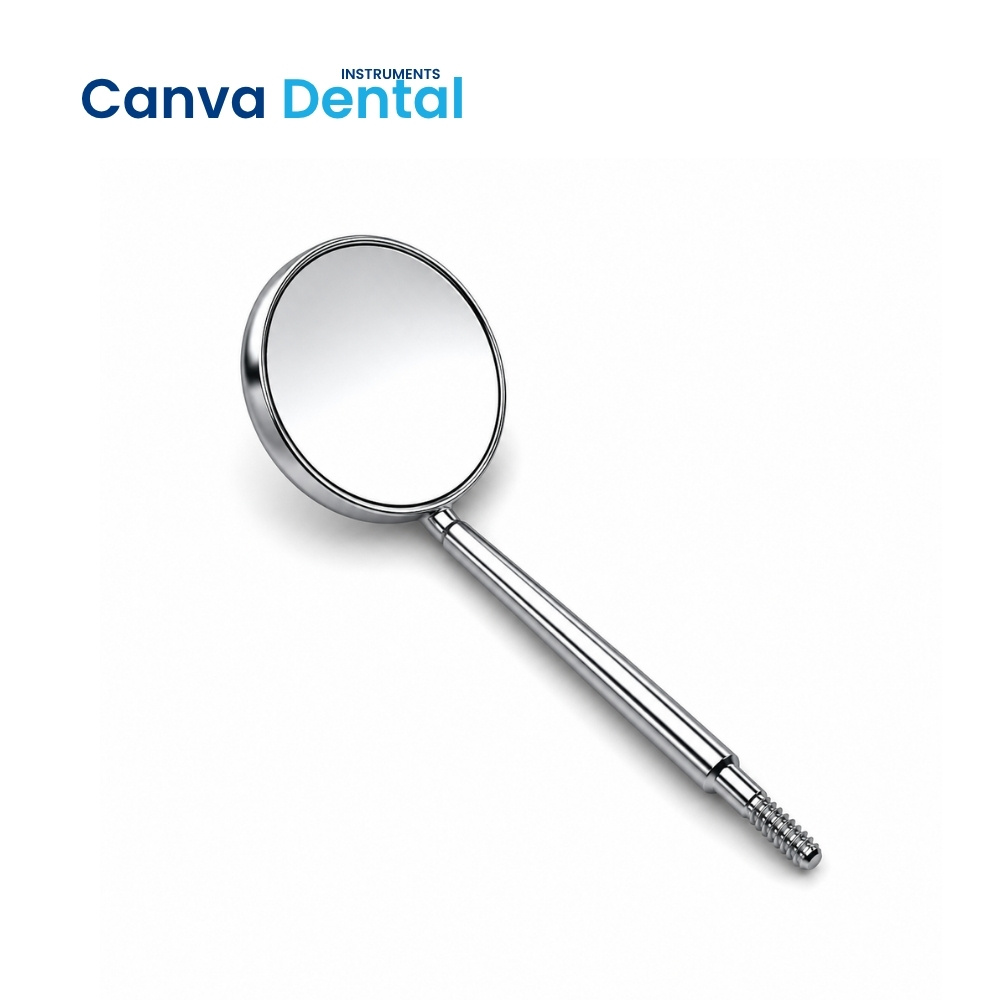
Mirror Tops are the replaceable reflective heads that attach to dental mirror handles and form the working surface of one of the most widely used diagnostic instruments in dentistry. Dentists, dental hygienists, and oral surgery teams use these components at every patient examination to achieve indirect vision of inaccessible tooth surfaces, reflect light into posterior and lingual areas, retract soft tissue, and transilluminate teeth during caries detection. Because examination quality depends directly on mirror surface clarity and reflective accuracy, selecting the correct mirror tops dental design for each clinical task is a fundamental decision in building a well-equipped diagnostic instrument set.
In addition to their diagnostic role, dental mirror heads serve as a communication tool during patient education — allowing clinicians to show patients their own tooth surfaces, gingival conditions, and treatment areas that direct vision alone cannot reveal. As a result, high-quality mirror tops dental products improve both clinical outcomes and patient understanding at every appointment.
Mirror tops dental professionals use are circular, polished reflective discs — typically 20–28mm in diameter — mounted on a threaded or snap-fit collar that attaches to a standard dental mirror handle. The reflective surface on each dental mirror head provides the optical function that makes indirect intraoral vision possible — bouncing light from the dental unit or headlight onto surfaces the clinician cannot view directly.
Each mirror top consists of a glass or stainless steel substrate coated with a reflective material — standard silver, rhodium, or front-surface optical coating — that determines the image clarity, distortion level, and durability of the reflection the clinician sees during examination. Therefore, the coating type is one of the most clinically significant features differentiating mirror tops dental designs from each other, particularly for procedures requiring high-definition image clarity such as caries detection and aesthetic assessment.
A dental mirror consists of two separate components — the handle and the mirror top — that clinicians purchase, replace, and sterilize independently. The handle provides the grip and shank that positions the mirror top intraorally, while the mirror top provides the actual reflective surface. Consequently, clinics can replace worn or scratched mirror tops without replacing the entire instrument — reducing clinical costs significantly while maintaining optical performance at every examination appointment.
Each mirror top in our range delivers the optical clarity, surface durability, and attachment compatibility that high-volume dental examination practice demands:
Several dental mirror head types exist, each providing different optical properties suited to specific clinical applications. Understanding these types helps clinicians select the correct mirror top for each examination task and build a complete diagnostic instrument set:
| Type | Coating | Image Quality | Best For |
|---|---|---|---|
| Front Surface Mirror Top | Rhodium or aluminium on front face | Excellent — no double image | Precise caries detection, aesthetic assessment, photography |
| Back Surface Mirror Top | Silver coating behind glass | Moderate — slight double image | General examination, routine check-ups, student use |
| Rhodium-Coated Mirror Top | Rhodium on front surface | Superior — high contrast, scratch resistant | High-definition examination, specialist practice |
| Stainless Steel Mirror Top | Polished steel surface | Good — minor distortion | Durable general use, high-volume clinics |
| Concave Mirror Top | Back silver, concave profile | Magnified — slight distortion | Detailed surface inspection, patient education |
| Plain / Flat Mirror Top | Standard back silver | Standard — slight double image | Everyday general dental examination |
In addition to coating type, dental mirror heads differ in surface profile — the curvature or flatness of the reflective face — which determines whether the reflected image appears magnified, reduced, or true-to-size:
| Profile | Image Effect | Clinical Use |
|---|---|---|
| Flat (Plain) | True-size image — no magnification | Standard examination — most commonly used profile |
| Concave | Magnified image — enlarges tooth surfaces | Detailed caries inspection, patient demonstration |
| Front-Surface Flat | Sharp, distortion-free true-size image | Precision examination, dental photography assistance |
Mirror tops dental sizing follows a numbered classification system where the number corresponds to the disc diameter. Selecting the correct mirror top sizes for each patient type and examination area ensures maximum intraoral access and visibility without causing discomfort or restricted access in smaller mouths:
| Mirror Number | Diameter | Best Application |
|---|---|---|
| No. 2 | 16 mm | Paediatric patients — primary dentition examination |
| No. 3 | 20 mm | Paediatric and small adult mouths — anterior examination |
| No. 4 | 22 mm | Standard adult examination — most commonly used size |
| No. 5 | 24 mm | Adult posterior examination — wider field of view |
| No. 6 | 28 mm | Large adult arches — maximum posterior visibility |
Therefore, stocking No. 4 as the primary examination size — alongside No. 3 for paediatric and No. 5 for posterior adult work — covers the full patient range in a general dental practice with three mirror top sizes rather than a complete set of all available numbers.
The full range of mirror tops dental uses extends across every dental specialty and clinical scenario requiring intraoral visibility, light management, or tissue displacement. Although routine examination represents the most frequent application, these components contribute to clinical precision across multiple disciplines:
The front surface mirror dental design represents the highest optical standard available in dental mirror tops and deserves specific attention because of how significantly it improves examination quality compared to standard back-silvered alternatives.
Standard dental mirror heads use a silver coating applied to the back surface of a glass disc — the same construction used in household mirrors. When light reflects from this design, it produces two reflections — one from the front glass surface and one from the silver coating behind the glass. Consequently, the clinician sees a primary image from the silver coating and a slightly offset ghost image from the glass surface simultaneously. Although this double image is subtle, it blurs fine surface detail and makes early carious lesions, hairline cracks, and subtle gingival changes significantly harder to detect accurately during examination.
Front surface mirror dental designs place the reflective rhodium or aluminium coating directly on the front face of the glass or stainless steel substrate — eliminating the layer of glass that causes the second reflection. As a result, only one reflection exists — sharp, undistorted, and at full contrast — producing an image quality that allows clinicians to detect finer clinical detail with greater confidence. Moreover, rhodium coatings are significantly more scratch-resistant than silver coatings, maintaining surface clarity across many more sterilization cycles before replacement becomes necessary.
Understanding how mirror tops relate to complete dental mirror instruments helps purchasing managers and clinical teams decide whether to buy complete assembled mirrors or replace only the dental mirror head components:
| Purchase Option | What Is Included | Best For |
|---|---|---|
| Mirror Tops Only | Reflective head only — no handle | Replacing worn or scratched heads on existing handles |
| Complete Dental Mirror | Handle + mirror top assembled | New clinic setup, replacing damaged complete instruments |
| Mirror Top Set (multiple sizes) | Several sizes — no handles | Stocking all sizes for varied patient types |
| Bulk Mirror Tops (box) | Single size, large quantity | High-volume clinics replacing frequently used sizes |
For most established practices, purchasing mirror tops separately rather than complete mirrors is the more economical long-term approach — handles last many years with proper care, while mirror tops require periodic replacement when scratching reduces reflective clarity. Therefore, maintaining a stock of the most frequently used sizes — particularly No. 4 — ensures replacement availability without clinic downtime.
All stainless steel and glass mirror tops in our range withstand repeated autoclave sterilization at 134°C. However, maintaining reflective surface quality across the instrument’s working life requires specific handling practices that preserve the coating integrity between sterilization cycles.
Similarly, many healthcare professionals follow hygiene and sterilization guidance shared by the American Dental Association regarding clinical safety and surgical instrument maintenance.
The reflective coating on dental mirror heads — whether silver, rhodium, or aluminium — scratches progressively when mirror tops contact other metal instruments during ultrasonic cleaning, autoclave cycling, or cassette tray storage. Therefore, always store mirror tops in dedicated positions within the cassette tray where the reflective face cannot contact adjacent instruments. In addition, placing mirror tops reflective-face-up in the ultrasonic cleaner prevents the head from resting against the cleaning basket and accumulating contact scratches during the cleaning cycle.
Replacing mirror tops when surface quality declines is a clinical decision, not merely an aesthetic one. A scratched or fogged mirror top produces a dim, distorted image that reduces the diagnostic value of every examination — increasing the risk of missed caries, undetected cracks, and inaccurate gingival assessment. Consequently, clinicians should hold each mirror top under direct light before the appointment and assess whether the reflected image meets the clarity standard required for reliable diagnosis. Moreover, a simple replacement policy — replacing all No. 4 mirror tops at the start of each quarter in high-volume practices — ensures consistent examination quality without relying on individual quality checks before each appointment.
We supply mirror tops — in plain flat, concave, and front-surface rhodium designs across No. 2 through No. 6 sizes, in both individual and bulk box quantities — to general dental clinics, specialist practices, teaching hospitals, dental colleges, and instrument distributors across Lahore, Karachi, Islamabad, Multan, Peshawar, Faisalabad, Rawalpindi, and all major cities in Pakistan. Furthermore, our institutional supply team handles bulk procurement for dental college clinical departments and hospital dental units at competitive pricing.
Contact our team for current mirror tops pricing in Pakistan, available sizes and surface types, bulk order options, and delivery timelines for your clinic or institution.
Q: What are mirror tops dental professionals use them for?
Mirror tops dental professionals attach to mirror handles to provide indirect intraoral vision, reflect dental unit light onto inaccessible tooth surfaces, retract soft tissue, transilluminate teeth for crack and caries detection, and assist patients in viewing their own oral conditions during examination and education appointments.
Q: What is the difference between front surface and back surface dental mirror heads?
Back surface dental mirror heads — the most common standard design — apply the reflective silver coating behind a glass layer, producing a slight double image alongside the primary reflection.
Q: What mirror top sizes should a general dental practice stock?
For most general dental practices, stocking No. 4 (22mm) as the primary adult examination size covers the majority of routine appointments. In addition, keeping No. 3 (20mm) for paediatric and smaller adult patients and No. 5 (24mm) for posterior adult examination provides full patient coverage with three sizes. Consequently, purchasing bulk quantities of No. 4 — the most frequently replaced size — and smaller stocks of No. 3 and No. 5 represents the most efficient mirror top inventory approach for a general dental practice.
Q: Can mirror tops be sterilized in an autoclave?
Yes. All stainless steel and glass mirror tops in our range withstand autoclave sterilization at 134°C.
Q: Are mirror tops universal fit or handle-specific?
Most mirror tops use a standard threaded collar fitting that is compatible with the vast majority of dental mirror handles from all major manufacturers — making them effectively universal fit for standard adult mirror handles.
For complete clinical setups, explore all dental instruments here: CLICK
| Type | Single Side Normal, Single Side Front Surface Mirror |
|---|
Reviews
There are no reviews yet.