



₨750 – ₨4,000Price range: ₨750 through ₨4,000
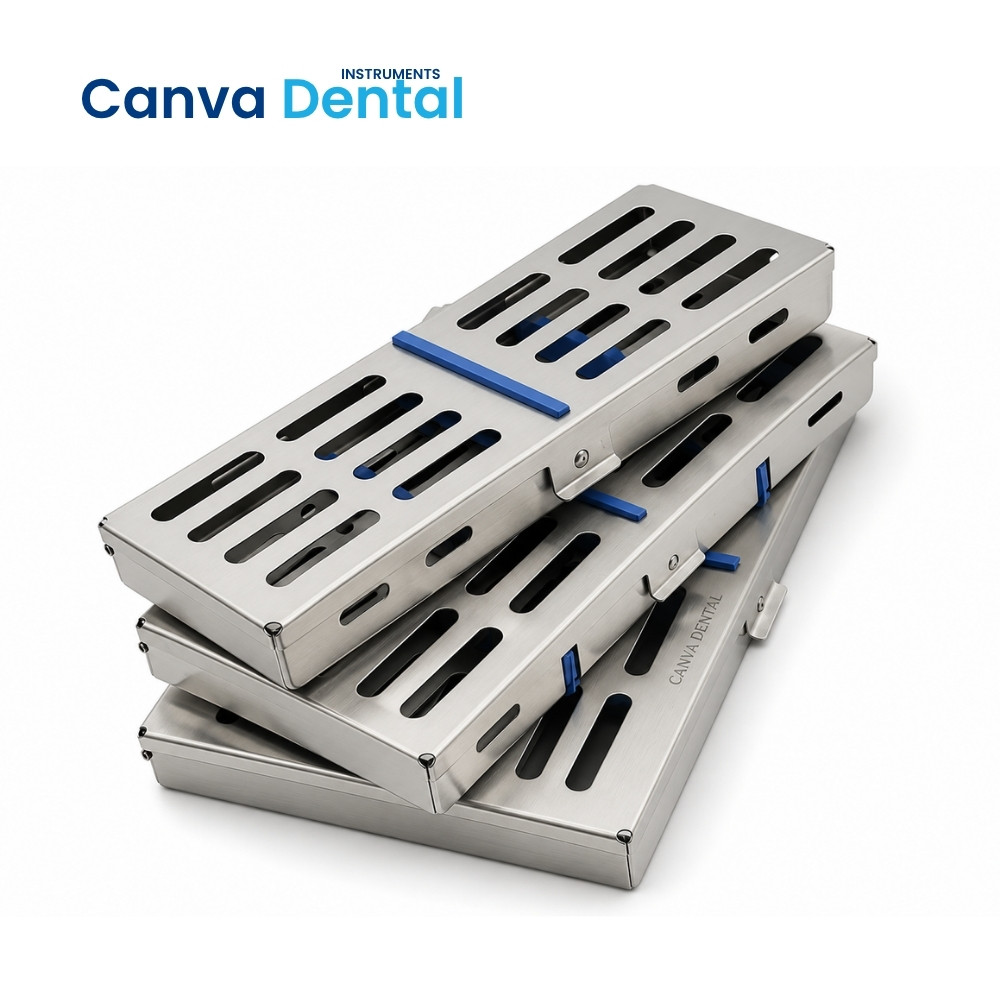
A Cassette Tray is one of the most important infection control and workflow management tools in modern dental practice. Dental clinics, oral surgery departments, and hospital dental units use this system to organise, transport, clean, and sterilize instruments as a contained unit — eliminating loose instrument handling between procedures and significantly reducing cross-contamination risk throughout the sterilization cycle. Because proper instrument management directly determines infection control compliance and clinical efficiency, the cassette tray has become a standard component of every well-organised dental operatory.
In addition to improving infection control, a dental cassette tray streamlines the entire instrument workflow — from procedure completion through cleaning, sterilization, and tray setup for the next patient. As a result, dental teams save considerable chairside preparation time at every appointment by working with pre-organised cassette sets rather than assembling individual instruments before each procedure.
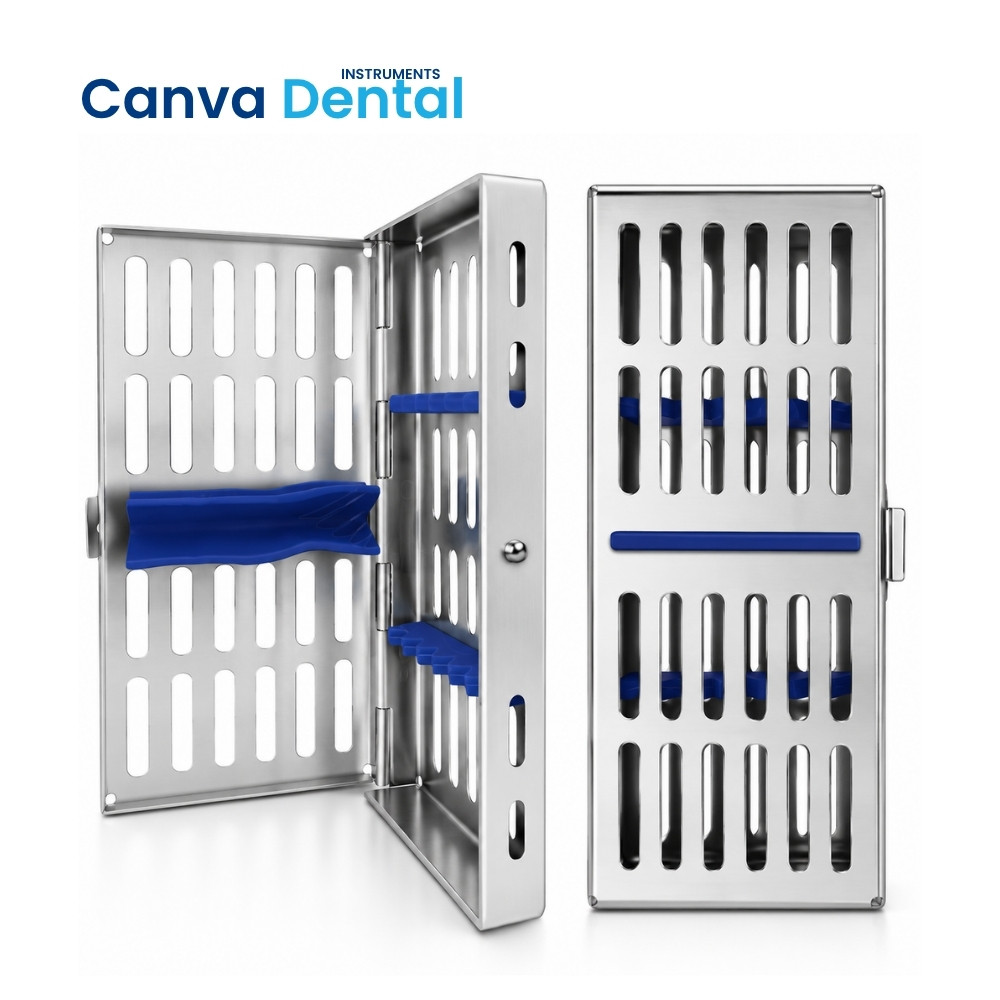
A dental cassette tray is a perforated, rigid metal or plastic container that holds a complete set of dental instruments securely in fixed positions throughout the entire instrument processing cycle — from chairside use, through manual or ultrasonic cleaning, through autoclave sterilization, and back to the operatory for the next patient. Unlike traditional flat trays where instruments lie loose and require individual handling at every stage, the cassette tray keeps instruments organised, separated, and immobilised throughout processing.
The dental cassette tray system works on a simple but powerful principle — instruments are loaded into the cassette once at the start of the day or procedure series, and the entire cassette travels through every processing stage as a single unit. Therefore, clinical staff handle instruments as a closed cassette rather than individually — reducing direct contact with contaminated sharp instruments, minimising instrument damage from loose handling, and ensuring no instrument becomes separated from its designated procedure set during the processing cycle.
Traditional loose-instrument tray systems require staff to pick up, sort, bag, sterilize, and reassemble each instrument individually after every procedure. This individual handling increases both the risk of sharps injuries and the time required per instrument processing cycle. Moreover, loose instruments tumble against each other during ultrasonic cleaning and autoclave cycles — causing tip damage, edge dulling, and surface scratching that shortens instrument working life considerably.
In contrast, the cassette tray immobilises each instrument in a fixed position throughout cleaning and sterilization — preventing instrument-to-instrument contact that causes damage. Consequently, instruments processed in cassettes consistently last longer, maintain sharper edges, and sustain fewer surface defects compared to those processed loose or individually bagged across repeated sterilization cycles.
Each cassette tray in our range delivers the organisation precision, material durability, and sterilization compatibility that high-volume dental practice demands consistently:
Several cassette tray types exist, each designed for specific instrument capacities, material preferences, and clinical workflow requirements. Understanding the available types helps dental teams select the most appropriate cassette system for their practice size and procedure mix:
| Type | Material | Autoclave Compatible | Best For |
|---|---|---|---|
| Stainless Steel Cassette Tray | Surgical-grade stainless steel | Yes — 134°C | High-volume practices, surgical procedures, longest durability |
| Anodised Aluminium Cassette Tray | Hard-anodised aluminium | Yes — 134°C | Lightweight portability, colour-coding systems, mixed procedure clinics |
| Rigid Plastic Cassette Tray | Polysulfone or PEEK plastic | Yes — specific grades only | Budget-conscious practices, light instrument sets |
| Titanium Cassette Tray | Medical-grade titanium | Yes — all cycles | Premium instrument protection, specialist surgical practices |
| Cassette Size | Instrument Capacity | Typical Procedure Set |
|---|---|---|
| Mini Cassette Tray | 4–6 instruments | Examination tray — mirror, probe, explorer, tweezers |
| Small Cassette Tray | 8–10 instruments | Restorative tray — excavator, plastic instrument, burnisher, matrix |
| Medium Cassette Tray | 12–14 instruments | Extraction tray — elevators, forceps, retractor, needle holder |
| Large Cassette Tray | 16–20 instruments | Surgical tray — full oral surgery or implant procedure set |
| Custom Cassette Tray | Variable | Specialist procedure-specific configurations |
Choosing the correct dental cassette tray size for each procedure type prevents two common workflow errors — overcrowding instruments into a cassette that lacks adequate retention positions, and using an oversized cassette that wastes autoclave space and increases processing time per cycle. The correct size holds every instrument the procedure requires, with each piece secured in its own dedicated position and no loose movement inside the closed cassette.
Moreover, matching cassette size to procedure type simplifies tray counting after each appointment. When every instrument for a procedure sits in a dedicated cassette position, the chairside assistant confirms procedure completion by checking all positions are filled — identifying any missing instrument immediately rather than counting loose instruments from a tray that may have shifted during the appointment.
Although every practice configures cassettes to its own instrument preferences, the following size guidelines cover the most common procedure types in general and surgical dental practice:
| Procedure | Recommended Cassette Size | Typical Instrument Count |
|---|---|---|
| New patient examination | Mini (4–6) | Mirror, probe, explorer, cotton tweezers |
| Routine restorative | Small (8–10) | Excavator, plastic instrument, burnisher, matrix, wedges |
| Endodontic access | Small (8–10) | Rubber dam kit instruments, excavator, plugger |
| Simple extraction | Medium (12–14) | Elevators, forceps, retractor, gauze instruments |
| Surgical extraction | Large (16–20) | Full surgical set — retractors, rongeur, needle holder, scissors |
| Implant placement | Large (16–20) | Surgical kit — suction, retractors, bone instruments, suturing set |
| Periodontal scaling | Medium (12–14) | Full scaler set, curettes, probe, mirror |
The full range of dental tray cassette uses extends across every clinical setting where instrument organisation and infection control compliance matter. Although general dental clinics represent the most common application, the cassette system delivers equal workflow and safety benefits across specialist and institutional environments.
In general dental practice, the cassette tray organises complete procedure-specific instrument sets for examination, restorative, extraction, and endodontic appointments — reducing preparation time and eliminating assembly errors at every chairside turnaround. Similarly, orthodontic practices use dedicated bonding cassettes holding bracket placers, ligature directors, band pushers, and wire cutters, while periodontal practices organise full scaler and curette sets by sextant or arch-specific configuration. Paediatric dental clinics, moreover, maintain separate paediatric-specific instrument cassettes that staff identify instantly by colour code — a particularly important safety feature when child-appropriate instruments must never be confused with adult surgical sets.
Oral surgery departments rely on cassette trays to manage full surgical instrument sets — including retractors, rongeurs, elevators, and suturing instruments — as a single processed unit that travels from operating site through decontamination and back to the surgical field without individual instrument handling at any stage. In dental teaching institutions, standardised instrument sets in labelled cassettes provide every student with an identical, complete clinical setup for each session — eliminating the equipment shortages and assembly variations that loose tray systems create in high-volume teaching environments. Furthermore, hospital dental departments use cassette systems to manage high-volume instrument throughput while maintaining the hospital-grade infection control protocols that regulatory compliance requires.
Mobile dental units benefit considerably from cassette trays because the closed system transports instruments safely between clinical locations — eliminating the loose instrument spillage risk and contamination exposure that open tray transport creates during vehicle movement. For high-volume practices running multiple operatories simultaneously, the cassette system enables a continuous processing cycle — with one cassette in use, one in decontamination, and one in the autoclave at any given time — so each operatory always has a sterile instrument set ready without processing delays between patients.
The sterilization cassette tray system replaces individual instrument processing with a single-unit workflow that improves both infection control compliance and processing efficiency. Understanding each stage of the cassette processing cycle helps dental teams implement the system correctly from day one:
After each clinical procedure, instruments remain in the cassette rather than being removed. The closed cassette travels directly to the decontamination area, where it enters the pre-cleaning stage as a closed unit. Pre-rinsing the cassette under running water with the lid closed removes gross contamination — blood, saliva, and debris — from all instrument surfaces simultaneously through the perforated walls, without any direct staff contact with contaminated sharp instruments.
The entire closed cassette then enters the ultrasonic cleaner or washer-disinfector directly. Ultrasonic energy penetrates the perforated cassette walls and reaches all instrument surfaces — including tips, joints, and serrations — simultaneously. Moreover, instruments remain immobilised in their designated positions throughout the cleaning cycle, preventing tip-to-tip contact that causes edge damage during loose ultrasonic processing.
After ultrasonic cleaning, the cassette transfers to a rinse stage and then drying, still as a closed unit. Consequently, staff handle the cassette rather than individual instruments throughout the entire pre-sterilization cleaning sequence — reducing sharps exposure risk at the highest-contamination stage of the instrument processing workflow.
The dried cassette enters the autoclave directly. Steam penetrates the perforated base, lid, and walls — reaching every instrument surface within the cassette simultaneously. Because instruments remain in fixed positions throughout the autoclave cycle, steam circulation around each instrument is consistent and complete. Furthermore, the cassette frame protects instrument tips from contact with autoclave rack surfaces — a common cause of tip damage when instruments are autoclaved individually in pouches that allow movement during pressurisation and depressurisation cycles.
After sterilization and cooling, the sealed cassette stores in the instrument storage area until needed. At the appointment, the cassette travels to the operatory sealed — opening only at the chairside immediately before the procedure begins. Therefore, instruments remain protected from environmental contamination between sterilization and chairside use, maintaining sterility throughout the storage and transport period.
Similarly, many healthcare professionals follow hygiene and sterilization guidance shared by the American Dental Association regarding clinical safety and surgical instrument maintenance.
Many dental practices still use traditional flat trays with loose instruments, unaware of the cumulative clinical, financial, and compliance advantages that the cassette tray system delivers. The following comparison helps practice managers make an informed upgrade decision:
| Feature | Cassette Tray System | Traditional Loose Tray |
|---|---|---|
| Instrument handling during processing | Closed cassette — no direct contact | Individual handling at every stage |
| Sharps injury risk | Significantly reduced | Higher — repeated individual handling |
| Instrument damage in autoclave | Minimal — fixed positions | High — instruments contact each other |
| Processing time per set | Faster — unit processed as one | Slower — individual instrument handling |
| Instrument count accuracy | Easy — check cassette positions | Manual count required every cycle |
| Infection control compliance | Superior — closed system throughout | Variable — open handling at multiple points |
| Instrument lifespan | Extended — no inter-instrument contact | Reduced — damage from loose processing |
| Storage organisation | Labelled cassettes by procedure | Tray sets require manual assembly |
Therefore, transitioning from loose tray processing to a sterilization cassette tray system delivers measurable improvements across infection control compliance, instrument longevity, staff safety, and overall processing efficiency — making the investment in cassette trays a financially justified decision for practices of every size and volume.
We supply dental cassette trays — in stainless steel, anodised aluminium, and rigid plastic designs across mini, small, medium, and large instrument capacity configurations — to general dental clinics, oral surgery departments, orthodontic practices, periodontal units, teaching hospitals, and dental instrument distributors across Lahore, Karachi, Islamabad, Multan, Peshawar, Faisalabad, Rawalpindi, and all major cities in Pakistan. Moreover, our institutional supply team supports bulk procurement for dental colleges and hospital dental departments at competitive pricing.
Contact our team for current cassette tray pricing in Pakistan, available sizes and configurations, colour-coding options, and delivery timelines for your clinic or institution.
Q: What is a dental cassette tray used for?
A dental cassette tray organises, transports, cleans, and sterilizes a complete set of dental instruments as a single closed unit throughout the entire instrument processing cycle. Its primary functions include keeping instruments separated and immobilised during autoclave sterilization, reducing sharps injury risk by eliminating individual instrument handling during decontamination, and streamlining procedure tray setup by maintaining pre-organised instrument sets for each clinical procedure type.
Q: What are the different cassette tray types available?
Cassette tray types divide by material — stainless steel for maximum durability and autoclave compatibility, anodised aluminium for lightweight colour-coding systems, rigid autoclavable plastic for budget-conscious settings, and titanium for premium instrument protection. They also divide by instrument capacity — from mini cassettes holding 4–6 examination instruments to large surgical cassettes accommodating 16–20 instruments for full oral surgery procedure sets.
Q: Can a cassette tray go directly into the autoclave?
Yes — and this direct autoclave compatibility is one of the cassette tray system’s most important advantages. The perforated base, lid, and walls allow steam to penetrate and reach all instrument surfaces simultaneously inside the closed cassette.
Q: How does a cassette tray reduce sharps injuries in dental practice?
The cassette tray reduces sharps injuries by eliminating direct individual instrument handling during the highest-risk stage of the processing cycle — post-procedure decontamination. Because instruments remain inside the closed cassette from procedure completion through cleaning and sterilization, staff never need to pick up contaminated scalers, elevators, excavators, or surgical instruments individually.
Q: How should I organise instruments inside the cassette tray?
Organise instruments in the cassette tray in the order they will be used during the procedure — placing first-use instruments in the most accessible positions and completing the set with instruments used later in the appointment sequence.
For complete clinical setups, explore all dental instruments here: CLICK
| Size | 5 Pcs, 7 Pcs, 10 Pcs |
|---|
Reviews
There are no reviews yet.