



₨450
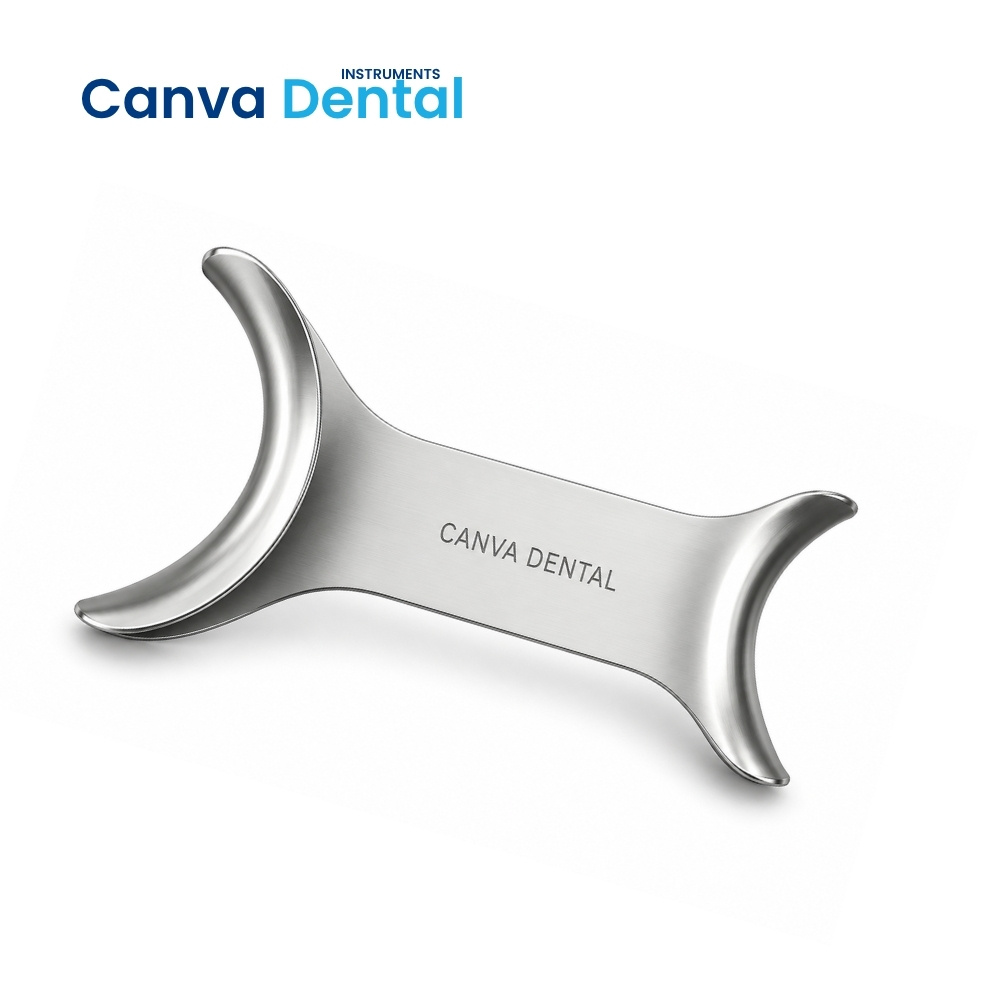
A Cheek Retractor is one of the most versatile access instruments in dental practice. Dentists, orthodontists, oral surgeons, and dental photographers rely on this instrument to displace the cheeks, lips, and oral commissures away from the teeth — creating unobstructed access to the dental arches for clinical treatment, photographic documentation, and patient examination. Because soft tissue displacement directly determines how clearly a clinician sees and reaches the working area, the cheek retractor plays an essential supporting role across virtually every dental specialty.
In addition to improving clinical access, the cheek retractor protects the oral commissures and buccal mucosa from accidental contact with rotary instruments, suction tips, and clinical materials during treatment. As a result, dental teams use this instrument not only for access improvement but also for active soft tissue protection throughout extended clinical procedures.
A cheek retractor dental instrument is a curved, C-shaped, or wing-shaped device that the clinician or assistant inserts into the oral commissure and positions to hold the cheek and lip away from the teeth simultaneously. Unlike the Minnesota Retractor — which requires active hand-holding by an assistant throughout the procedure — most cheek retractor dental designs are self-retaining, meaning the instrument holds its position passively once correctly placed, freeing both hands for clinical work.
The cheek retractor dental design achieves this passive retention through the natural elasticity of the oral commissure and buccal mucosa — the instrument stretches the tissues laterally to a position beyond their resting state, and the tissue tension itself keeps the retractor in place without clamps, screws, or active holding. Consequently, self-retaining cheek retractors are particularly valuable during dental photography, orthodontic examination, and procedures where the clinician works alone without a chairside assistant.
Each cheek retractor in our range combines smooth surface quality, correct anatomical curvature, and long-term durability that clinical dental use demands:
Understanding cheek retractor types helps dental teams select the most appropriate design for each clinical application. Several distinct cheek retractor types exist, each with a specific shape, material, and functional advantage for different clinical scenarios:
| Type | Shape | Self-Retaining | Primary Use |
|---|---|---|---|
| C-Shape Cheek Retractor | Simple curved C profile | Yes — single side | Unilateral cheek retraction for extractions and restorations |
| Bilateral Wing Retractor | Wide winged frame — both sides | Yes — bilateral | Dental photography — full arch bilateral access simultaneously |
| T-Shape Mouth Retractor | T-bar frame with bilateral arms | Yes — bilateral | Orthodontic photography, full arch examination records |
| Fan Retractor | Fanned lateral blade | Yes | Wide buccal corridor retraction for posterior access |
| Minnesota-Style Retractor | Right-angle flat blade | No — hand-held | Active soft tissue retraction during oral surgery and extractions |
| Lip Retractor / Labial Retractor | Straight or curved labial plate | Yes | Anterior labial retraction for anterior composite and veneer work |
Cheek retractors are available in two primary material categories — stainless steel and plastic — each carrying distinct clinical advantages. Because our range focuses on stainless steel cheek retractors, understanding how this material compares to plastic alternatives helps clinicians appreciate the long-term value of the metal design:
| Feature | Stainless Steel Cheek Retractor | Plastic Cheek Retractor |
|---|---|---|
| Durability | Excellent — indefinite clinical life | Limited — cracks and deforms with repeated use |
| Sterilization | Full autoclave at 134°C | Cold disinfection only — most are single-use |
| Surface quality | Mirror-polished — smooth on tissue | Variable — can have mould seam ridges |
| Photography reflectivity | Excellent — inner surface reflects light | Poor — opaque plastic absorbs light |
| Rigidity | Rigid — consistent retraction force | Flexible — may collapse under tissue pressure |
| Cost over time | Lower — reusable indefinitely | Higher — continuous replacement needed |
| Environmental impact | Minimal — reusable instrument | High — disposable plastic waste per patient |
The full range of cheek retractor uses extends across nearly every dental specialty and clinical scenario where soft tissue displacement improves access, visibility, or documentation quality. Although dental photography represents one of its most recognisable applications, cheek retractor uses extend well beyond photographic records into active clinical treatment:
Dental photography has become a clinical standard in modern practice — used for treatment planning, patient education, laboratory communication, and medico-legal documentation. In every intraoral photographic series, the dental cheek retractor photography role is to displace both cheeks and lips simultaneously so the camera captures the full dental arch without soft tissue obstruction or shadow.
Without correct cheek retraction during intraoral photography, the buccal mucosa partially covers the premolar and molar teeth, the oral commissure creates a dark shadow across the posterior segment, and the images fail to meet the standardised format that treatment planning and laboratory communication require. Therefore, bilateral cheek retractors are considered mandatory accessories in every dental photography kit, alongside intraoral mirrors, occlusal mirrors, and a standardised camera and lens system.
The stainless steel cheek retractor dental photography design offers a further advantage over plastic alternatives — the inner metal surface acts as a secondary light reflector, bouncing the ring flash or twin flash illumination into the buccal corridor and significantly improving posterior tooth visibility in every photograph. Consequently, clinical images taken with stainless steel retractors consistently show better detail, more uniform exposure, and superior colour accuracy compared to those taken with opaque plastic designs.
During cheek retractor oral surgery applications, the instrument works alongside dedicated surgical retractors rather than replacing them. In oral surgery, the Minnesota Retractor manages mucoperiosteal flap retraction and active tissue displacement at the surgical site, while the cheek retractor manages the buccal mucosa and commissure at the outer boundary of the operative field.
This combination — Minnesota Retractor for the surgical site, cheek retractor for the buccal corridor — creates the maximum possible access to posterior surgical areas, particularly during lower third molar surgery, implant placement in the posterior mandible, and bone grafting procedures where both the flap and the buccal soft tissues must be displaced simultaneously. In addition, the self-retaining nature of the cheek retractor means the surgical assistant can focus both hands on the Minnesota Retractor and suction rather than managing multiple instruments simultaneously.
In orthodontic practice, the cheek retractor serves two primary roles — clinical access during bracket bonding and photographic documentation throughout the treatment timeline. During full arch bracket bonding sessions, bilateral cheek retractors provide simultaneous access to all buccal surfaces across both upper and lower arches — allowing the orthodontist to etch, prime, and bond brackets systematically without repeatedly repositioning single-sided retractors between tooth surfaces.
For orthodontic photography, bilateral T-shape or wing-style cheek retractors produce the standardised frontal intraoral view — both arches in occlusion, commissures retracted symmetrically, full buccal corridor visible — that every orthodontic treatment record requires. Moreover, the same retractor design supports the right and left lateral buccal photographs that document posterior occlusal relationships at diagnosis, mid-treatment, and completion stages.
Correct cheek retractor placement ensures maximum soft tissue displacement with minimum patient discomfort. Because incorrect insertion angle or excessive force causes commissure abrasion and patient discomfort during even short procedures, clinicians should follow this placement sequence:
All stainless steel cheek retractors in our range withstand repeated autoclave cycles at 134°C without surface corrosion, edge deformation, or dimensional change. However, clinicians should inspect the inner and outer edges before each use — any nicks, burrs, or rough spots on the retractor surface require immediate polishing before the instrument contacts patient tissue, since sharp surface irregularities cause mucosal abrasion during insertion and repositioning.
In addition, ultrasonic cleaning before autoclaving removes blood and saliva deposits from the retractor surface effectively, preserving the mirror polish that provides both aesthetic appearance and the light-reflective function needed for dental photography applications. For photography-specific retractors, inspecting the inner surface for scratches that reduce reflectivity helps clinicians replace instruments before image quality deteriorates noticeably in clinical photographs.
Similarly, many healthcare professionals follow hygiene and sterilization guidance shared by the American Dental Association regarding clinical safety and surgical instrument maintenance.
We supply stainless steel cheek retractors — in C-shape, bilateral wing, T-shape, fan, and lip retractor designs across adult and paediatric sizes — to general dental clinics, orthodontic practices, oral surgery departments, dental photography studios, teaching hospitals, and instrument distributors across Lahore, Karachi, Islamabad, Multan, Peshawar, Faisalabad, Rawalpindi, and all major cities in Pakistan. Moreover, our institutional supply team handles bulk procurement for dental colleges and hospital dental departments at competitive pricing.
Contact our team for current cheek retractor pricing in Pakistan, available designs and sizes, and delivery timelines for your clinic or institution.
Q: What is a cheek retractor used for in dentistry?
A cheek retractor displaces the cheeks, lips, and oral commissures away from the teeth to improve clinical access, surgical visibility, and photographic documentation quality. Primary cheek retractor uses include intraoral dental photography, orthodontic bracket bonding, oral surgery access, anterior composite and veneer work, tooth whitening, and standardised treatment records. Because most cheek retractor designs are self-retaining, the instrument holds its position passively without assistant support — freeing both hands for clinical work throughout the procedure.
Q: What are the different cheek retractor types available?
The main cheek retractor types include the C-shape retractor for unilateral single-side retraction, the bilateral wing retractor for simultaneous both-side displacement during full arch photography, the T-shape retractor for orthodontic records, the fan retractor for wide posterior buccal corridor access, and the labial or lip retractor for anterior labial surface work. Each type suits specific clinical applications — and stocking two or three designs covers the full range of routine dental access and photography requirements.
Q: Why is a stainless steel cheek retractor better than a plastic one?
A stainless steel cheek retractor offers three significant advantages over plastic alternatives. First, it withstands full autoclave sterilization at 134°C — plastic retractors require cold disinfection or disposal, creating ongoing replacement costs and environmental waste. Second, the mirror-polished inner surface reflects dental light into the buccal corridor during photography — improving posterior tooth visibility in intraoral images that plastic retractors cannot match.
Q: Can cheek retractors be used during oral surgery?
Yes. During cheek retractor oral surgery applications, the instrument manages the buccal mucosa and oral commissure at the outer boundary of the surgical field, working alongside the Minnesota Retractor that handles active flap retraction at the surgical site itself.</p>
Q: Are cheek retractors autoclavable?
Yes — stainless steel cheek retractors in our range withstand full autoclave sterilization at 134°C without corrosion, surface deformation, or dimensional change.
For complete clinical setups, explore all dental instruments here: CLICK
Reviews
There are no reviews yet.