



₨180 – ₨380Price range: ₨180 through ₨380
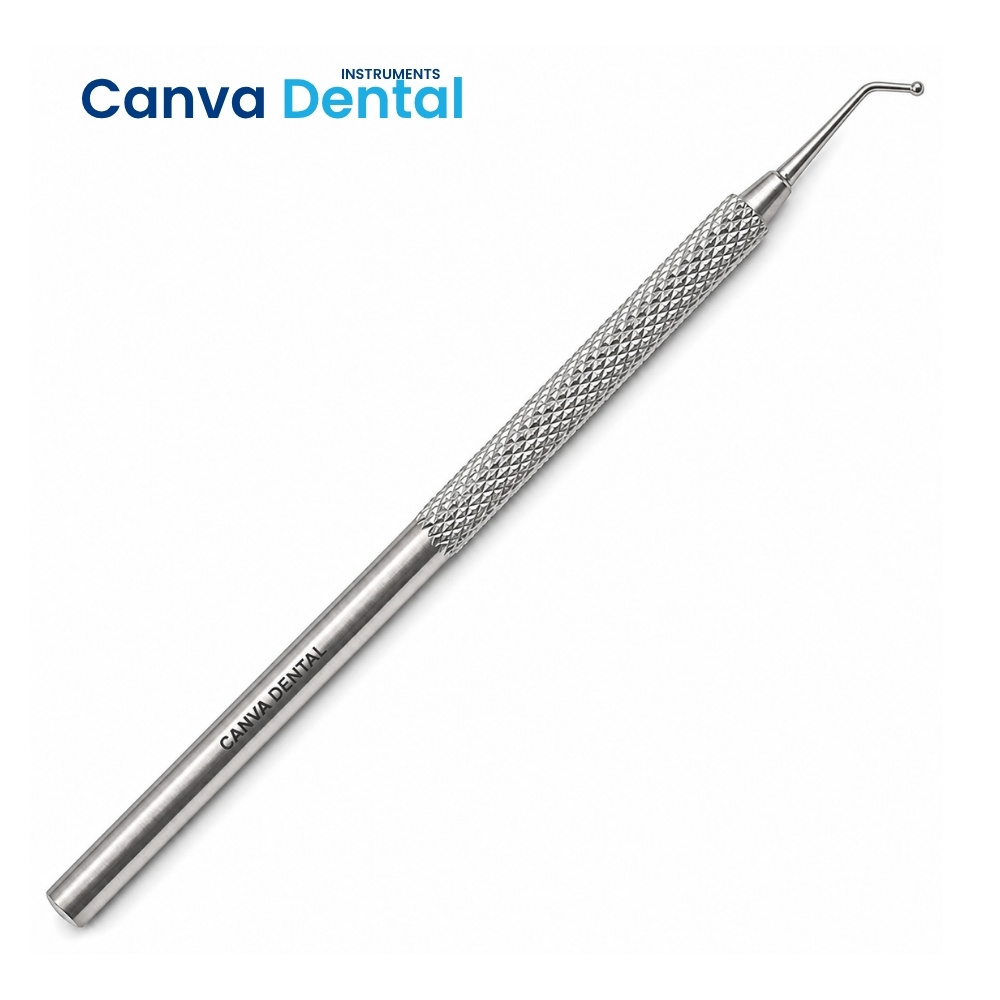
A Dycal Applicator is an essential restorative hand instrument used by dentists to place calcium hydroxide liner materials — most commonly Dycal — onto the floor and walls of deep cavity preparations before restoration placement. Restorative dentists, endodontists, and general practitioners rely on this instrument to deliver precise, controlled quantities of calcium hydroxide liner to cavity areas closest to the dental pulp, where pulp protection and biocompatibility are critically important. Because incorrect liner placement — whether too thick, too thin, or applied to the wrong cavity zone — directly affects restoration success and pulp vitality, the Dycal Applicator remains indispensable in every restorative instrument tray.
In addition to its primary liner placement role, the instrument serves across multiple restorative and endodontic scenarios wherever a small, controlled deposit of calcium hydroxide material needs precise intraoral placement. As a result, most restorative dental teams consider the Dycal Applicator a fundamental instrument alongside excavators, plastic instruments, and condensers in their daily clinical setup.
A Dycal instrument dental clinicians use is a small, hand-held applicator designed with a ball-ended or spoon-ended working tip specifically shaped for collecting, carrying, and depositing calcium hydroxide liner material within a prepared tooth cavity. The instrument takes its name from Dycal — the trade name of Dentsply Sirona’s calcium hydroxide liner — which became so widely used in restorative dentistry that “Dycal” entered clinical vocabulary as the generic term for calcium hydroxide liner materials and their placement instruments.
As a Dycal instrument dental professionals select for liner work, this applicator differs fundamentally from larger restorative instruments. Its working tip is intentionally small — typically a 1mm ball or micro-spoon — allowing precise liner deposit in the deepest, narrowest areas of a cavity preparation without contaminating the cavity walls intended for adhesive bonding. Therefore, the instrument’s miniature working end represents its most clinically important design feature.
Although Dycal is a specific brand name, the applicator instrument itself serves equally well for placing all calcium hydroxide liner materials including Calxyl, Calcipulpe, Life, and generic calcium hydroxide formulations. Consequently, purchasing the correct applicator instrument matters far more than the specific liner brand — the clinical technique and instrument design requirements remain identical across all calcium hydroxide products.
Each Dycal Applicator in our range combines the precise tip geometry, handle balance, and material compatibility that accurate liner placement demands:
Understanding the complete range of Dycal applicator uses helps dental teams deploy this instrument most effectively across different clinical procedures. Although calcium hydroxide liner placement beneath deep restorations is its primary application, Dycal applicator uses extend across several restorative, endodontic, and protective clinical scenarios:
In deep cavity preparations where the remaining dentine over the pulp measures less than 1mm, the dental pulp faces significant risk from bacterial toxins, thermal conductivity of restorative materials, and chemical irritation from adhesive systems. Therefore, a precisely placed calcium hydroxide liner creates a biocompatible barrier between the pulp and the overlying restoration — neutralising residual acid byproducts, stimulating tertiary dentine formation, and reducing the risk of pulp necrosis in teeth with compromised remaining dentine thickness.
Using the calcium hydroxide applicator correctly ensures the liner covers only the deepest cavity zone — the area closest to the pulp — without contaminating the entire cavity floor. This selective placement is critically important, as calcium hydroxide placed on the enamel or mid-dentine cavity walls reduces adhesive bond strength and undermines composite restoration retention. Consequently, the small, precise tip of the Dycal Applicator is not merely a convenience — it is a clinical necessity for maintaining correct liner placement boundaries.
One of the most common liner placement errors involves applying an excessive volume of calcium hydroxide material — creating a thick liner layer that raises the cavity floor significantly and reduces the space available for adequate restorative material thickness over the liner. When the restoration is subsequently too thin, cohesive failure under occlusal loading becomes inevitable. The Dycal Applicator’s small working tip naturally limits the material volume collected per stroke, making over-application significantly less likely than when larger instruments attempt the same task.
In addition, the instrument’s angled shank positions the tip at the correct angle to reach the deepest cavity point without the clinician’s hand obscuring direct vision of the working area. As a result, placement accuracy improves considerably compared to makeshift instrument alternatives that lack the correct shank angle and tip size for deep cavity liner work.
As a pulp capping instrument, the Dycal Applicator serves two distinct clinical procedures that differ in the depth of cavity involvement and the relationship between the liner and the dental pulp. Understanding both techniques helps clinicians select the correct material and placement approach for each clinical scenario:
| Feature | Indirect Pulp Capping | Direct Pulp Capping |
|---|---|---|
| Pulp status | Pulp not exposed — thin dentine remaining | Small mechanical or carious pulp exposure |
| Material applied | Calcium hydroxide liner (Dycal, Life) | Calcium hydroxide, MTA, or Biodentine |
| Applicator tip position | On cavity floor — over remaining dentine | Directly onto pulp exposure site |
| Material volume required | Small — covers deepest cavity area only | Minimal — covers only the exposure point |
| Clinical objective | Stimulate tertiary dentine — protect vital pulp | Promote pulpal healing — dentinal bridge formation |
| Subsequent restoration | Permanent restoration after liner sets | Temporary or permanent after pulp assessment |
| Prognosis indicator | Good — pulp vitality maintained | Guarded — depends on contamination level |
Several instruments can theoretically deliver liner materials to cavity preparations, but each carries significant limitations compared to a dedicated liner applicator dental instrument. Understanding these differences reinforces why the Dycal Applicator remains the instrument of choice for precision liner work:
| Instrument | Working Tip | Liner Placement Suitability | Limitation vs Dycal Applicator |
|---|---|---|---|
| Dycal Applicator | 1mm ball or micro-spoon | Excellent — designed specifically for liner work | — |
| Plastic Instrument | Flat paddle blade | Poor — tip too large for deep cavity access | Deposits excessive material; obscures vision |
| Dental Excavator | Rounded spoon | Acceptable for accessible cavities only | Spoon too wide for narrow deep cavities |
| Explorer Tip | Sharp fine point | Very poor — no material carrying capacity | Cannot carry adequate liner volume |
| Microbrush | Plastic fibre tip | Suitable for flowable materials only | Contaminated by calcium hydroxide paste |
| Syringe Tip | Plastic cannula | Suitable for injectable formulations only | Not applicable to paste-form Dycal |
Therefore, when restorative procedure quality and pulp protection accuracy matter — which they do in every deep cavity — the dedicated Dycal Applicator consistently outperforms improvised instrument alternatives across every measurable clinical criterion.
Correct Dycal Applicator use begins before the instrument enters the mouth. Calcium hydroxide two-paste systems — Dycal and equivalent products — require equal-length extrusion of base and catalyst paste, mixed thoroughly on a paper pad until a uniform colour indicates complete mixing. Because the working time of calcium hydroxide liner is only 2–3 minutes at room temperature, clinicians should prepare the cavity, select and load the applicator, and complete all placement within this window before the material begins to set.
Loading the applicator requires collecting a small amount of mixed liner on the ball or spoon tip — approximately the size of a pinhead — through a gentle scooping motion on the mixing pad. Overloading the tip with excess material increases the risk of depositing the liner on unintended cavity surfaces, making conservative loading and multiple small strokes the preferred technique over single large deposits.
Inside the cavity, the Dycal Applicator tip should contact the deepest point of the cavity floor first, then spread a thin layer of liner across the deepest zone only. Clinicians should avoid contacting the cavity walls above the deepest third, as liner contamination of adhesive bonding surfaces reduces composite bond strength measurably. In addition, the liner should not pool into angles or line-angles between the floor and walls, as thick accumulations in these areas create stress concentration points within the overlying restoration.
After placement, allow the calcium hydroxide liner to set completely — typically 3–5 minutes for Dycal — before proceeding with adhesive application, cavity conditioning, or base placement. Disturbing the liner before complete setting disrupts the surface and compromises the protective barrier the liner is intended to provide.
All stainless steel Dycal Applicators in our range withstand repeated autoclave cycles at 134°C without tip deformation or shank distortion. However, calcium hydroxide liner residue sets hard on metal surfaces within minutes, making immediate post-procedure cleaning essential before material hardens on the working tip.
Cleaning the applicator immediately after use — wiping the tip with a gauze moistened with water before the liner sets — prevents residue accumulation that obscures the tip geometry and reduces placement precision. In addition, ultrasonic cleaning before autoclaving removes any residual set calcium hydroxide effectively from tip surfaces and shank angles that manual wiping may miss. Clinicians should inspect the ball or spoon tip before each procedure to confirm the working end remains smooth and correctly shaped, since a deformed or roughened tip delivers inconsistent material volumes and reduces placement control.
Similarly, many healthcare professionals follow hygiene and sterilization guidance shared by the American Dental Association regarding clinical safety and surgical instrument maintenance.
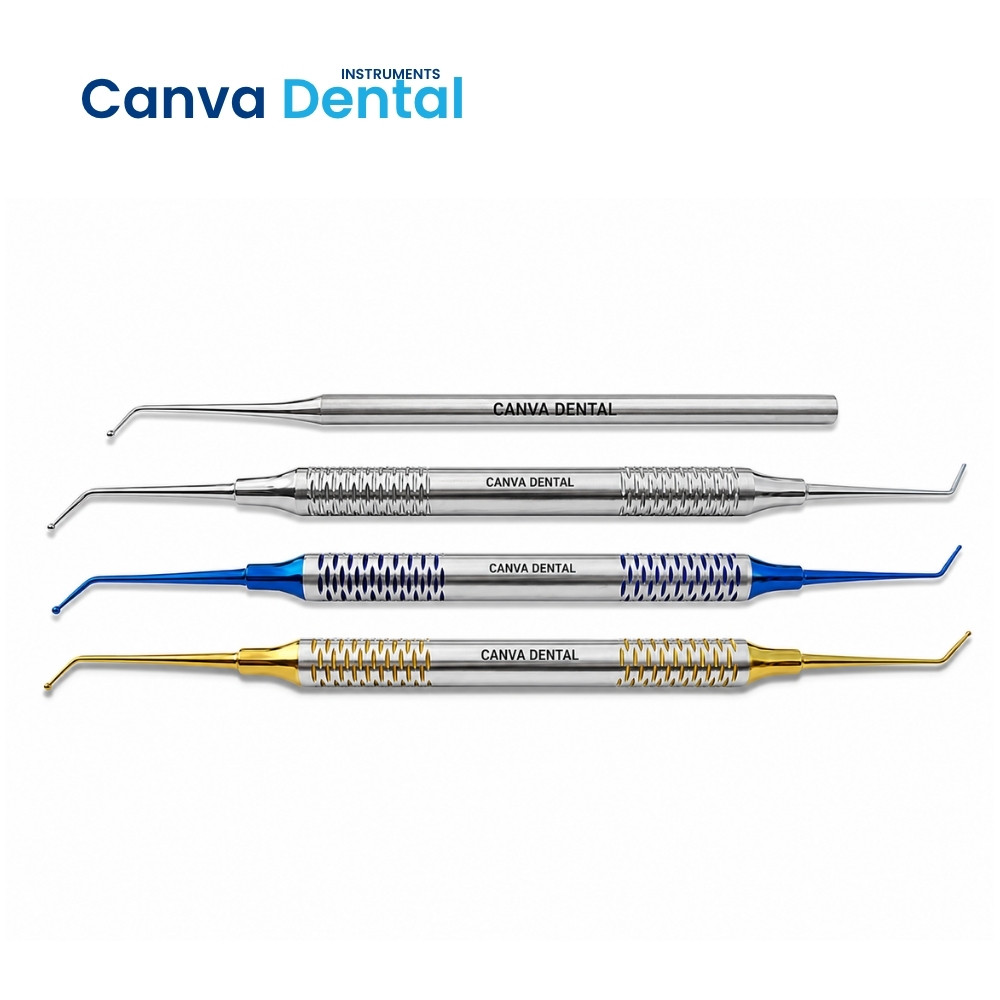
We supply Dycal Applicators — in ball-ended, spoon-ended, and double-ended configurations — to restorative dental clinics, endodontic practices, paediatric dental departments, teaching hospitals, and dental instrument distributors across Lahore, Karachi, Islamabad, Multan, Peshawar, Faisalabad, Rawalpindi, and all major cities in Pakistan. Moreover, our institutional supply team supports bulk procurement for dental colleges and hospital dental departments at competitive pricing.
Contact our team for current Dycal Applicator pricing in Pakistan, available tip configurations, and delivery timelines for your clinic or institution.
Q: What is a Dycal Applicator used for in dentistry?
A Dycal Applicator places calcium hydroxide liner materials onto the floor of deep cavity preparations to protect the dental pulp before restoration placement.
Q: Why is the Dycal Applicator better than using a plastic instrument for liner placement?
The Dycal Applicator’s 1mm ball or micro-spoon tip delivers a small, precisely controlled volume of liner to the deepest cavity zone without contaminating the surrounding cavity walls. A plastic instrument, however, carries a wide flat blade that deposits excessive liner material across the entire cavity floor — covering adhesive bonding surfaces and reducing composite bond strength.
Q: Can the Dycal Applicator be used for direct pulp capping?
Yes. As a pulp capping instrument, the Dycal Applicator delivers calcium hydroxide, mineral trioxide aggregate, or Biodentine directly onto small mechanical or carious pulp exposures during direct pulp capping procedures..
Q: What materials can the Dycal Applicator place?
Although named after Dycal specifically, the instrument places all paste-form calcium hydroxide liner materials including Life, Calxyl, Calcipulpe, and generic calcium hydroxide formulations. In addition, clinicians use the same applicator for zinc oxide eugenol cement bases, mineral trioxide aggregate in small quantities, and other paste-form liner and base materials that require precise intraoral placement in confined cavity preparations.
Q: How do I clean the Dycal Applicator after use?
Clean the working tip immediately after each use — before the calcium hydroxide liner sets on the metal surface. Wipe the tip with a moistened gauze directly after removing the instrument from the mouth, then proceed with ultrasonic cleaning before autoclaving.
For complete clinical setups, explore all dental instruments here: CLICK
| Types | Normal, Silver Double Side, Plasma, Golden |
|---|
Reviews
There are no reviews yet.