



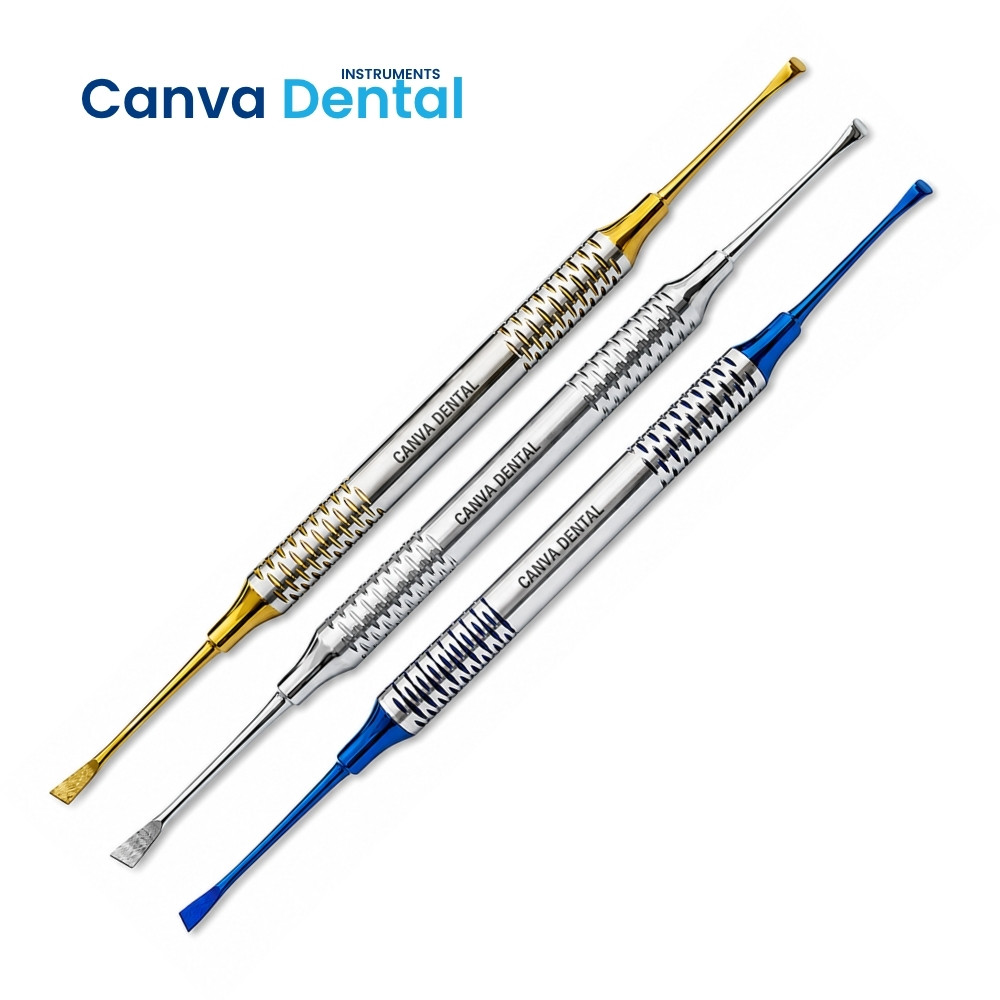
₨300 – ₨380Price range: ₨300 through ₨380
A Peri Scaler is one of the most essential hand instruments in periodontal and preventive dental practice. Dental hygienists, periodontists, and general dental professionals rely on this instrument to remove supragingival calculus, plaque deposits, and stain from tooth surfaces during scaling and periodontal maintenance procedures. Because thorough calculus removal directly determines the success of periodontal therapy and long-term gingival health, every dental professional depends on a sharp, well-designed Peri Scaler as a cornerstone of their clinical instrument setup.
Furthermore, the Peri Scaler plays a critical preventive role — removing the hardened mineralised deposits that cause gingivitis and periodontitis before they progress to irreversible bone and attachment loss. Therefore, consistent use of the correct peri scaler design at every scaling appointment protects patients from the most prevalent chronic dental disease worldwide.
A periodontal scaler dental instrument is a hand-operated scaling tool with a sharp, angular working end designed specifically for removing calculus and plaque deposits from supragingival tooth surfaces — that is, above and at the gumline. Unlike curettes, which feature curved working ends suited for subgingival root planing, a periodontal scaler dental instrument carries pointed or flat blade tips adapted for working on the visible and accessible coronal portions of tooth surfaces.
The term “peri” in Peri Scaler refers to periodontal — reflecting this instrument’s primary role in managing the health of the periodontium, the supporting structures of the teeth that include the gingiva, periodontal ligament, cementum, and alveolar bone. As a result, the Peri Scaler forms the front line of periodontal disease prevention in every dental practice.
Unlike ultrasonic scalers that use vibration and water spray to disrupt calculus, the Peri Scaler works through direct physical contact — the sharp blade edge engages the calculus deposit and removes it through controlled push or pull strokes applied against the tooth surface. Consequently, this instrument delivers tactile feedback that ultrasonic devices cannot replicate, allowing the clinician to detect residual deposits and confirm complete removal.
Each Peri Scaler in our range combines sharp working end geometry, balanced handle design, and clinical durability that intensive periodontal scaling practice demands:
Understanding the types of dental scalers helps clinicians select the correct instrument design for each calculus location, tooth surface, and deposit hardness. Because different scaler designs access different areas of the tooth with different stroke mechanics, a complete periodontal instrument tray includes multiple scaler types working together:
| Scaler Type | Working End | Stroke Direction | Best For |
|---|---|---|---|
| Sickle Scaler | Two cutting edges, pointed tip, triangular cross-section | Pull stroke | Supragingival calculus — anterior and posterior interproximal surfaces |
| Hoe Scaler | Single straight cutting edge, bent at 45° | Pull stroke | Heavy supragingival ledges on buccal and lingual surfaces |
| Chisel Scaler | Single straight cutting edge, slight curve | Push stroke | Anterior interproximal calculus, tight contact areas |
| File Scaler | Multiple parallel cutting edges | Pull stroke | Crushing and removing tenacious calculus before sickle finishing |
| Jacquette Scaler | Double cutting edges, curved blade | Pull stroke | Supragingival and shallow subgingival anterior deposits |
| Morse Scaler | Single curved cutting edge | Pull stroke | Posterior supragingival surfaces, furcation access |
Understanding the full range of peri scaler uses helps dental teams deploy this instrument most effectively across different clinical scenarios. Although supragingival calculus removal represents its primary application, peri scaler uses extend across multiple periodontal, preventive, and restorative clinical situations:
Calculus — also called dental tartar — forms when supragingival plaque mineralises through salivary calcium and phosphate deposition, typically within 10–14 days of plaque accumulation on undisturbed tooth surfaces. Because calculus harbours bacterial biofilm on its roughened surface and provides a scaffold for further plaque accumulation, it directly drives the chronic inflammatory response that causes gingivitis and progresses to periodontitis if left untreated.
As the primary calculus removal instrument for supragingival deposits, the Peri Scaler disrupts this disease cycle at its earliest accessible stage. Moreover, removing calculus before it extends subgingivally prevents the need for more complex, invasive subgingival root planing procedures at later appointments — reducing treatment burden for both the patient and the clinical team.
Furthermore, because the Peri Scaler delivers direct tactile feedback through the clinician’s hand during every stroke, it detects residual calculus fragments that visual inspection alone cannot identify — particularly in interproximal areas and at the gingival margin. Consequently, hand scaling with a sharp peri scaler remains an essential complement to ultrasonic scaling in every comprehensive periodontal treatment protocol.
The Peri Scaler and the periodontal curette are the two primary categories of hand scaling instruments, but they serve fundamentally different anatomical zones and clinical purposes. Understanding when to use each ensures complete deposit removal and prevents the most common scaling error — using the wrong instrument design for the wrong location:
| Feature | Peri Scaler | Periodontal Curette |
|---|---|---|
| Working zone | Supragingival — above gumline | Subgingival — below gumline into pocket |
| Tip design | Pointed tip — two cutting edges | Rounded toe — two cutting edges |
| Cross-section | Triangular | Semi-circular |
| Subgingival safety | Not recommended — pointed tip risks tissue trauma | Safe — rounded toe designed for pocket use |
| Calculus type | Supragingival calculus and stain | Subgingival calculus and root surface debridement |
| Stroke direction | Pull stroke primarily | Pull stroke — vertical, oblique, horizontal |
| Common designs | Sickle, hoe, chisel, file, Jacquette | Gracey, Universal, Columbia |
Therefore, the most effective scaling protocol uses the Peri Scaler for all supragingival deposits first, followed by curettes for subgingival root debridement in areas of periodontal pocket formation. Attempting to use a peri scaler subgingivally risks soft tissue laceration with the pointed tip — an error that causes patient discomfort and procedural bleeding without achieving effective subgingival deposit removal.
Many dental clinics use both hand Peri Scalers and ultrasonic scaling devices as complementary instruments rather than treating them as alternatives. Consequently, understanding the strengths and limitations of each approach helps dental teams build a scaling protocol that leverages both instrument types optimally:
| Criteria | Peri Scaler (Hand) | Ultrasonic Scaler |
|---|---|---|
| Calculus detection | Excellent — direct tactile feedback | Limited — vibration masks tactile sense |
| Speed of removal | Slower on heavy deposits | Faster for bulk calculus removal |
| Interproximal access | Excellent with sickle and chisel | Moderate — tip geometry less precise |
| Patient comfort | Moderate — pressure-dependent | Higher — water irrigation reduces heat |
| Residual deposit detection | Superior — sharp blade confirms clean surface | Unreliable — vibration alone insufficient |
| Power requirement | None — fully manual | Electrical — requires handpiece unit |
| Implant compatibility | Yes — with correct tip material | Yes — with plastic or carbon fibre tips only |
Effective and safe calculus removal with the Peri Scaler depends on correct instrument grasp, working angulation, stroke mechanics, and fulcrum positioning. Because poor technique produces incomplete calculus removal, soft tissue trauma, or hand fatigue, dental professionals should apply these established scaling technique principles consistently:
Because the Peri Scaler contacts gingival tissue, tooth surfaces, and periodontal deposits at every patient appointment, thorough sterilization after each use is essential. Fortunately, all stainless steel Peri Scalers in our range withstand repeated autoclave cycles at 134°C without blade distortion, handle corrosion, or edge degradation.
However, blade sharpness requires active maintenance between sterilization cycles. A Peri Scaler that passes the sharpening test — catching lightly on an acrylic test stick without slipping — is clinically ready. One that glides rather than catches needs sharpening with an Arkansas or ceramic sharpening stone before the next patient procedure. Furthermore, ultrasonic cleaning before autoclaving removes calculus dust, blood, and organic debris from blade edges and shank surfaces effectively, preserving both sharpness and sterilization penetration across the full instrument surface.
Similarly, many healthcare professionals follow hygiene and sterilization guidance shared by the American Dental Association regarding clinical safety and surgical instrument maintenance.
We supply a comprehensive range of Peri Scalers — including sickle, hoe, chisel, file, Jacquette, and Morse designs in single-ended and double-ended configurations — to dental clinics, periodontal practices, dental hygiene departments, teaching hospitals, and instrument distributors across Lahore, Karachi, Islamabad, Multan, Peshawar, Faisalabad, Rawalpindi, and all major cities in Pakistan. Moreover, our institutional supply team handles bulk procurement for dental colleges and hospital periodontal departments at competitive pricing.
Contact our team for current Peri Scaler pricing in Pakistan, available designs, and delivery timelines for your clinic or institution.
Q: What is a Peri Scaler used for in dentistry?
A Peri Scaler removes supragingival calculus, plaque, and stain deposits from tooth surfaces during scaling and periodontal maintenance procedures. Primary peri scaler uses include routine scaling at recall appointments, initial periodontal therapy, pre-surgical deposit removal, stain elimination, and pre-restorative tooth surface cleaning.
Q: What are the different types of dental scalers?
The main types of dental scalers include the sickle scaler for anterior and posterior interproximal supragingival deposits, the hoe scaler for heavy buccal and lingual ledges, the chisel scaler for anterior contact area calculus, the file scaler for crushing tenacious deposits, the Jacquette scaler for anterior supragingival work, and the Morse scaler for posterior and furcation access.
Q: Can a Peri Scaler be used with an ultrasonic scaler in the same appointment?
Yes — and this combination represents the most effective scaling protocol available. The ultrasonic scaler removes bulk calculus rapidly across all surfaces, while the hand Peri Scaler follows to detect and remove residual deposits through direct tactile feedback. Because ultrasonic vibration alone cannot confirm complete calculus removal with the same reliability as a sharp hand instrument, combining both approaches consistently produces better outcomes than either instrument used alone.
Q: How do I know when my Peri Scaler needs sharpening?
Test the blade against an acrylic test stick or your thumbnail lightly — a sharp periodontal scaler dental blade catches and grips the surface without sliding. If the blade glides smoothly rather than catching, the cutting edge has rounded through use and needs sharpening with an Arkansas or ceramic stone before the next scaling procedure.
For complete clinical setups, explore all dental instruments here: CLICK
| Types | Silver, Golden, Plasma |
|---|
Reviews
There are no reviews yet.