



₨260 – ₨370Price range: ₨260 through ₨370
A dental excavator is one of the most fundamental hand instruments in restorative dentistry. Clinicians use this instrument daily to remove decayed tooth material, clean cavity preparations, and access pulp chambers during endodontic procedures. Because precise caries removal directly determines restoration quality and longevity, every dental professional depends on a reliable dental excavator as a core part of their instrument setup.
Furthermore, the dental excavator plays a critical role in minimally invasive dentistry, where preserving healthy tooth structure while removing only infected tissue defines treatment success.
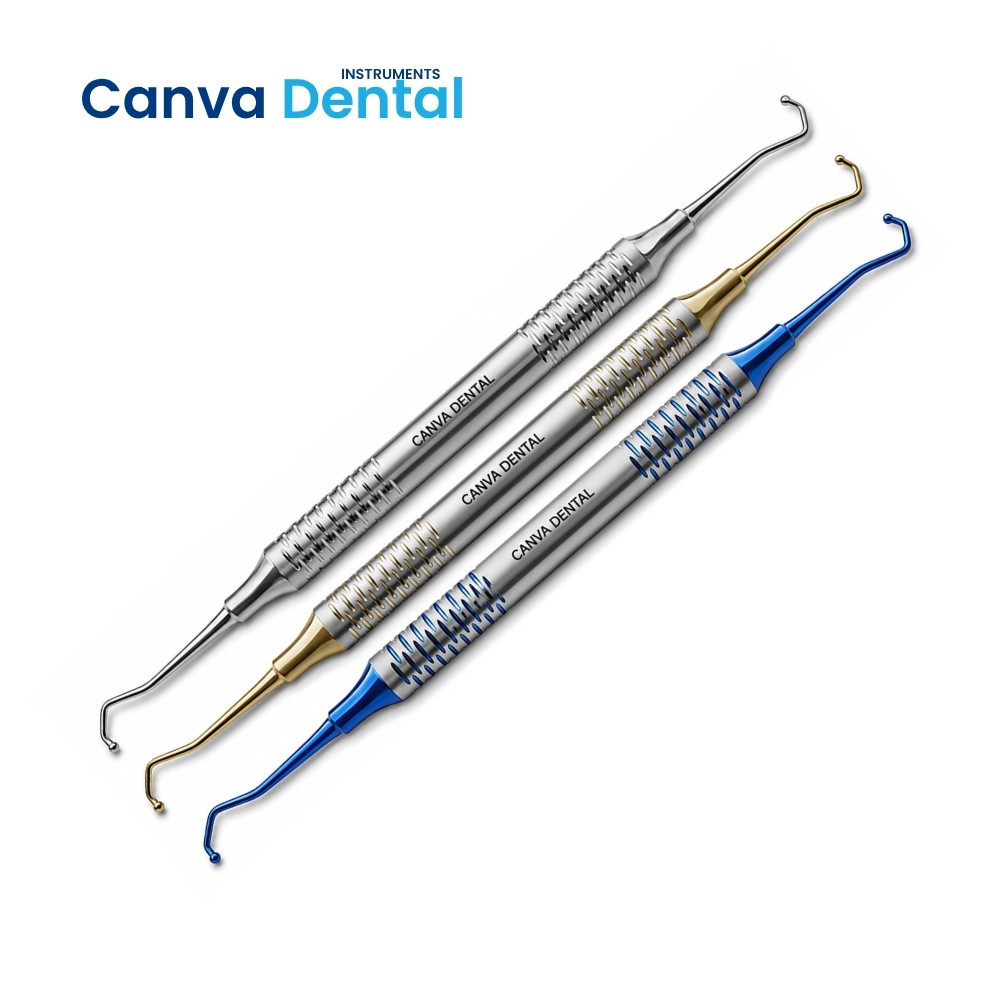
A dental excavator is a hand instrument with a sharp, spoon-shaped or hoe-shaped working end designed to scrape and remove soft, decayed dentine from cavity preparations. As an excavator dental instrument, it works through a scooping and scraping motion that lifts carious tissue away from the cavity floor and walls without applying rotary forces.
Unlike burs and rotary instruments that cut through all tissue indiscriminately, a dental excavator allows the clinician to selectively remove only softened, infected dentine while leaving sound tooth structure intact. Therefore, it remains essential even in clinics that use high-speed handpieces for initial cavity access.
Each dental excavator in our range combines ergonomic handling with sharp, durable working ends that maintain clinical performance across many patient procedures:
Dental teams select different excavator dental instruments based on cavity size, tooth type, access requirements, and the depth of caries involved. Consequently, stocking a range of sizes and designs ensures efficient instrument selection for every clinical scenario:
| Type | Blade Design | Primary Use |
|---|---|---|
| Spoon Excavator (Small) | Small round spoon tip | Pit and fissure caries, deciduous teeth |
| Spoon Excavator (Large) | Wide spoon blade | Large cavity caries removal, posterior teeth |
| Double-Ended Excavator | Two blade sizes, one handle | All-purpose caries removal, efficient tray setup |
| Hoe Excavator | Angled hoe-shaped blade | Cavity wall planing and caries removal |
| Cleoid Excavator | Claw-shaped pointed tip | Occlusal cavity carving and caries access |
| Discoid Excavator | Disc-shaped flat blade | Pulp chamber cleaning, smooth cavity floors |
| Interproximal Excavator | Angled offset blade | Proximal surface caries in tight contact areas |
Understanding the full range of dental excavator uses helps clinicians select and apply this instrument most effectively. Although caries removal is its primary role, dental teams rely on this excavator dental instrument across several additional clinical applications:
Both rotary burs and hand excavators remove carious tissue, but they serve different stages of cavity preparation. Moreover, many clinicians combine both instruments for optimal results:
| Criteria | Dental Excavator | Rotary Bur |
|---|---|---|
| Tissue selectivity | High — removes only soft caries | Low — cuts all tissue types |
| Patient comfort | Silent, vibration-free | Noise and vibration present |
| Deep caries near pulp | Preferred — tactile control | Risk of pulp exposure |
| Speed of removal | Slower on large caries | Faster for bulk removal |
| Paediatric use | Excellent — less anxiety | Moderate — drill anxiety common |
| Power source needed | None — fully manual | Handpiece required |
Therefore, the most effective approach uses a rotary bur for initial bulk caries access followed by a dental excavator for final, selective removal of soft infected tissue close to the pulp — a technique widely recommended in minimally invasive dentistry guidelines.
Minimally invasive dentistry prioritizes preserving healthy tooth structure while removing only diseased tissue. Consequently, the dental excavator has become more important than ever as dentistry moves away from aggressive cavity preparation toward selective and stepwise caries removal protocols.
Because this excavator dental instrument provides direct tactile feedback, clinicians can feel the difference between soft infected dentine and firm, sound tooth structure during excavation. As a result, they remove only what needs to go — reducing the risk of unnecessary pulp exposure and supporting longer-lasting restorations.
Because dental excavators contact open dentine and potentially infectious carious tissue at every appointment, strict sterilization is essential. Fortunately, all stainless steel excavators in our range withstand repeated autoclave cycles at 134°C without corrosion or blade distortion.
However, clinicians should inspect blade sharpness before each procedure. A dull excavator drags rather than scoops, increasing patient discomfort and reducing excavation control. Additionally, ultrasonic cleaning before autoclaving effectively removes organic debris from the blade edge and preserves sharpness over the instrument’s working life.
Similarly, many healthcare professionals follow hygiene and sterilization guidance shared by the American Dental Association regarding clinical safety and surgical instrument maintenance.
Our dental excavator range — including spoon, hoe, discoid, cleoid, and double-ended excavator dental instruments — supplies dental clinics, teaching hospitals, restorative practices, and paediatric dental departments across Lahore, Karachi, Islamabad, Multan, Peshawar, and all major cities in Pakistan. Moreover, we offer competitive institutional pricing for dental colleges and bulk procurement teams.
Contact our team for current pricing, available sizes, and delivery timelines for your dental excavator order.
Q: What is a dental excavator used for?
A dental excavator removes soft, decayed dentine from cavity preparations, cleans cavity floors before restoration placement, and assists with pulp chamber access during endodontic procedures. It is one of the most frequently used excavator dental instruments in restorative and paediatric dentistry.
Q: What is the difference between a spoon and a hoe excavator dental instrument?
A spoon excavator features a rounded, cup-shaped blade ideal for scooping carious dentine from cavity floors and walls. A hoe excavator, however, has an angled, flat blade better suited for planing cavity walls and removing caries from accessible flat surfaces. Both designs appear in a well-equipped dental excavator tray.
Q: Can excavator dental instruments be used on primary teeth?
Yes. In fact, dental excavators are particularly valuable in paediatric dentistry because they remove caries silently and without the vibration associated with rotary instruments. As a result, they reduce patient anxiety significantly during treatment of young children.
Q: How do I know when a dental excavator needs sharpening?
Test the blade against your fingernail lightly — a sharp excavator dental instrument catches and holds without slipping. If the blade glides rather than catches, the working end needs professional sharpening or replacement to restore clinical performance.
Q: Are dental excavators autoclavable?
Yes. All stainless steel dental excavators in our range withstand autoclave sterilization at 134°C. Furthermore, ultrasonic cleaning before each sterilization cycle removes debris from the blade edge and extends instrument sharpness over time.
For complete clinical setups, explore all dental instruments here: CLICK
| Type | Silver, Plasma, Golden |
|---|
Reviews
There are no reviews yet.